10 Best Sea Glass Beaches in Cornwall (2026 Guide)
Victor
Founder of Sea Glass Map
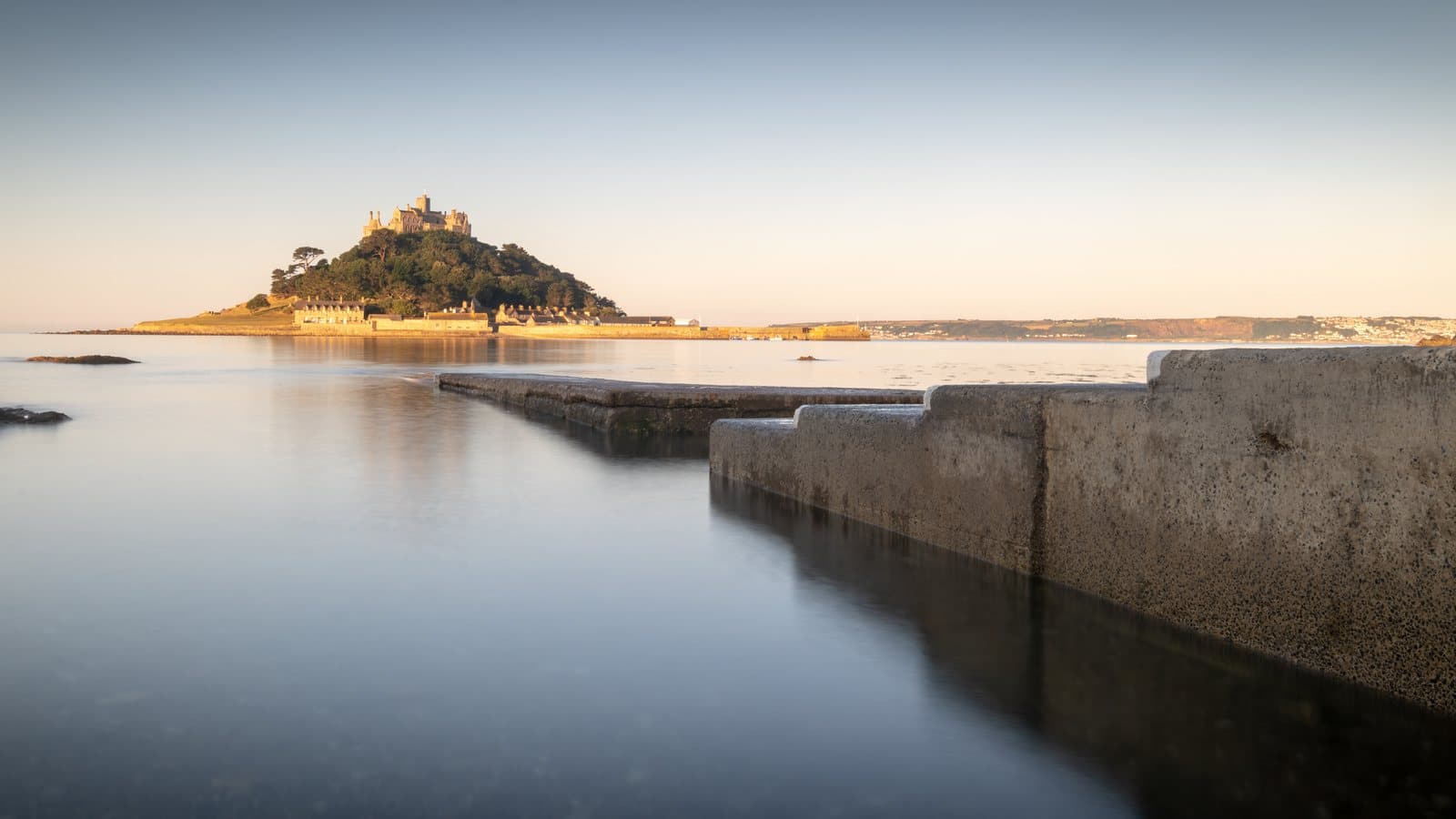
The best sea glass beaches in Cornwall are Marazion under St Michael's Mount, St Ives Harbour Beach, and the run of beaches on the old china clay coast around Mevagissey and Pentewan, with Portreath the pick of the north coast. Cornish sea glass is a winter find: the most glass turns up between October and March, at low tide on a spring tide, a day or two after a storm. Taking a pocketful for yourself is legal on ordinary Cornish beaches, as long as you leave the pebbles and shingle where they are.
Cornwall is not Seaham. There is no single bottle works here that tipped its waste off a cliff for seventy years, which is why no Cornish beach will ever carpet itself in frosted glass the way County Durham can. What Cornwall has instead is three hundred years of working harbours: copper ports on the north coast, china clay ports on the south, and fishing villages all the way round. Every one of them meant ships, crews, coal, provisions and bottles, and the glass that survives is spread thin along a very long coastline rather than piled in one place. This guide covers the ten beaches worth your morning, how to reach each one, and what is realistically there. If you hunt one of them, pin your finds on Sea Glass Map so other collectors can see which stretches are producing right now.
| Beach | Where | Access | Colours to expect | Best months |
|---|---|---|---|---|
| Marazion | Mount's Bay (SW) | Level, from the seafront car parks | White, green, brown, some purple | Oct–Mar |
| St Ives Harbour | St Ives (W) | Easy, in the middle of town | White, green, brown, sea pottery | Oct–Mar |
| Pentewan | St Austell Bay (S) | Through the holiday park, level | White, green, brown, sea pottery | Oct–Mar |
| Portreath | North coast | Easy, shingle near the waterline | White, green, brown | Oct–Mar |
| Maenporth | Falmouth (S) | Car park by the beach | White, green, brown | Oct–Mar |
| Polstreath | Mevagissey (S) | 200 steps down | White, green, brown | Oct–Mar |
| Mevagissey Harbour | Mevagissey (S) | Easy, on the harbour | White, green, sea pottery | Oct–Mar |
| Vault Beach | Dodman Point (S) | Steep walk from the NT car park | White, green | Oct–Mar |
| Polperro | South-east | Walk down through the village | Unrecorded so far | Oct–Mar |
| Port Isaac | North coast | Down through the village | Unrecorded so far | Oct–Mar |
Why Is There Sea Glass in Cornwall?
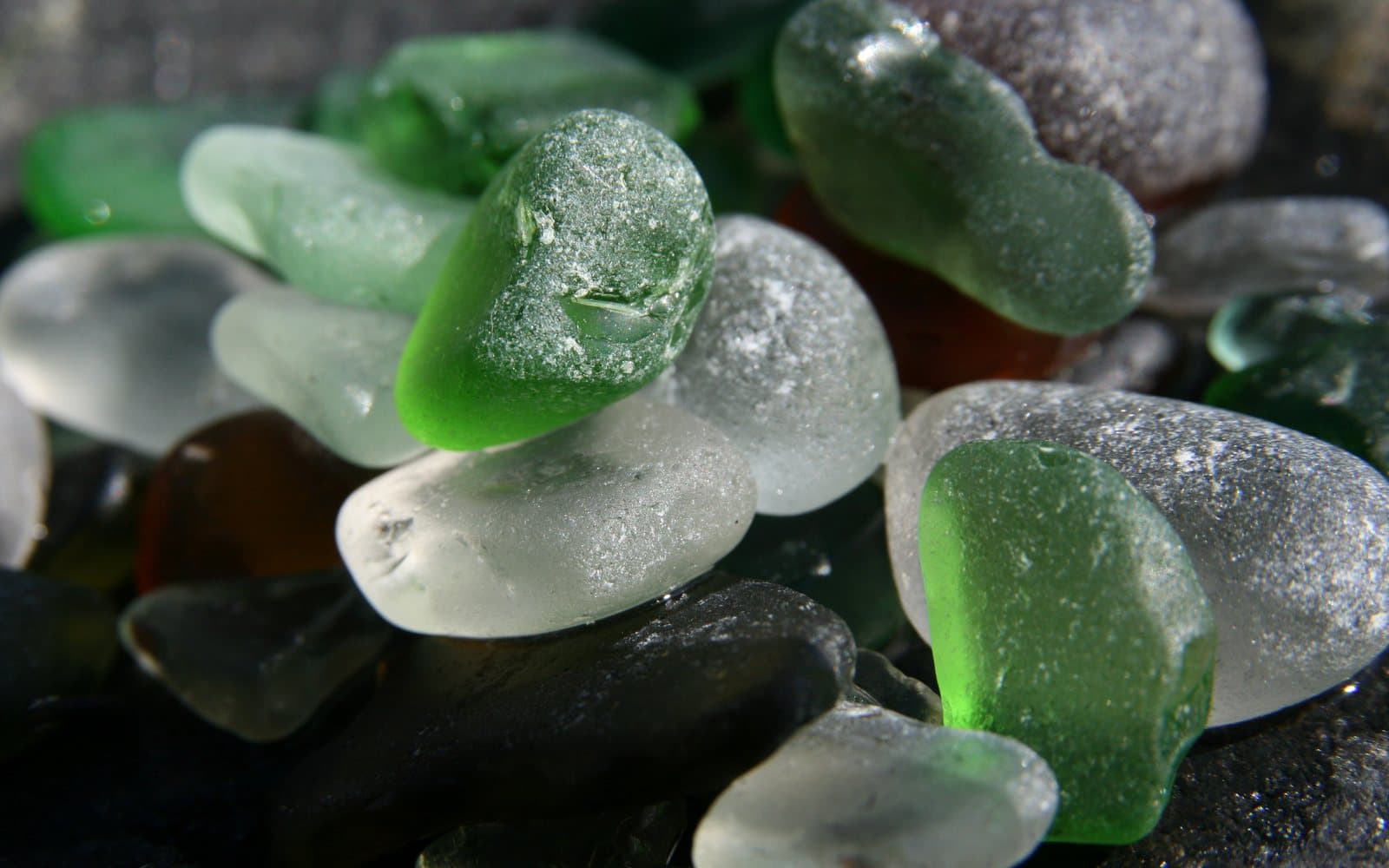
Cornwall's glass comes from its industry, not from a rubbish tip. Three separate trades put bottles into the sea here, and knowing which one fed a beach tells you what to expect on it.
- The copper ports of the north coast. Portreath was built to ship the ore out of the Camborne and Redruth mines, and by 1827 it was arguably Cornwall's most important port; in the 1840s it was handling around 700 shiploads a year. The Portreath Tramroad, begun in 1809, was the first railway in Cornwall. The ore went to Swansea for smelting and the ships came back loaded with coal for the mine engines, and a harbour working at that pace means crews, provisions and glass.
- The china clay ports of the south coast. Charlestown, built between 1791 and 1801 by Charles Rashleigh, is the oldest china clay port in the world. Par followed from 1820, and Pentewan at its peak shipped a third of Cornwall's china clay. This is the densest sea glass corner of Cornwall on our map, and it is also where the sea pottery comes from: crockery once carried as ships' ballast, now softened to rounded shards.
- The fishing harbours. St Ives, Newlyn, Mevagissey, Polperro, Port Isaac and Falmouth have all been working water for centuries. None of them produced glass in industrial quantity, but all of them have been quietly losing bottles over the side for a very long time.
The practical consequence is that Cornish sea glass is thin, well tumbled and widely spread. The Atlantic does an excellent job on the pieces it does find: a two-week hunt across Cornwall reported on the collecting forums came home with mostly white, green and brown, and a couple of reds and cobalts across the whole fortnight. That is the honest shape of it.
1. Marazion, Mount's Bay
Marazion is the Cornish hunt everyone photographs, under the fairytale silhouette of St Michael's Mount, and it earns the attention. The productive stretch is the left-hand side of the beach, by the rock pools and to the left of the causeway path out to the Mount, worked after the sea has turned the shingle over. The pieces run small but there are plenty of them, and purple is genuinely reported here among the usual whites, greens and browns, which is unusual for the county. Orange is not: a page promising orange at Marazion is selling you the postcard rather than the beach. Access is level from the seafront car parks. One thing that catches people out: the SSSI at Marazion is the reed marsh behind the road, not the foreshore, so it does not restrict what you do on the beach. See the Marazion Beach spot, and the wider Mount's Bay if you want to work the quieter coves at the edges.
2. St Ives Harbour Beach
St Ives keeps its glass in the middle of town. Harbour Beach opens out as the tide drops, and the tideline around Smeaton's Pier is the part to rake over, best after a storm. It is known for throwing up more white glass than most of Cornwall, alongside greens and browns and a steady scatter of patterned pottery from generations of harbour traffic. It is also the easiest hunt on this list: you can walk to it from the bus or the train and comb it between galleries, with the Tate a minute away. Town parking is limited, so arrive early, which is what you want for the tide anyway. See the St Ives Harbour Beach spot.
3. Pentewan, St Austell Bay
Pentewan is half a mile of shingly sand below a village that once shipped a third of Cornwall's china clay, and the shingle is exactly why it works: glass travels and settles with gravel, not with open sand. It is the county's best-known beach for sea pottery, the softened shards of old crockery carried as ballast and tipped when the ships loaded clay. The beach is privately owned and reached through the Pentewan Sands Holiday Park, which keeps public access open; parking by the beach is limited, with more in the village. See the Pentewan Beach spot.
4. Portreath, North Coast
Portreath is the north coast's pick and the beach with the best story behind it. The big Atlantic surf that makes it a well-known surfing beach is the same swell that drags glass up the shingle, and the old harbour beside it moved a hundred thousand tonnes of copper ore a year at its peak. Search the shingle bands near the waterline rather than the open sand, and keep an eye on the sea: the waves here run a long way up the beach. It is not on Sea Glass Map yet, so if you hunt it you would be the first to log it. Browse every Cornish spot we have to see what is already mapped nearby.
5. Maenporth, Falmouth
Falmouth sits on one of the largest natural harbours in the world and has been repairing and provisioning ships for centuries, so the whole shoreline around it is worth a walk. Maenporth is the pick: a sheltered, shallow cove a few minutes south of town, calm enough to work slowly, with a pay-and-display car park right by the beach that fills fast on a sunny day. In town, the small strip of foreshore at Greenbank is a low-tide-only hunt right on the working waterfront. See the Maenporth Beach spot.
6. Polstreath, Mevagissey
Polstreath is the beach you earn. There is very little parking near the coast path, so the usual approach is to park in Mevagissey, hike up through the streets and then down around two hundred steps. That descent is the whole point: it keeps the beach quiet, and a quiet beach on a coast this heavily worked is a good place to be the first one down after a storm. See the Polstreath spot.
7. Mevagissey Harbour
The harbour itself is the low-effort counterpart to Polstreath, ten minutes' walk away. The productive corner is the foreshore to the right of the aquarium on the inner harbour, uncovered as the tide drops. Working harbours are reliable rather than spectacular: expect whites and greens, sea pottery, and the occasional older piece that has been circulating in the basin for a very long time. See the spot on the inner harbour.
8. Vault Beach, Dodman Point
Vault Beach curves below Dodman Point on National Trust land near Gorran Haven, reached by narrow lanes to the Trust car park and a steep walk down and back up. It is a shingle-and-coarse-sand beach rather than a soft one, which is the texture that holds glass, and it is far enough from a road to stay unpicked. Because it is National Trust ground, check the signs at the car park before you fill a pocket: the Trust can and does restrict removing material on some of its coast, and an absence of a sign is not the same as permission. See the Vault Beach spot.
9. Polperro, South-East Cornwall
Polperro is a small sandy cove inside the fishing village, ringed by cliffs and uncovered at low tide. Park at the top of the village and walk down through the pedestrianised streets. We are listing it honestly: nobody has written up the glass here yet, on our map or anywhere else we can find. It has the right ingredients, a centuries-old working harbour and a sheltered cove that collects what the sea brings in, and it is the kind of place where a first report is worth more than another photograph of Marazion. See the Polperro Beach spot.
10. Port Isaac, North Coast
Port Isaac is the north coast's version of the same bet: an old pilchard-fishing harbour, a steep village, a beach that empties at low tide, and no published account of its sea glass at all. It is on the map because a collector put it there, and it is waiting for someone to say what actually washes up. If you go, log what you find rather than what you hoped for. See the Port Isaac Beach spot.
What Colours of Sea Glass Can You Find in Cornwall?
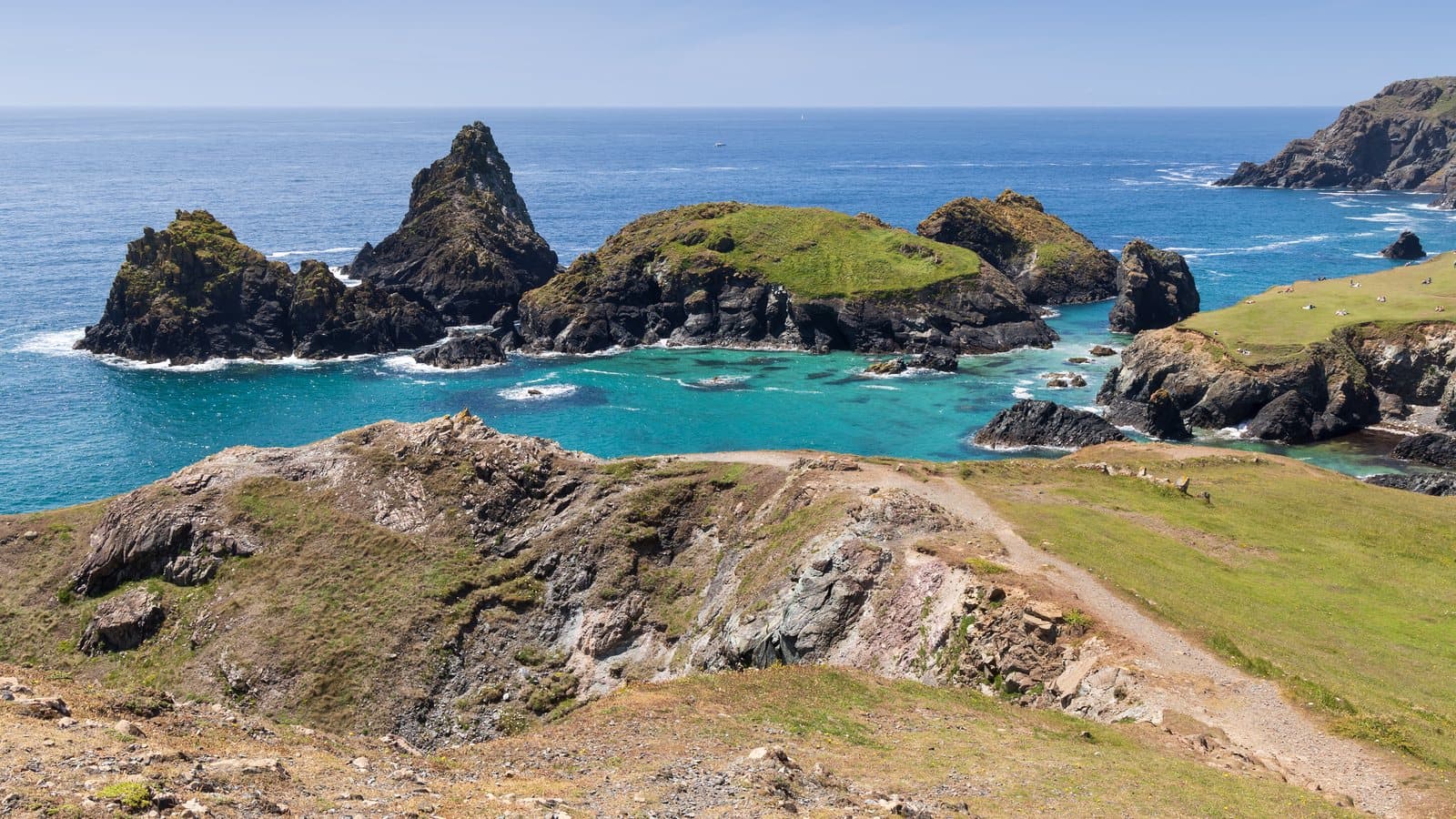
White, green and brown, overwhelmingly. That is the palette of the bottles and jars that made up almost all of the waste from harbours, crews and households, and it is what a realistic Cornish morning produces. Soft blues and aquas from old medicine and soda bottles turn up but are a step rarer here than on estuary coasts like the Thames or the Conwy. Marazion is the county's one credible source of purple. Cobalt and red exist in Cornwall the way they exist everywhere: a collector who shows you a jar of them has gathered them over years and across many beaches, not in an afternoon.
The Cornish speciality is not a colour at all, it is sea pottery: blue-and-white transferware, plain glazed crockery and the occasional maker's mark, worn to rounded shards. The china clay coast around Pentewan and Mevagissey is the place for it, and a good piece of transferware is a better find than a chip of cobalt. On Sea Glass Map we never rank finds by rarity or price. For the full colour chart, see our guide to what sea glass is.
When Is the Best Time to Find Sea Glass in Cornwall?
October to March, and specifically the day or two after a storm once it is safe to get down to the beach. Winter is when the Atlantic churns the seabed and throws fresh material up, and it is also when you have the beaches to yourself. Time the walk for low tide and, if you can, for a spring tide around the new or full moon, when the sea pulls back furthest and uncovers gravel that rarely sees daylight.
Cornwall has one advantage over most of Britain and one complication. The advantage is that it has coasts facing several directions, so there is almost always somewhere on the right side of the weather: the north coast beaches (Portreath, Port Isaac) work best with the prevailing westerlies and south-westerlies driving straight in, while the south coast (Mevagissey, Pentewan, Falmouth, Polperro) wants a southerly. The complication is the surf. The same Atlantic swell that makes the north coast productive makes it dangerous, so check the tide times before you go down rather than after, and do not get caught in a cove on a rising tide.
Is It Legal to Collect Sea Glass in Cornwall?
For a pocketful, yes. Sea glass is man-made litter rather than protected natural material, so it sits outside the rules that protect the coastline itself. Those rules still apply, and Cornwall has one wrinkle that the rest of England does not:
- Leave the pebbles, sand and shingle. Removing natural beach material is an offence under the Coast Protection Act 1949. It exists to slow coastal erosion, councils enforce it, and it carries fines. This is the law people misremember as 'you can't take anything off a beach'. It does not cover glass.
- The foreshore here mostly is not the Crown Estate's. The Duchy of Cornwall owns roughly three-fifths of the Cornish foreshore, a position settled by the Cornish Foreshore Case in 1858, so the Crown Estate's blanket permission for small personal collecting is not the one that applies on most Cornish beaches. In practice nobody is policing a handful of glass, but if you are gathering in quantity to sell, that is a different conversation and worth having with the landowner.
- Check National Trust and protected land. The Trust owns a great deal of the Cornish coast, including Vault Beach, and Cornwall is thick with SSSIs and a National Landscape designation. These can forbid removing any material at all. Read the signs at the car park; 'no rule found' is the absence of a rule, not permission.
None of this is a reason to strip a beach. Cornwall's glass is thin and slow to replace, and there is no bottle works still feeding it. Take what you will actually treasure, leave the rest for the next person, and never clear a signposted or protected shore.
Tips for Sea Glass Hunting in Cornwall
- Go in winter, after a blow. October to March, a day or two after rough weather, with the wind having pushed onto the coast you are walking.
- Pick your coast by the weather. North coast for westerlies, south coast for southerlies. Cornwall is narrow enough that you can switch sides in an hour.
- Search shingle, not sand. Pentewan, Portreath and Marazion all hide their glass in the gravel bands and around rock pools, never on the open sand.
- Expect sea pottery on the clay coast. Around Mevagissey and Pentewan, the transferware is the find, not a consolation prize.
- Take a pocketful, leave the pebbles. The pebbles are protected by law and the glass is finite.
- Log what you find. Pin it on Sea Glass Map with a photo and a note. Two of the beaches on this list have no published account of their glass at all, and the only way that changes is if someone writes it down.
Frequently asked questions
Which is the best beach in Cornwall for sea glass?
Marazion, under St Michael's Mount, is the most reliable and the most often recommended: work the left-hand side of the beach by the rock pools. St Ives Harbour Beach and Pentewan are the next two, and Portreath is the pick of the north coast. None of them produces glass in the quantity a beach like Seaham in County Durham does.
When is the best time to find sea glass in Cornwall?
October to March, and especially the day or two after a storm. Go at low tide, ideally on a spring tide around the new or full moon. Choose the north coast when the wind is westerly and the south coast when it is southerly.
What colours of sea glass are found in Cornwall?
White, green and brown make up almost everything. Soft blue and aqua turn up occasionally, and Marazion is the county's one credible source of purple. Red and cobalt are genuinely rare here. The Cornish speciality is sea pottery rather than a colour: worn shards of blue-and-white transferware and old crockery, most common on the china clay coast around Pentewan and Mevagissey.
Why is there sea glass in Cornwall?
Three centuries of working harbours rather than a single glassworks. Portreath shipped copper ore from the Camborne and Redruth mines and was handling around 700 shiploads a year in the 1840s; Charlestown, Par and Pentewan shipped china clay from the south coast, with Pentewan alone moving a third of Cornwall's output; and fishing harbours from St Ives to Polperro have been losing bottles over the side for centuries. The glass is spread thin along a long coastline rather than piled in one place.
Is it legal to take sea glass from Cornish beaches?
Taking a pocketful for yourself is fine on ordinary beaches: sea glass is litter, not protected natural material. Do not take pebbles, sand or shingle, which is an offence under the Coast Protection Act 1949. Note that the Duchy of Cornwall, not the Crown Estate, owns about three-fifths of the Cornish foreshore, so the Crown Estate's general permission for personal collecting does not apply on most Cornish beaches; and National Trust land such as Vault Beach can restrict removing anything at all, so read the signs.

 United Kingdom