Where to Find Sea Glass in New Zealand (2026)
Victor
Founder of Sea Glass Map
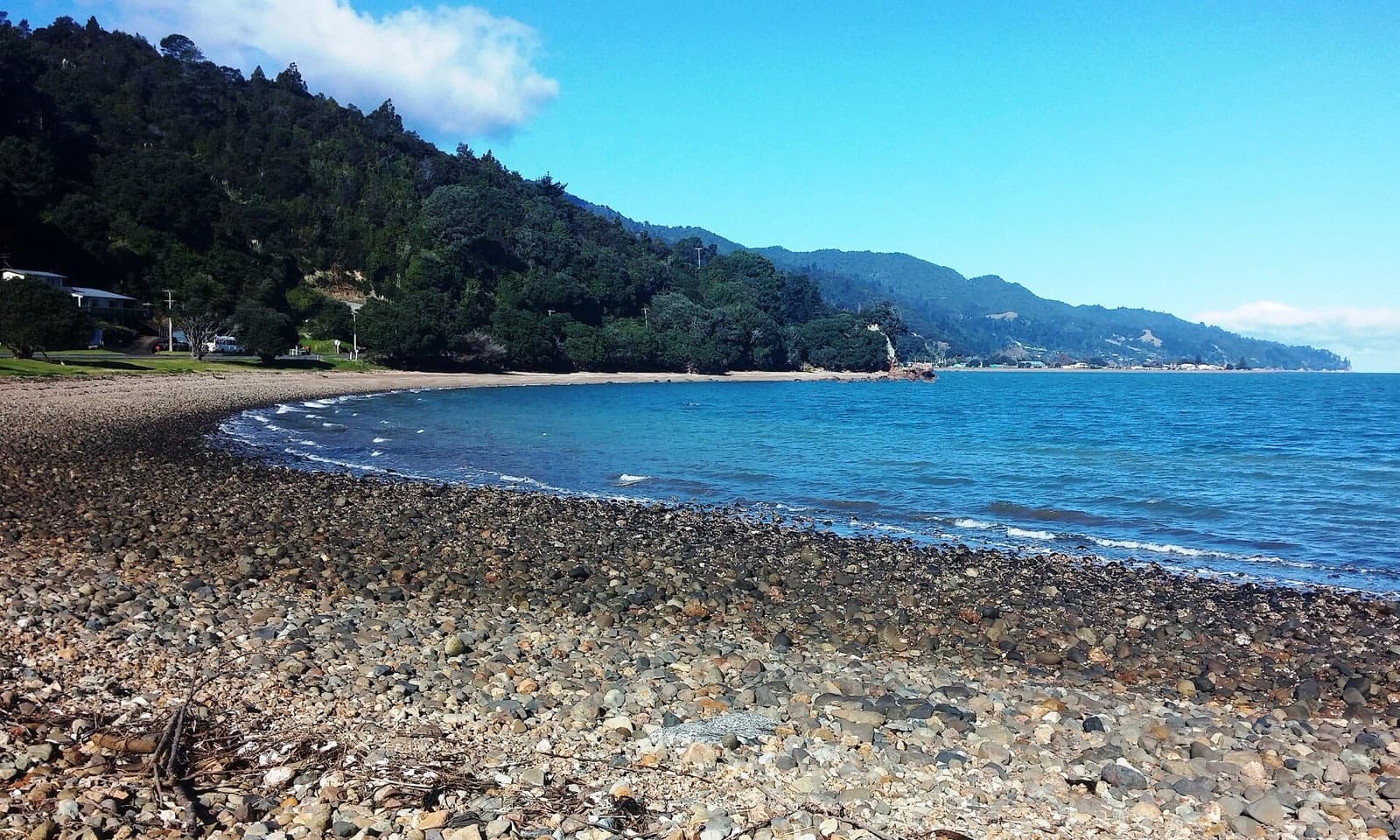
Most reports of sea glass in New Zealand come from Wellington Harbour, in particular the small bays along Evans Bay Parade, Days Bay in Eastbourne, Seatoun and Kau Bay on the Miramar peninsula. Away from the capital, collectors name Auckland's East Coast Bays, the rocks between St Heliers and Karaka Bay, the Thames coast, Russell in the Bay of Islands and the beach by the main wharf in Akaroa.
Sea glass is patchy here. A collector put it this way on Reddit in 2022: “In NZ sea glass is a rare find, unless I'm on a ‘city’ beach.” Most of what people find is brown, green and white. The nine places below come from collectors' own reports, and we give the year of each one, because a beach can change a lot in a few years. Rules and safety notes for each place are in its section.
Choose a Place
| Place | Area | What to plan around |
|---|---|---|
| Evans Bay Parade | Hataitai, Wellington | Small harbour beaches beside a busy road |
| Days Bay and Rona Bay | Eastbourne, Wellington | A ferry trip from the city, searching both sides of the wharf |
| Seatoun Beach | Miramar peninsula, Wellington | A long walk between the wharf and the Wahine memorial |
| Kau Bay | Miramar peninsula, Wellington | Steps down to the rocks, collecting from the surface only |
| Browns Bay to Campbells Bay | North Shore, Auckland | A falling tide, well away from the cliffs |
| St Heliers to Karaka Bay | Auckland | A walk around the rocks at low tide |
| Waiomu and nearby bays | Thames coast | Pebble bays beside the coast road |
| Russell | Bay of Islands | A historic waterfront, so surface finds only |
| French Bay | Akaroa, Banks Peninsula | The stony beach beside the main wharf |
1. Evans Bay Parade, Wellington
A string of small harbour beaches lines Evans Bay Parade in Hataitai, a few minutes from the city centre. Visitors reported finds here to Odyssey Sea Glass, a site that publishes beachcombers' reports, in 2014, 2016 and 2017. One called a small beach near 293 Evans Bay Parade “one of the most abundant beaches” they had found. Another collected white, green and brown glass on “three little bays around this area”, along with purple, lavender, pink, blue and red pieces. The 2017 visitor found mostly brown glass and some pottery.
Not every report agrees. A 2015 comment on the same page found the glass barely tumbled, and two residents disagreed in 2018. Expect a mix of worn and fresher pieces, and check the edges before you pick one up.
Wellington City Council describes Hataitai Beach as small, with steps and a concrete ramp down to the sand. Balaena Bay, next along, has parking. Evans Bay Parade is a busy road, so take care crossing it.
2. Days Bay and Rona Bay, Eastbourne
Days Bay is on the eastern side of the harbour, and East by West ferries sail there from central Wellington every day. A visitor who reported to Odyssey Sea Glass found well-frosted glass on both sides of the wharf, with “more aqua coloured glass here” than elsewhere and one tiny fragment of blue. In 2020 a Wellington collector added that the shore between Days Bay and Point Howard is “good for light aqua and pale amethyst”.
Rona Bay, a little further south in Eastbourne, gave the same visitor mostly browns and ambers, some greens and whites, and fresher pieces among the frosted ones. Fresher glass is sharper, so handle it with care. Keep clear of the ferry when you search near the wharf. You will find Days Bay on the map.
3. Seatoun Beach, Wellington
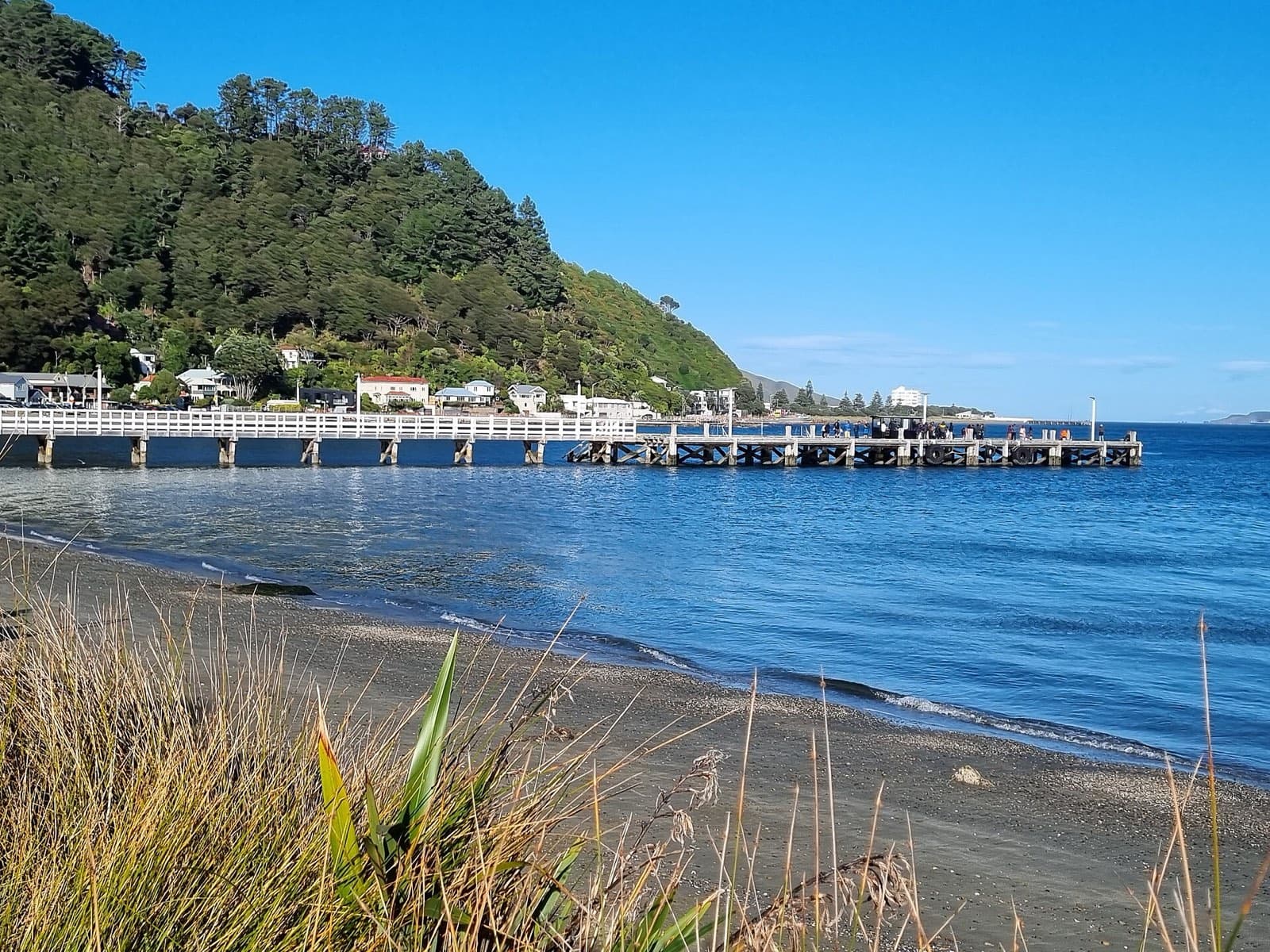
Seatoun has the longest run of reports in Wellington, from 2017 to 2026. A 2017 visitor found “lots of awesome greens”, a few pink pieces and pottery. In January 2018, after a storm, a local found a large piece of dark red glass on the beach. In 2023 another collector said Seatoun “has a fair amount”, and in 2026 a collector recommended the stretch between the wharf and the Wahine memorial for a long walk, with pottery as well as glass.
Little penguins (kororā) live around Seatoun, according to the Te Motu Kairangi restoration group. Keep dogs on a lead and stay out of the vegetation at the top of the beach.
4. Kau Bay, Miramar Peninsula
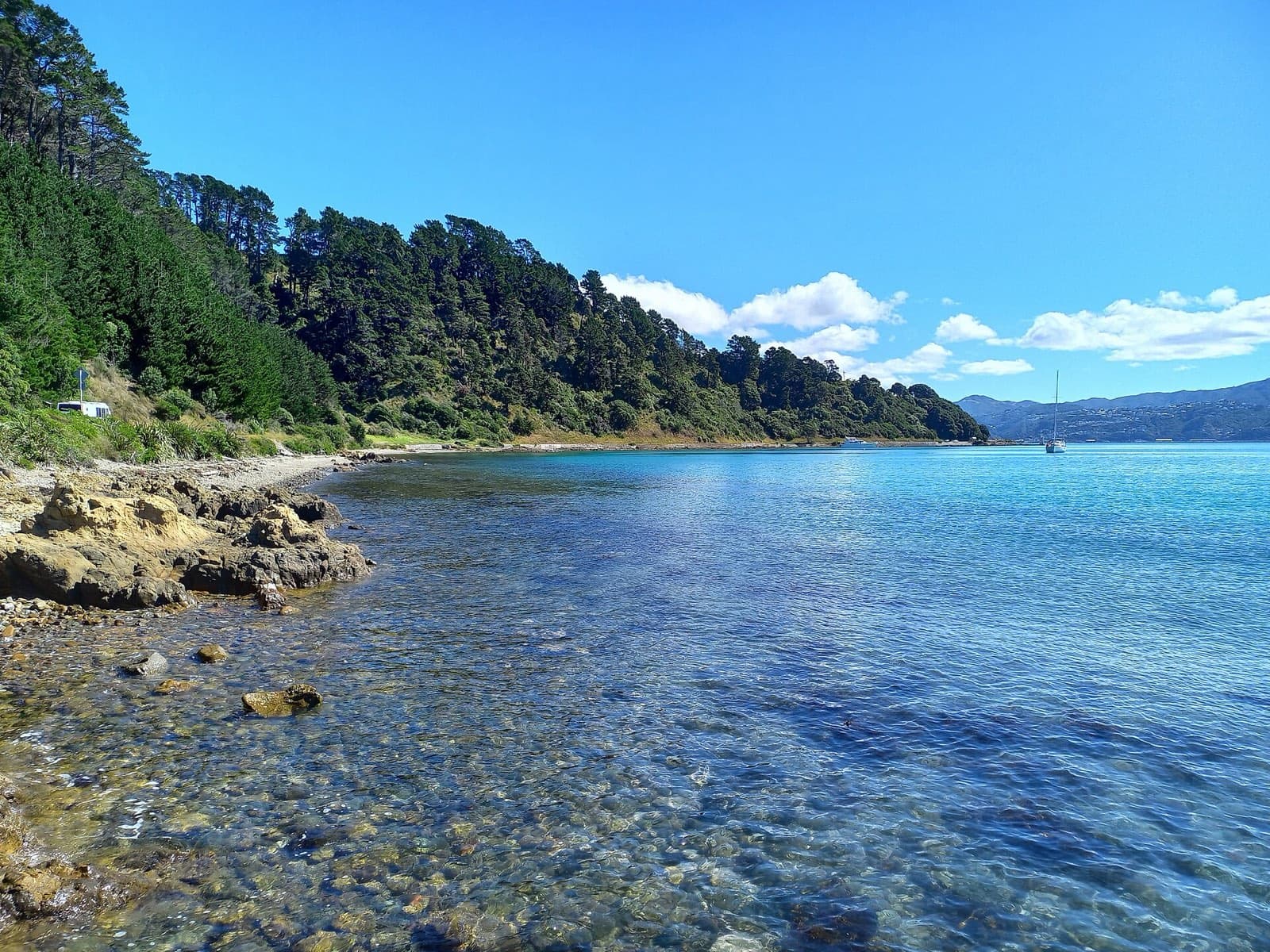
Kau Bay is a small rocky bay on Massey Road, on the harbour side of the Miramar peninsula. Two collectors wrote about it in the same Reddit thread in April 2026. The first calls it their favourite place, with a spot to park “fully off the road” on a bend and steps down to the rocks. The second, on their second visit, found dark purple, very light pink and smoky glass, plus clear pieces with moulded patterns, and was surprised by how much glass there was.
Kau Bay is also a heritage site. Heritage New Zealand records that Kau Point took its name from a kāinga (village) in the bay, and that traces of a midden were still visible in 1955. Pick up what lies on the surface, and do not dig among the rocks or into the bank. Little penguins nest in cracks between the rocks, so keep your hands and your dog out of the crevices.
The steps and rocks are slippery when wet, and the parking is on a bend, so watch the traffic when you get out of the car.
5. Browns Bay to Campbells Bay, Auckland
On Auckland's North Shore, three people on Reddit in October 2023 pointed to the East Coast Bays. One wrote that “browns bay to campbells bay has a lot”. Another found glass on a small beach between Rothesay Bay and Murrays Bay, reached from Churchill Road. A third described walking around the rocks at Browns Bay at low tide to look for sea glass and shells.
Safety comes first on this stretch. In July 2011 a rockfall killed a woman walking her dogs on the beach about 350 metres south of Rothesay Bay (GNS Science report). The cliffs here are known for slips and rockfalls, especially after heavy rain. Herenga ā Nuku notes that Auckland Council does not recommend walking the shoreline, asks walkers to keep at least 10 metres out from the cliffs, and warns that the rising tide can cut you off. Go on a falling tide, stay away from the base of the cliffs, and do not sit under them to sort your finds.
Further north, the Long Bay-Okura Marine Reserve starts at Toroa Point, at the southern end of Long Bay. Nothing may be taken from a marine reserve.
6. St Heliers to Karaka Bay, Auckland
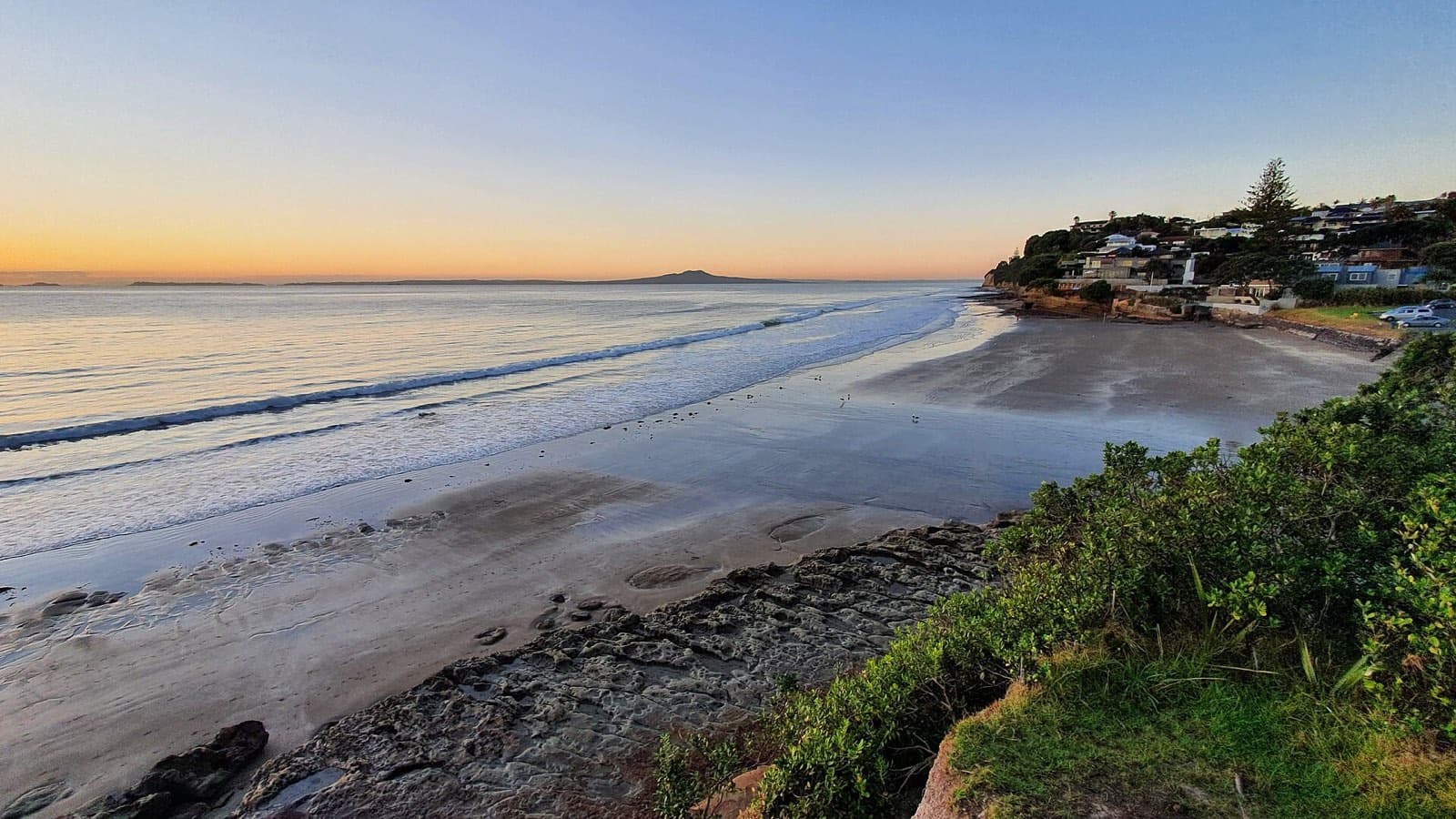
On the southern shore of the Waitematā, two people in the same 2023 thread named St Heliers. One said their children used to collect glass there. The other wrote that “walking around the rocks from saint heliers to karaka bay (at low tide) you can find a lot”.
The route around the rocks only works at low tide. Check the tide before you set out and leave plenty of time to walk back. We found no official safety notes for this stretch, so treat the rocks and the cliffs above them with the same care as on the North Shore.
7. Waiomu and the Thames Coast
Along the eastern shore of the Firth of Thames, north of the town of Thames, a run of pebble bays sits beside the coast road. A collector posted finds from Waiomu in 2023, along with Mount Maunganui and Waihi Beach, and a reader replied “They're huge!”. In 2025 a collector in the same thread said they had had the most luck along this coast, at Whakatete Bay, Ngārimu Bay, Thornton Bay and Waiomu, and a visitor staying on the water at Waiomu found “a few large pieces”.
Under the Waikato Regional Coastal Plan, sand, shell, shingle and other natural marine material should not be taken from the beach. Glass is not a natural material, but the pebbles and shells should stay where they are. The bays run along State Highway 25, so park well off the road.
8. Russell, Bay of Islands
Russell has two reports, seventeen years apart. In 2008 a visitor photographed frosted glass and pottery “picked up from the beach in Russell”. More recently, the member who added Russell Beach to the map found pottery at the high-tide mark, and darker “pirate glass” closer to the water.
The waterfront is one of the oldest settled shores in the country. Heritage New Zealand describes Māori and Pākehā living along it from at least the 1820s, archaeological sites along the foreshore including a pā, and Te Hikuwai urupā (a burial ground) north of the old Customhouse. Collect from the surface only, leave anything old that is still bedded in the sand or the bank, and do not collect near the urupā.
9. French Bay, Akaroa
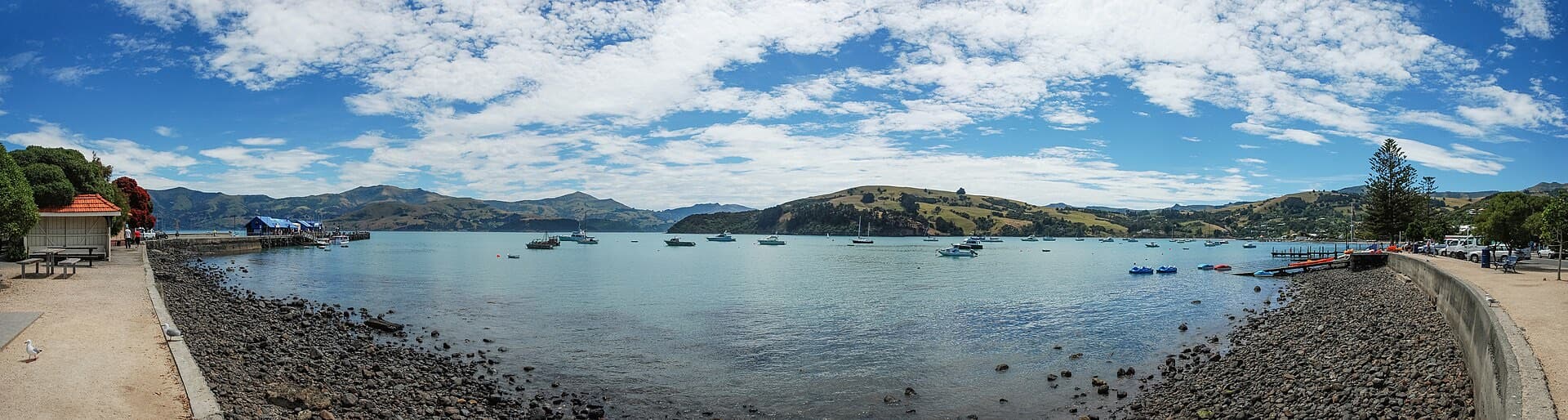
Two Australian visitors reported finds in Akaroa in 2019. One stood on the main wharf and found most of her pieces on the beach to the right, with “lots of different colours” and plenty of pottery. The other collected close to a kilogram in a few hours around French Bay and the bays towards Duvauchelle. Hers were mostly brown and green, with one blue, one purple and one yellow piece, and some newer glass that was not yet frosted.
Not everyone in Akaroa likes this. Under the 2019 report, a resident wrote that visitors were taking “our Akaroa history”. Take a few pieces and leave the rest. South of the town, Takapūneke is a wāhi tapu and a historic reserve, so do not collect there. The Akaroa Marine Reserve, at the mouth of the harbour, is a no-take area. French Bay is on the map.
Other Places Collectors Mention
Each of these has a single report, or reports too vague to place on a map. They are worth a look if you are nearby, but not worth a special trip.
- Breaker Bay, Wellington: one small piece, photographed in 2009.
- Lyall Bay, Wellington: “bits on and off” (2023).
- Pukerua Bay, Porirua: down a steep track, “can be good after a storm” (2026).
- Whitireia Park, Porirua: glass along the shoreline (2023). Greater Wellington describes the park as a place of great importance to Ngāti Toa, with dogs on a lead along the coast.
- Cheltenham Beach, Devonport: “the most sea glass at a beach I've seen” (2024).
- Bucklands Beach, Auckland: the little bays east towards Musick Point (2024).
- Mount Maunganui and Waihi Beach: named alongside Waiomu (2023).
- Port Chalmers and Portobello, Otago Harbour: a group that “found more than what we took home” at Port Chalmers (2025), and “decent luck around Portobello” (2021).
- Lyttelton Harbour: Camp Bay (2020) and Rāpaki Bay (video, 2026). The Rāpaki marae stands above the beach, so treat the shore with respect.
- Westshore, Napier: mostly greywacke, with “the odd nice Jasper, and beach glass” (video, 2025).
- Urenui, Taranaki: a two-litre tub filled over about six days (2012).
Where Not to Collect
- Taputeranga Marine Reserve, on Wellington's south coast. It covers Ōwhiro Bay, Island Bay, Houghton Bay and Princess Bay, and DOC states that “the removal or disturbance of any living or non-living marine resource is prohibited”. Collectors mention glass at Ōwhiro Bay. Leave it there. Lyall Bay, Moa Point, Breaker Bay, Seatoun and Kau Bay are outside the reserve.
- Every other marine reserve, including Long Bay-Okura in Auckland and the Akaroa reserve.
- Shag Point (Matakaea), Otago. The reserve is managed jointly by DOC and Te Rūnanga o Ngāi Tahu, and holds burial grounds and old mine shafts.
- The rocks along State Highway 59 between Pukerua Bay and Paekākāriki. The only access is from emergency stopping bays on a state highway, and slips closed the road in 2022.
- Ōpunake, Taranaki. An old dump below the cliffs near the beach is eroding into the sea, and a beach cleaner reported asbestos in it (1News, 2020).
What Colours Do Collectors Find in New Zealand?
Brown, green and white make up most finds. A Wellington collector with a large collection wrote in 2026 that on the city's beaches “the red and yellow are definitely the rarest ones”. The reports above add aqua and pale amethyst around Days Bay, dark purple and pale pink at Kau Point, dark red at Seatoun, and single blue, purple and yellow pieces at Akaroa. Our colour guide explains where each colour usually came from and how rare it is.
Can You Take Sea Glass Home in New Zealand?
We found no national rule that names sea glass. Three kinds of rule still apply.
In a marine reserve, take nothing at all. Outside reserves, councils and regional plans control the removal of natural material. Wellington's Public Places Bylaw 2022 forbids removing soil, sand, gravel, rock or any “naturally occurring thing” from a beach without the council's approval, and the Waikato plan has a similar rule for the Thames coast. Glass is not natural, but the pebbles and shells around it should stay.
Places where people lived or worked before 1900 are archaeological sites, protected under the Heritage New Zealand Pouhere Taonga Act 2014 (Quality Planning). Several places in this guide are among them. Do not dig into banks, middens or old deposits, and leave anything old that is still in place. For other countries, see Is Collecting Sea Glass Illegal?
Tides and Safety
Most of these places are rocky, so plan around the tide. LINZ publishes tide predictions for ports around the country. Water Safety New Zealand advises checking the marine forecast, including swell, tide and wind, before going onto rocks.
Several of the reports above came after a storm. Wait until the sea has calmed down before you go out, and check each piece for sharp edges before you pick it up.
Share What You Find
New Zealand has few reports, so each one helps. If you search any of these beaches, add what you found to Sea Glass Map, even if it was very little. A note that a beach has thinned out is as useful as a report of a good day.
Frequently asked questions
Where is the best place to find sea glass in New Zealand?
Wellington Harbour has the most reports, from the small bays along Evans Bay Parade, Days Bay in Eastbourne, Seatoun and Kau Bay on the Miramar peninsula. In Auckland, collectors point to the East Coast Bays and the rocks between St Heliers and Karaka Bay at low tide.
Is sea glass rare in New Zealand?
It is patchy. Local collectors describe it as rare away from city beaches, and most finds are brown, green or white. Harbour beaches in Wellington and Auckland, and the old waterfronts of Russell and Akaroa, have the most reports.
Can you collect sea glass on New Zealand beaches?
Not in marine reserves, where nothing may be taken. Elsewhere, no national rule names sea glass, but councils restrict taking sand, stones and shells, and archaeological sites are protected. Take glass only, from the surface, and read the local signs.
What is the rarest sea glass colour in New Zealand?
A Wellington collector with a large collection says red and yellow are the rarest on the city's beaches. Collectors also report aqua, pale amethyst, purple and pink in small numbers.
Is there sea glass on Wellington's south coast?
Yes, but the stretch from Ōwhiro Bay to Princess Bay is in the Taputeranga Marine Reserve, where nothing may be taken. Lyall Bay, Moa Point and Breaker Bay are outside it, with thin reports. Seatoun and Kau Bay, on the harbour side of the Miramar peninsula, have more recent ones.
 New Zealand