Where to Find Sea Glass in Tasmania: Hobart, Penguin and the Channel
Victor
Founder of Sea Glass Map
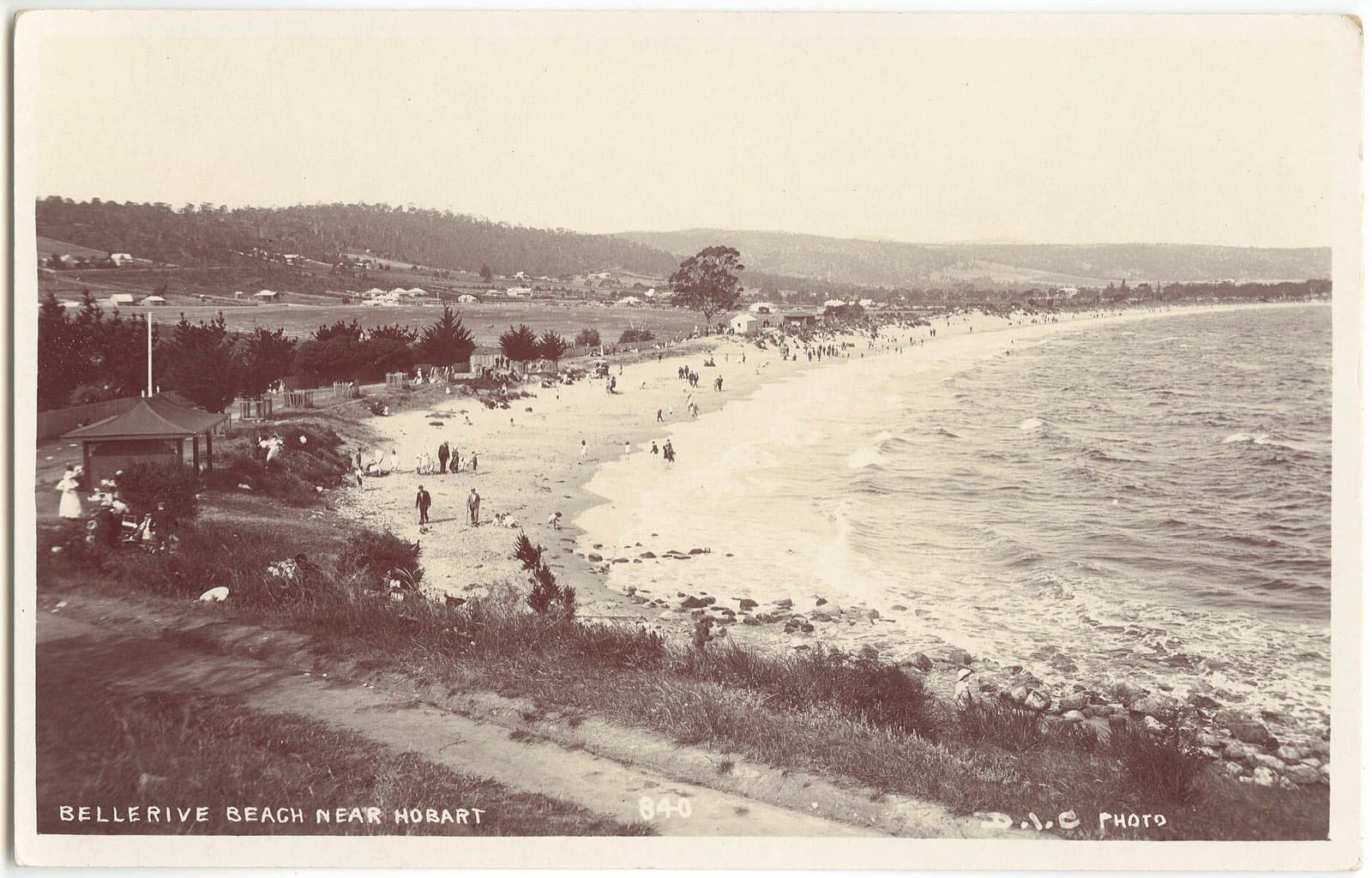
In Tasmania, most recent reports of sea glass come from Hobart's eastern shore, across the Derwent from the city. The rocks of Second Bluff, between Bellerive Beach and Howrah Beach, and a small cove below Kangaroo Bluff are the two places collectors name most precisely. Further afield, the main beach at Penguin on the north-west coast and the old jetty sites at Birchs Bay and Middleton, on the D'Entrecasteaux Channel, have smaller reports.
Tasmania is also the only place we know where the collecting rules name glass. On reserved land and public reserves, taking glass needs permission, and several of the beaches people talk about are closed, private or protected. They are listed at the end, with the reasons. Each report below gives its year, because a beach can change a lot in a few years.
Choose a Place
| Place | Area | What to plan around |
|---|---|---|
| Second Bluff | Between Bellerive and Howrah, Hobart | Low tide on the rocks, with the Foreshore Trail as the way back |
| Kangaroo Bluff cove | West end of Bellerive Beach, Hobart | A small shelly cove with private land beside it |
| Bellerive Beach | Hobart's eastern shore | Easy parking, few pieces on the sand |
| Penguin | North-west coast | A town beach with modest finds |
| Birchs Bay and Middleton | D'Entrecasteaux Channel | Old jetty sites known from one collector |
1. Second Bluff, Between Bellerive and Howrah
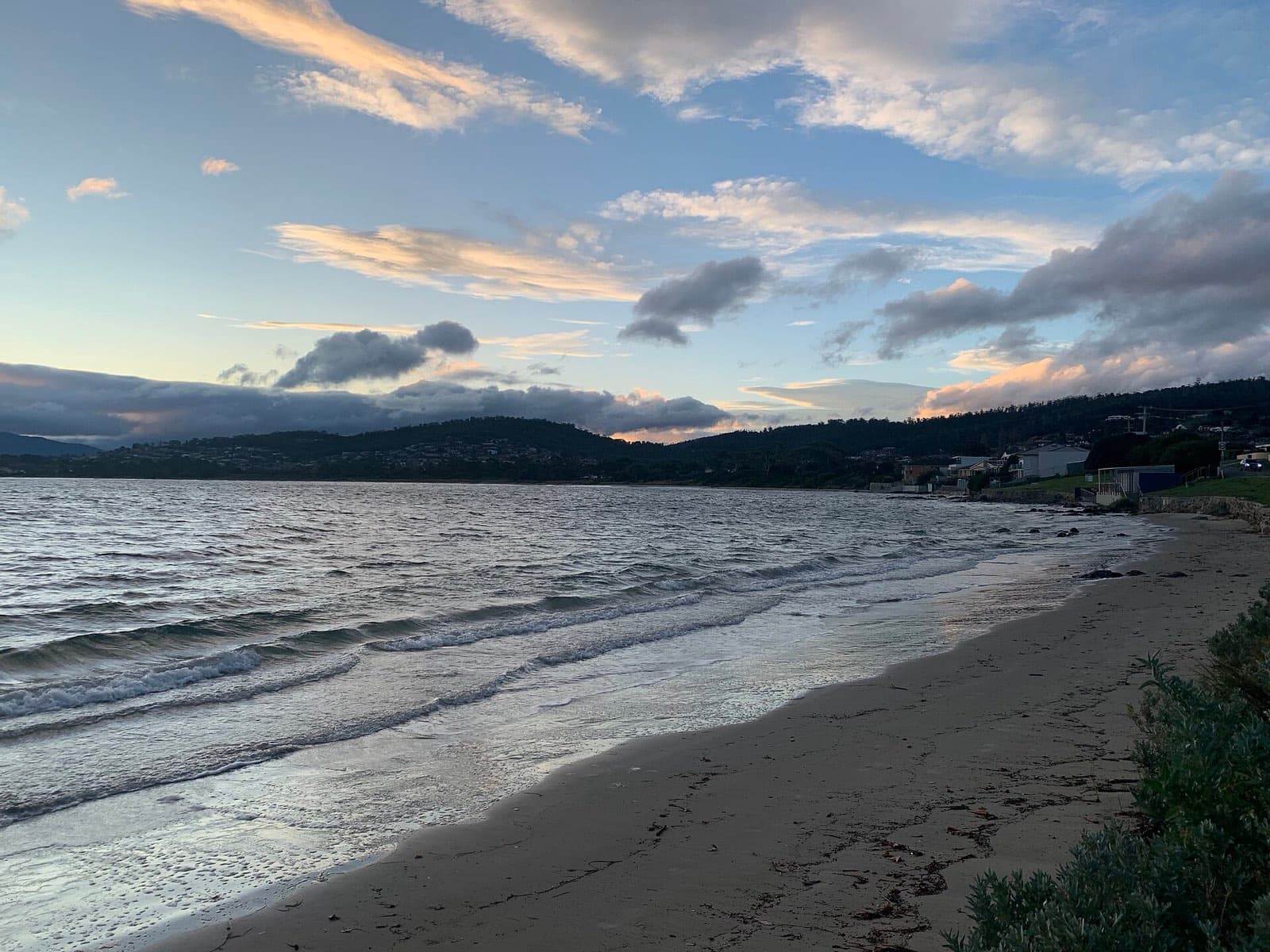
Second Bluff is the sandstone headland between Bellerive Beach and Howrah Beach, and three people have reported glass on its rocks. In 2018 a commenter on Reddit found glass climbing around the rocks between the two beaches. In 2019 a visitor to Odyssey Sea Glass, a site that publishes beachcombers' reports, found a few brown, green and white pieces on Bellerive Beach and more among the rocks at its eastern end. In 2021 another local wrote that they had found “lots of sea glass between Howrah and Bellerive beach”, and that at low tide “you can make it all the way around on the rocks pretty easy”.
The way round on the rocks depends on the tide, so check it before you start. The Clarence Foreshore Trail crosses the headland on steps above the rocks (The Hobart Magazine), which gives you a safe way back if the water is rising. Keep clear of the base of the sandstone cliffs.
2. The Cove Below Kangaroo Bluff, Bellerive
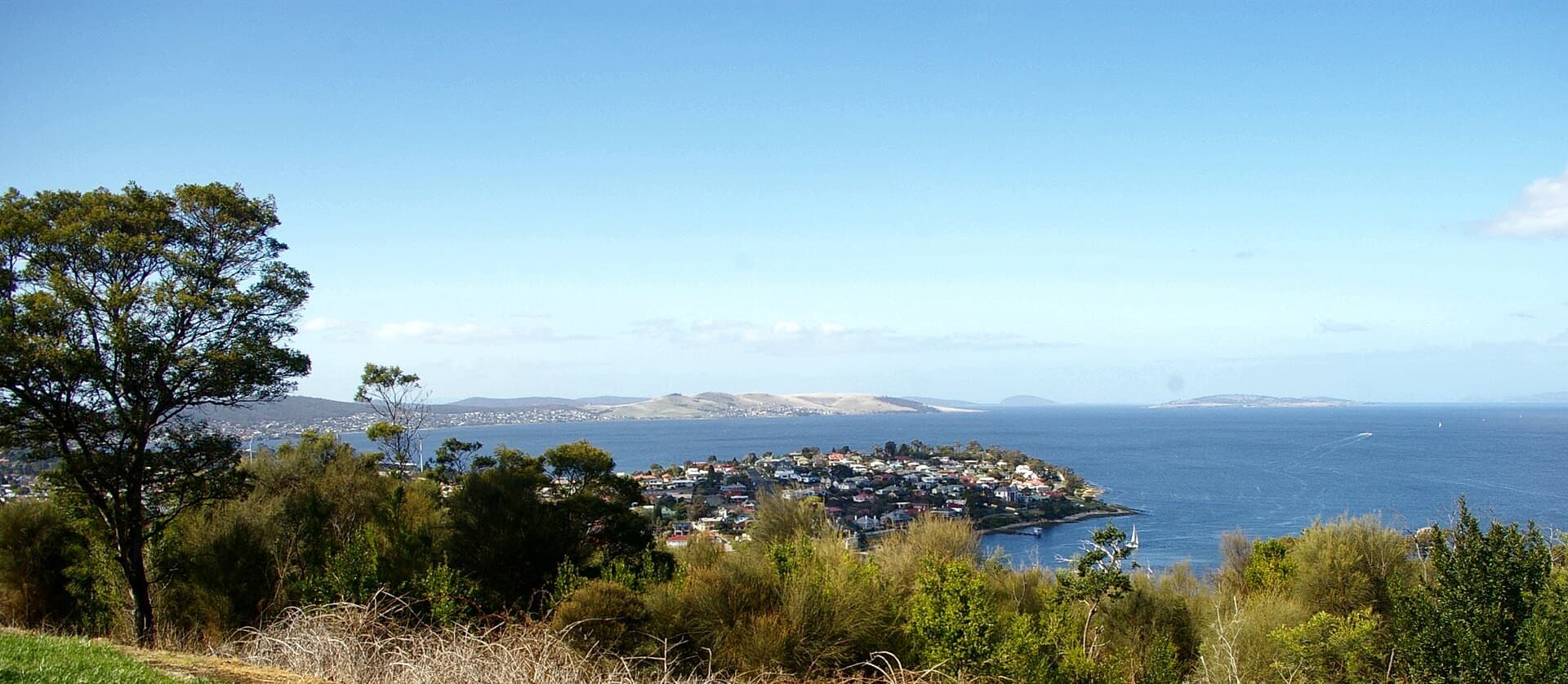
At the other end of Bellerive Beach, below Kangaroo Bluff, a collector spent an hour in a small cove in November 2024, among as much mussel and oyster shell as rock. They found blue, pink and dark lavender pieces, black glass and patterned ceramic. A map pin shared in the same thread marks the cove as “Glass Beach, Bellerive”, which is how the name has spread. It is not an official place name.
In 2018 a commenter remembered an old rubbish dump on the rocky foreshore just south of the Bellerive Bluff battery, where people dug up old bottles and blue-and-white pottery some 45 years earlier. We found no record of that dump, so take it as a memory rather than a fact.
The cove is small and easy to miss. Kangaroo Bluff above it is a historic site managed by Parks and Wildlife, and private land runs close to the shore, so reach the cove along the foreshore, not through gardens. Oyster shells cut, so wear shoes. On the historic site itself, the rules for reserved land forbid removing glass (see the rules below).
3. Bellerive Beach
The sand between the two bluffs has little glass. The 2019 visitor found only a few pieces there. A Hobart collector writing in 2016 about the eastern shore as a whole said it gave only a few pieces, and in another report that her old cove at Lauderdale no longer gave any. Over twenty years, her finds along this shore were mostly brown, green and clear, with the occasional mauve, blue and black.
The beach is the easy part of the trip, with parking at Bellerive Beach Park or on Victoria Esplanade. Start at one end and work towards the rocks. Bellerive Beach is on the map.
4. Penguin, North-West Coast
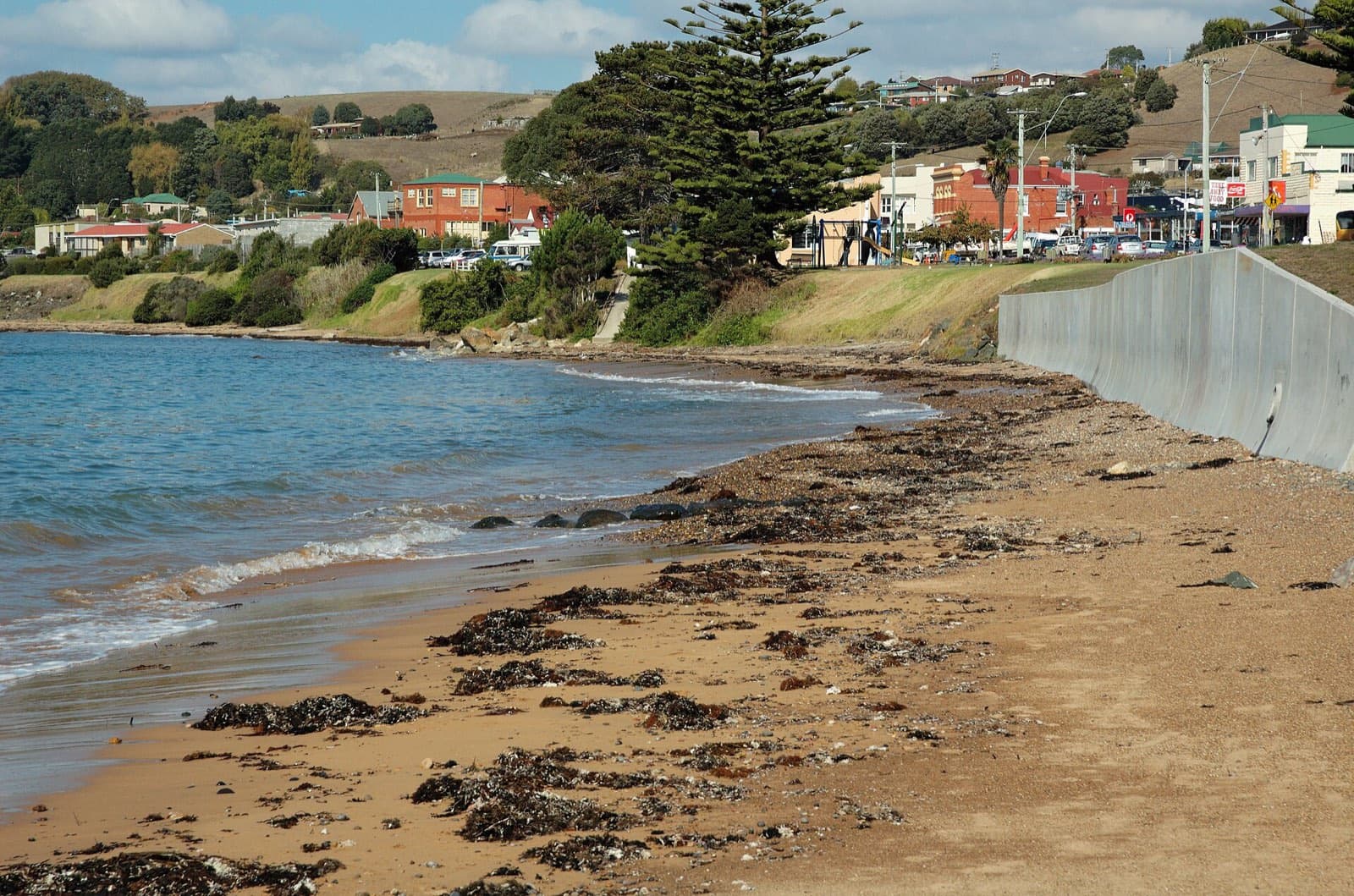
Penguin's main beach, in the town centre below the Big Penguin, has modest reports. A visitor to Odyssey Sea Glass found about twenty frosted pieces opposite the visitor information centre, mostly white, with a few green and one pale pink. The report is undated and we found no other that names this beach, so treat Penguin as a stop on a north-west trip rather than a destination.
The foreshore park is a public reserve, where glass may not be removed without permission. The sand below it appears to lie outside the reserve, but read the signs. The coast east of town is better known among collectors, but the beach they mention most is closed (see Places to Skip).
5. Birchs Bay and Middleton, D'Entrecasteaux Channel
About 35 minutes south of Hobart, a collector who lives at Birchs Bay has filmed her searches along the D'Entrecasteaux Channel. In June 2021 she found icy blue and patterned sea glass near the site of the old Birchs Bay jetty, and met a local walker who had been picking glass off that beach for years and leaving it in a pile on the bank. In July 2021 she found a few pieces, including lavender, around the old Middleton jetty, which burnt in the 1967 bushfires.
Both places rest on one person's videos, so expect less certainty than on Hobart's eastern shore. In the first video she points to broken bottles coming out of the bank and talks about digging there. Please leave the bank alone. It is eroding, and old deposits on this coast can hold Aboriginal heritage (see below).
The coastal strip along the Channel is mostly public reserve, and at Middleton the Central Channel Marine Conservation Area lies next to the shore. On either kind of land, glass may not be removed without permission, so look for signs before you pick anything up.
Places to Skip
- Tea Tree Point, between Penguin and Ulverstone. The beach collectors mention most on the north-west coast, described as sitting below an old tip east of Penguin, lies about 120 metres from Tea Tree Point. Mineral Resources Tasmania has closed Tea Tree Point to fossickers because of sensitive penguin colonies and possibly contaminated material. Goat Island, 3 km further east, is a nature reserve.
- The “Secret Beach” near Maria Point, South Arm. Forty South tells its story, and older collectors remember it full of glass. The land behind it is private and fenced, and the only ways in are by boat or a long, dangerous scramble.
- Lauderdale. The Hobart collector who wrote in 2016 said her cove there no longer gave any glass.
- Wineglass Bay. It tops searches for “glass beach Tasmania”, but it has nothing to do with sea glass. It is in Freycinet National Park, where nothing may be removed.
Can You Take Sea Glass Home in Tasmania?
Tasmania is the only place we know where the collecting rules name glass.
- On reserved land (national parks, state reserves, nature reserves, conservation areas including marine ones, and historic sites), regulation 5(4)(a) of the National Parks and Reserves Management Regulations 2019 forbids removing, damaging or disturbing “any brick, glass, coin, masonry, ceramics” without permission.
- On public reserves, regulation 19(3)(a) of the Crown Lands Regulations 2021 does the same for glass and ceramics.
Many foreshore parks are public reserves, including those at Bellerive and Penguin. Their boundaries seem to stop at the top of the beach, and we found no general rule for the sand and rocks below. So we cannot tell you that collecting there is allowed, or that it is forbidden. Check the land status on LISTmap, read the signs, and ask Parks and Wildlife if you are unsure.
Glass That Is Not Sea Glass
Tasmanian Aboriginal people took up bottle glass quickly after colonisation and worked it into tools (Aboriginal Heritage Tasmania). The Tasmanian Museum and Art Gallery shows a scraper made from thick bottle glass, probably from the 1820s. Under the Aboriginal Heritage Act 1975, objects like this are protected whatever their age, and finds must be reported. Coastal shell middens, often found near headlands and rocky outcrops, are protected too.
In practice, leave shell middens alone, leave any thick piece of glass with deliberately chipped edges where you found it, and report it to Aboriginal Heritage Tasmania.
What Colours Do Collectors Find?
Brown, green and clear make up most finds on Hobart's eastern shore. The rarer colours in the reports above are blue, pink, dark lavender and black near Kangaroo Bluff (2024), mauve, blue and black in a Hobart collection built over twenty years (2016), and lavender at Middleton (2021). One collector wrote in 2023 that seafoam is very common in Tasmania. Our colour guide explains where each colour usually came from and how rare it is.
Safety
Much of the glass on Tasmanian beaches is recent, sharp litter. An ABC report from 2017 on a study of Tasmanian shores found plenty of local broken glass, especially near stormwater outlets. Wear shoes, carry a rigid container, and check each piece before you pick it up. On the rocks, check the tide and keep a way back.
Share What You Find
Tasmania has only one spot on our map so far, at Bellerive. If you search any of these places, add what you found to Sea Glass Map, even after a quiet day. It is the quickest way to show other collectors which beaches still have glass. For the rest of the country, see our Australia guide.
Frequently asked questions
Where can I find sea glass in Tasmania?
Most recent reports come from Hobart's eastern shore, on the rocks of Second Bluff between Bellerive and Howrah at low tide, and in a small cove below Kangaroo Bluff. Penguin's main beach and the old jetty sites at Birchs Bay and Middleton have smaller reports.
Is there a glass beach in Tasmania?
Not officially. “Glass Beach, Bellerive” is the name a collector's map pin gave a small cove below Kangaroo Bluff in Hobart. Wineglass Bay, which often appears in searches, has nothing to do with sea glass.
Is it legal to collect sea glass in Tasmania?
Not on reserved land or public reserves without permission, because Tasmanian regulations name glass among the things you may not remove. For beaches outside reserves we found no clear rule. Check the land status on LISTmap and the signs on site.
Where is the secret sea glass beach near Hobart?
The beach people usually mean lies near Maria Point on the South Arm peninsula. It is backed by private, fenced land and can only be reached by boat or a dangerous scramble, so we do not recommend going.
What colours of sea glass can you find in Tasmania?
Mostly brown, green and clear. Collectors also report blue, pink, lavender and black near Kangaroo Bluff, and lavender at Middleton.
 Australia