10 Best Sea Glass Beaches in Australia (2026 Guide)
Victor
Founder of Sea Glass Map
The best sea glass beach in Australia is Stockton Beach in Newcastle, where a century of harbourside history feeds the sand with everything from everyday greens to ultraviolet-reactive purples and cobalt. Behind it come Glass Beach at Robe in South Australia, a former town dump turned glass cove, and the gravel pockets of Leighton Beach by Fremantle, where a fifth of what one collector picked up was jewellery grade. Australia's glass story runs right around the coast: every state and the Northern Territory has at least one documented beach in this guide.
Australia earned its sea glass the same way every good glass coast did: ports, piers and seaside towns that threw their bottles over the nearest bank for a hundred years before anyone recycled. The difference here is scale. With coastline on three oceans, the finds cluster tightly around the old harbours and bayside suburbs, which is good news for a collector, because it means the productive beaches are usually the easy ones to reach. This guide covers the ten with the strongest first-hand evidence we could find, plus what collectors are logging on Sea Glass Map right now. If you hunt one of them, pin your finds so the next collector knows the coast is producing.
| Beach | State | Access | Documented colours | Best window |
|---|---|---|---|---|
| Stockton Beach | Newcastle, NSW | Easy, town beach | Green, seafoam, amber, white, purple, teal, cobalt | Low tide |
| Glass Beach (Factory Bay) | Robe, SA | Low tide only, rocky cove | Brown, white, green, seafoam, teal, light blue | Calm day, low tide |
| Leighton Beach | Fremantle, WA | Easy, near the station | Sea green, clear, blues, amber, dark olive | Mid tide |
| Shelly Beach | Manly, NSW | Easy, Fairy Bower walk | Mixed, unrecorded | Early morning |
| Malabar Beach | Sydney, NSW | Easy, bayside | Brown, white, green, pale aqua | Low tide |
| Woody Point | Redcliffe, QLD | Easy, bayside | Green, amber, blue, white | Low tide, mornings |
| Bellerive Beach | Hobart, TAS | Easy, eastern end | Brown, green, white, rare mauve and black | Low tide |
| Frankston Beach | Melbourne, VIC | Easy, below Olivers Hill | Small mixed pieces | After a storm |
| Port Willunga | Fleurieu, SA | Easy, beside the jetty ruins | Mixed, unrecorded | Low tide |
| Nightcliff Beach | Darwin, NT | Easy, rocky foreshore | Clear, patterned pressed glass | Dry season, low tide |
Why Australia's Sea Glass Hides in Plain Sight
Nobody thinks of Australia as sea glass country, and that is precisely why the beaches in this guide still produce. The famous shores are the surf beaches, which grind glass to nothing, so the glass survives where the water is calm and the history is thick: inside Moreton Bay and Port Phillip Bay, along the harbour suburbs of Sydney and Fremantle, and in the old port towns of South Australia. The pattern to remember is calm water plus old settlement. Wherever a jetty shipped wool or grain a century ago, or a town tipped its rubbish over the dunes, the sea has been quietly polishing the leftovers ever since.
1. Stockton Beach, Newcastle: The Best Palette in the Country
Across the harbour from Newcastle, Stockton is the beach Australian collectors talk about, and the range of colour is the reason: alongside the everyday greens, seafoams, ambers and whites, collectors here report ultraviolet-reactive pieces, purples, teal, pink and cobalt. The honest explanation is under the dunes. Coastal erosion exposed an old landfill here, and after years of remediation more than ten thousand tonnes of waste were removed and the site capped. The beach is open and the glass keeps coming, but the rule follows from the history: take the glass, and leave anything that is not glass alone. Enter near the surf club, walk north, and work the low tide line. See the Stockton Beach spot.
2. Glass Beach, Robe: The Town That Owns Its Dump
Robe, on South Australia's Limestone Coast, is refreshingly frank about why its cove below the Cape Dombey obelisk is called Glass Beach: Factory Bay held a canning factory, then the town dump, and the hotels' green and brown bottles washed back in as sea glass. The town council itself tells the story on its attractions page. Browns, whites and greens lead, with seafoam, teal and light blue in the mix and lettering still legible on some pieces. The cove is only reachable at low tide and the swell rises fast, so pick a calm day, and dig a little: the glass settles under the surface, especially toward the cave at the right-hand end. See the Glass Beach, Robe spot.
3. Leighton Beach, Fremantle: The Gravel Pockets
The sand between North Fremantle and Mosman Park looks like any Perth beach until you find the pockets of gravel, and it is in the gravel that the glass sparkles: well-tumbled sea greens, clear, light and darker blues, ambers, and dark olive pieces that read as black until you hold them to the sun, with sea pottery mixed through. One collector rated a fifth of an hour's haul here as jewellery grade, which for an easy metropolitan beach is remarkable. Mid tide works fine, and the beach is a short walk from North Fremantle station. Bathers Beach and South Beach, closer to Fremantle's old port, are worth the detour on the same trip. See the Leighton Beach spot.
4. Shelly Beach, Manly: The Sheltered Cove
At the end of the Fairy Bower walk from Manly, Shelly Beach faces away from the ocean, and that shelter is the whole trick: glass that would be ground to sand on the surf side survives here whole. A local collector came away with two handfuls in twenty minutes. One thing to know before you go: this is Cabbage Tree Bay Aquatic Reserve, a no-take zone where collecting shells, dead or alive, is prohibited. Those rules protect marine life rather than bottle glass, but keep it strictly to glass and leave every shell where it lies. Go early, the cove is one of Sydney's favourite snorkelling spots and fills up by mid-morning. See the Shelly Beach spot.
5. Malabar Beach, Sydney: The Quiet Bay
Tucked into Long Bay in Sydney's east, Malabar is a calm, unfashionable bay beach, which is exactly the profile that holds glass. Brown is by far the most common find, with white, green and the occasional pale aqua mixed in, and the honest report is that it runs hit or miss: some days generous, some days a few browns and whites. Low tide gives you the most ground, the walk is flat and easy, and it pairs well with a swim at the netted end. See the Malabar Beach spot.
6. Woody Point, Redcliffe: Moreton Bay's Corner
On the western side of the Redcliffe Peninsula north of Brisbane, Woody Point faces into Moreton Bay, so the water stays calm and the glass settles instead of scattering. The shore is sandy with patches of pebbles, and the pebble patches are where to look. Recent finds include the base of an old blue bottle and a piece of green vitrolite tile, the structural glass of pre-war shopfronts, which says something about the age of what this bay still holds. Low tide opens the most shoreline, and mornings beat the glare off the bay. See the Woody Point spot.
7. Bellerive Beach, Hobart: A Century in the Sand
Across the Derwent from Hobart, Bellerive is an easy city beach with a long memory. A Tasmanian collector with twenty years on these shores describes mainly browns, greens and clear, with the occasional mauve, blue and black, and traces the oldest pieces to the ships and barges that supplied the early settlement, their broken glass and crockery gradually finding its way ashore. The rocks at the eastern end are the productive stretch, better than the open sand. Sorell and Lauderdale, on the same eastern shore, reward the same low-tide habit. See the Bellerive Beach spot.
8. Frankston Beach, Melbourne: The Bayside Standby
Port Phillip Bay is calm, shallow and ringed by a century and a half of bayside suburbs, and Frankston is its most consistent corner for glass. The spot is precise: the small rocky outcrop at the base of Olivers Hill, at the beach's southern end, where bits of glass and pottery shard collect among the stones. The finds run small but steady, and the best time is after a high tide or one of Melbourne's proper storms has stirred the bay. Parking is easy off the Nepean Highway. Mornington's cliff-base coves, further down the bay, hunt the same way. See the Frankston Beach spot.
9. Port Willunga, Fleurieu Peninsula: Glass Under the Jetty Ruins
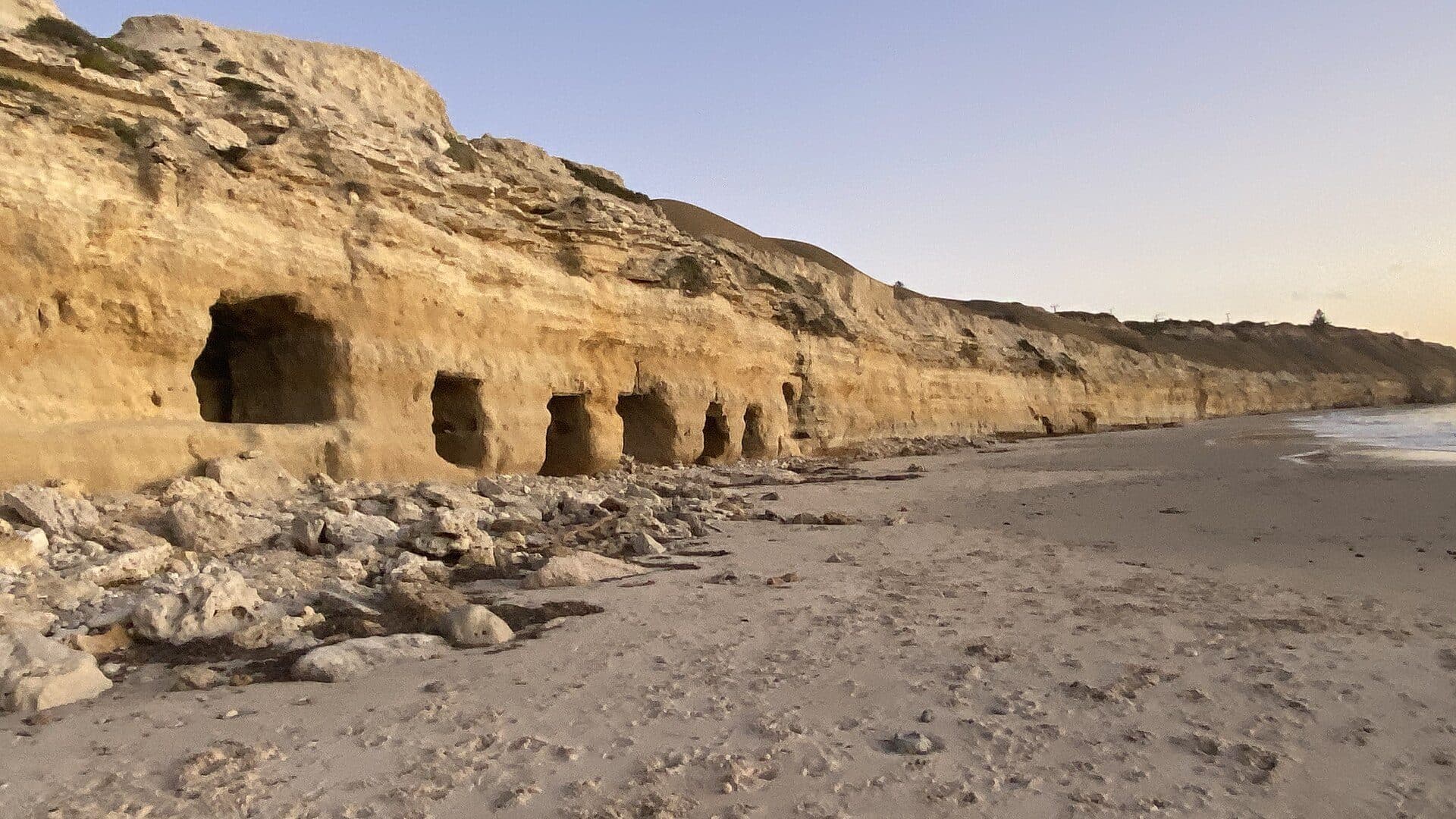
South of Adelaide, Port Willunga keeps its history standing in the water: the weathered pylons of the 1864 jetty that shipped grain out of McLaren Vale, hand-carved boat caves in the golden cliffs, and the wreck of the Star of Greece two hundred metres out. Fifty working years of cargo and breakage are where the glass comes from, and Adelaide collectors hunt this shore year round. Check the sand around the pylons at low tide, and mind that high tide reaches the caves. See the Port Willunga spot.
10. Nightcliff Beach, Darwin: The Top End Outpost
The rocky foreshore below the Nightcliff cliffs is Darwin's beachcombing shore and the Northern Territory's one documented glass spot, which earns it a place in this guide on rarity alone. A local collector turned up a piece of clear hobnail glass here, the patterned kind that began as a pressed-glass bowl. Work the rocks at low tide in the dry season, and treat it like any Top End shore: the hunting happens on the rocks, not in the water, because this is crocodile and stinger country. See the Nightcliff Beach spot.
The Beaches We Left Off, and Why
- Glenelg, Adelaide: the tram takes everyone there, and that is the problem. It is a groomed, heavily walked city beach, and the one first-hand sea glass report we found came back empty. Port Willunga, forty minutes south, is the better use of the trip.
- The national park shores: Australian national parks prohibit removing natural material, and rangers do not draw fine distinctions on a beach. Wilsons Promontory, the Royal National Park coast and their kind are for walking, not filling a jar.
- Marine sanctuary zones: marine parks in every state ban removal of material in their sanctuary zones. Rules vary by zone, so read the signs at the access point.
- Cairns to Port Douglas: there are reports of glass at Pebbly Beach and Trinity Beach, but they are thin, and a tropical-north beach between October and May is a stinger beach. We want a better-documented case before sending anyone that far.
What Sea Glass Colours to Expect in Australia
Australia runs on the world's standard palette: brown, green and white, the residue of a beer and bottle country. The accents are what make the individual beaches. Stockton is the outlier, with purples, teal, pink, cobalt and ultraviolet-reactive pieces on record. Robe adds seafoam and teal from its hotel-bottle dump years. Tasmania's long settlement history surfaces as occasional mauve and black glass old enough to predate Federation, and Fremantle's gravel pockets simply produce a better grade of the standards. Treat any colour promise with a little suspicion, ours included: several beaches here are documented for their glass but not their palette, and where a source named no colours we have listed none rather than invent a rainbow. For how colour maps to age, see our identification guide.
When to Hunt Sea Glass in Australia
Low tide is the universal rule, and the southern winter is the restocking season: the storms from June to August rework the beaches of NSW, Victoria and South Australia, so the calm morning after a blow is the best hunt of the year. On the bay beaches, Port Phillip, Moreton Bay, Long Bay, the tide matters more than the swell, since the water never gets violent enough to bury or grind the glass. The Top End flips the calendar: Nightcliff is a dry-season beach, May to October, when the box jellyfish are gone and the foreshore is walkable. Everything else from our general guide applies here: hunt the gravel pockets and the rock traps, not the open sand.
Can You Collect Sea Glass in Australia?
On ordinary town and suburban beaches, yes, without controversy: sea glass is rubbish the ocean improved, and picking it up is a small act of cleanup. The lines to respect are the protected places. National parks prohibit removing any material, marine parks ban collection in their sanctuary zones, and Indigenous heritage sites are off limits everywhere. One Sydney case shows how local the rules can get: Shelly Beach at Manly sits in a no-take aquatic reserve where empty shells are protected, even though the rules were written for marine life rather than glass. The habit that keeps you right everywhere is the same one we recommend in Can You Take Sea Glass Home?: read the signs at the access point, and when a place asks you not to take things, believe it.
Tips for Sea Glass Hunting in Australia
- Think calm water, not famous water. The surf beaches grind glass to sand. The finds are in the bays, harbours and old port towns.
- Hunt the gravel. At Leighton, Woody Point and Frankston the glass concentrates in gravel pockets and rock traps. Walk past the open sand.
- Work the winter. June to August storms restock the southern beaches. The morning after, at low tide, is the season's best window.
- Respect the Top End. At Nightcliff, stay on the rocks and out of the water, dry season only. No piece of glass is worth a crocodile's attention.
- Log what you find. Australia's map is young and the coast is enormous. A pinned find with a photo on Sea Glass Map tells the next collector which shores are producing.
Frequently asked questions
What is the best sea glass beach in Australia?
Stockton Beach in Newcastle has the strongest documented case: collectors report greens, seafoams, ambers and whites alongside purples, teal, cobalt and ultraviolet-reactive pieces. Glass Beach at Robe in South Australia, a former town dump turned glass cove, and Leighton Beach near Fremantle are the other standouts.
Does Australia have a glass beach?
Yes. Glass Beach at Robe, South Australia, properly called Factory Bay, is the clearest case: the cove below the Cape Dombey obelisk served as the town dump after the wars, and the hotels' green and brown bottles washed back in as sea glass. The cove is only accessible at low tide on a calm day.
Is it legal to collect sea glass in Australia?
On ordinary town and suburban beaches, yes. The exceptions are national parks, which prohibit removing any material, marine park sanctuary zones, and Indigenous heritage sites. A few local spots have their own rules, like Manly's Shelly Beach, a no-take aquatic reserve where shells are protected. Read the signs at the access point.
When is the best time to find sea glass in Australia?
Low tide, in the cooler months. Southern winter storms from June to August restock the beaches of NSW, Victoria and South Australia, so the calm morning after a blow is prime. In Darwin the calendar flips: Nightcliff is a dry-season hunt, May to October.
Where can I find sea glass in Sydney?
Malabar Beach in Long Bay is the reliable pick, with browns, whites, greens and the odd pale aqua. Shelly Beach at Manly, at the end of the Fairy Bower walk, is a sheltered cove where a local collector gathered two handfuls in twenty minutes, though it sits in a no-take reserve, so take glass only and leave the shells.
 Australia