10 Best Sea Glass Beaches in France (2026 Guide)
Victor
Founder of Sea Glass Map
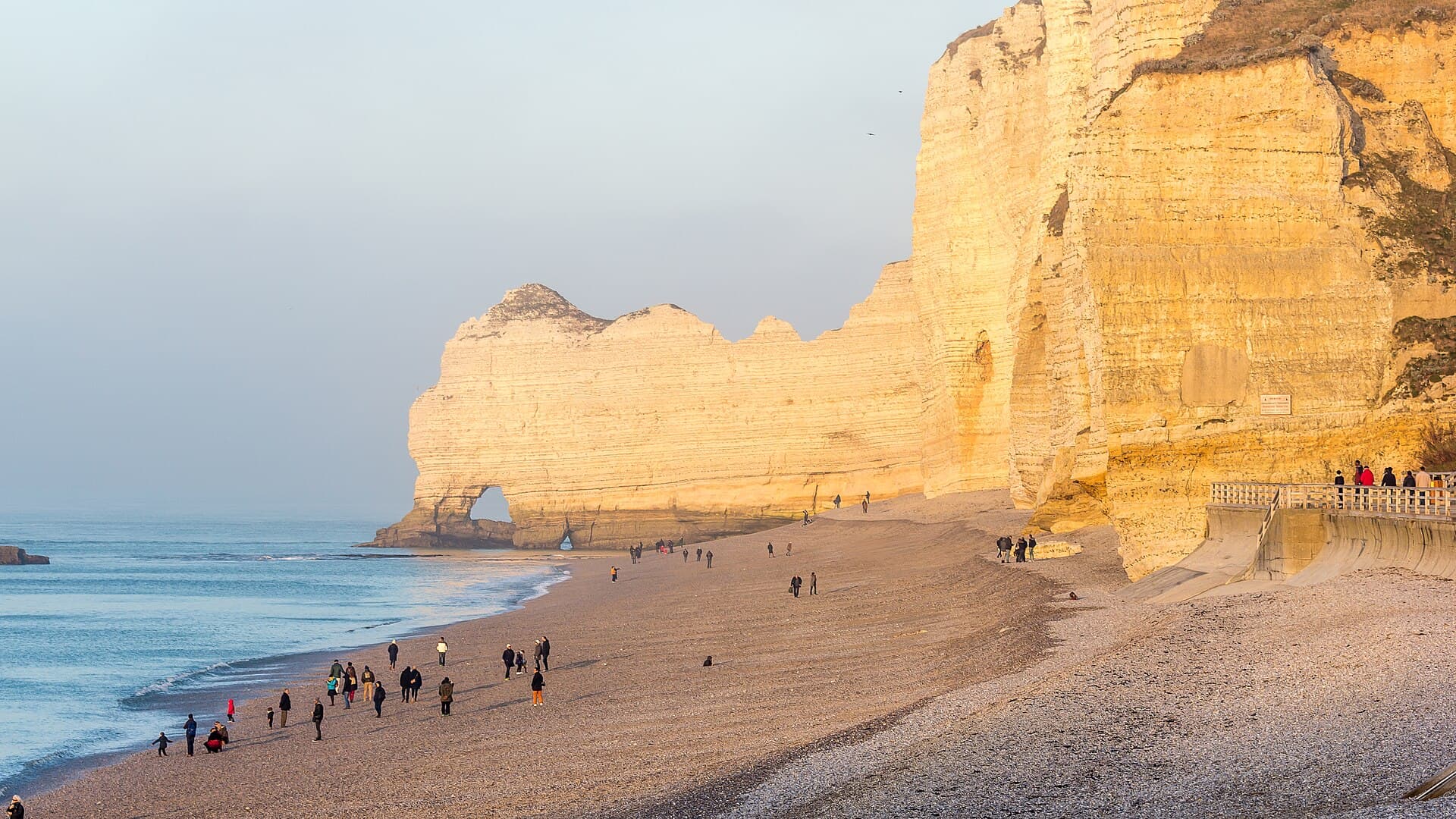
The best sea glass beaches in France are the city beaches of Saint-Malo in Brittany, where collectors pull dark 'pirate glass' from below the ramparts, Sangatte on the Côte d'Opale, where one local couple has weighed over 56 kilos of finds, and a string of Riviera beaches around Nice, Cap-d'Ail and the Gulf of Saint-Tropez that produce some of the most colourful glass in Europe. And France holds one genuine surprise: it is the rare country whose rules explicitly welcome sea glass collecting, because taking polished glass counts as cleaning the beach, while pocketing the pebbles it lies among can cost you a fine.
France earned its sea glass the same way it earned its history. Two thousand years of port towns from Saint-Malo to Marseille, wartime destruction and rebuilding along the Channel, and generations of seaside tips have fed the coasts with glass, and the Channel's huge tides and the Mediterranean's storm surf have been polishing it ever since. This guide covers the ten beaches with the strongest first-hand collector evidence we could find, plus what the community on Sea Glass Map is logging in France right now. If you hunt one of them, pin your finds so the next collector knows the coast is producing.
| Beach | Coast | Access | Documented colours | Best window |
|---|---|---|---|---|
| Saint-Malo (Bon-Secours & Éventail) | Brittany, Channel | In town, hunt low tide | Olive and black 'pirate glass', greens | Oct–Mar |
| Sangatte | Côte d'Opale, Channel | Easy, below the village dike | A bit of everything | Oct–Mar |
| Plage du Centenaire, Nice | Riviera | Easy, city beach | Green, white, cobalt, amber | After rough seas |
| Plage Marquet, Cap-d'Ail | Riviera | Easy, walk from Monaco | Green, white, brown, cobalt | After rough seas |
| Aigues Douces, Port-de-Bouc | Provence | Easy, urban beaches | Not yet documented | After storms |
| Sainte-Maxime | Riviera | Easy, town beaches | Not yet documented | Spring, after storms |
| San Peïre, Les Issambres | Riviera | Easy, plus a cove scramble | Green, turquoise, pale amber, black | After rough seas |
| Granville & Carolles | Normandy, Mont-Saint-Michel bay | Easy, huge tides | Cobalt, red, orange logged by collectors | Oct–Mar, low tide |
| Le Havre | Normandy | Easy, city beach | Greens | Oct–Mar |
| Plage de Sorlock, Mesquer | Southern Brittany | Easy, quiet | Not yet documented | Oct–Mar |
Why France Is a Sleeper for Sea Glass
Ask the international sea glass community about Europe and you will hear about Seaham and the Italian glass beaches long before anyone mentions France. That is a gap in the conversation, not on the coast. French collectors are quietly prolific: one Breton hunter documents a collection of fifty kilos gathered from the old port towns, with pieces he dates to the seventeenth century; a couple on the Côte d'Opale have logged every gram of their hauls for a decade; and jewellers from Royan to Marseille work entirely in glass from their own beaches. The raw material is all there. What France never had is a map of it, which is precisely the gap this guide, and the collectors pinning their finds on the map, set out to close.
1. Saint-Malo, Brittany: Pirate Glass Below the Ramparts
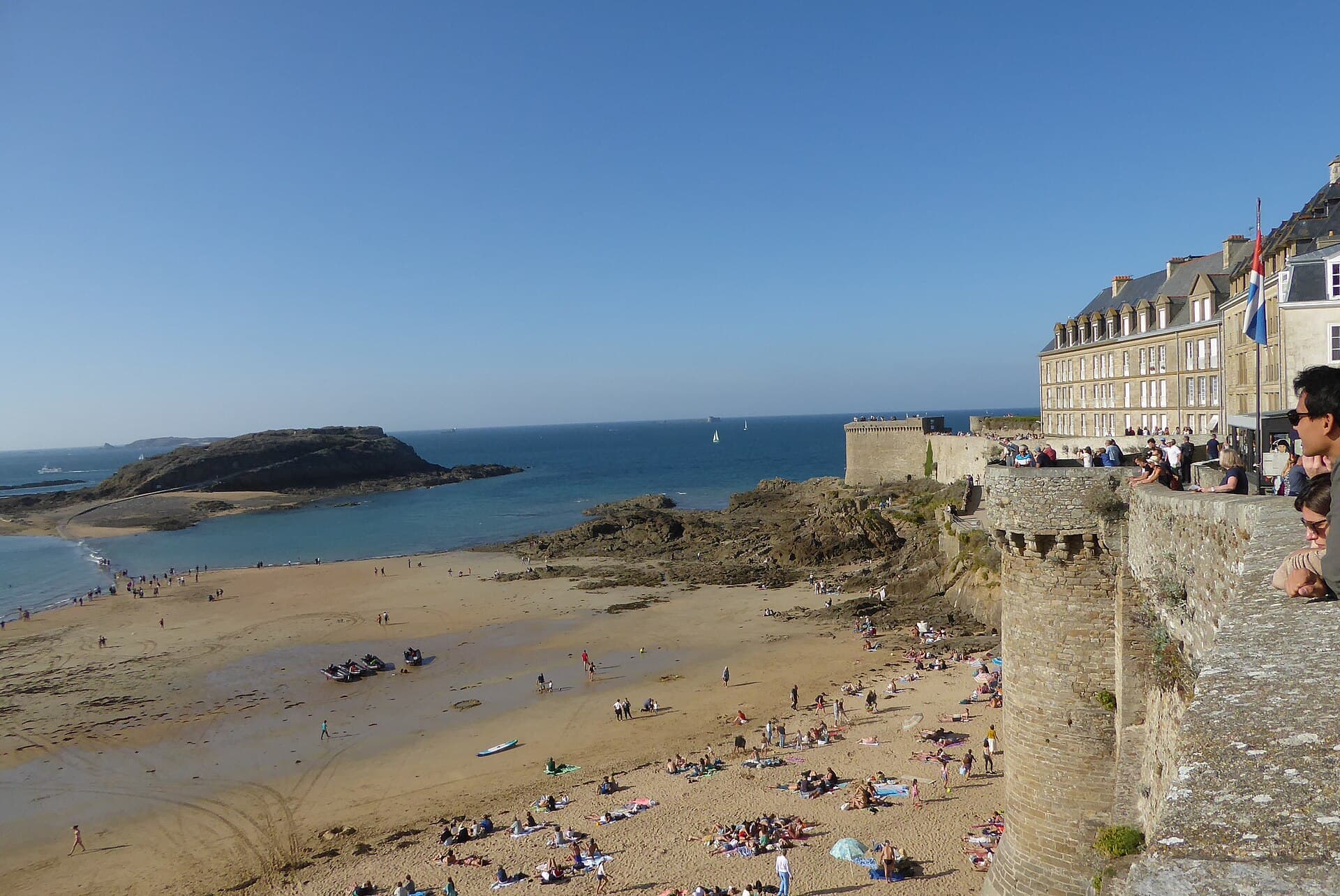
The walled corsair city is France's answer to the great historic glass beaches, and the only place in this guide where the finds can predate the French Revolution. Centuries of port life, sieges and shipwrecks seeded the beaches under the ramparts, and the resident collectors' signature find is what they call pirate glass: thick, dark olive and black bottle glass from the seventeenth and eighteenth centuries, turning up as heavy bases, kick-ups and necks. Hunt Plage de Bon-Secours on the west side of the walls, where a local collector who measures his best days in kilos sends anyone who asks, and the Plage de l'Éventail below the castle, where one visiting collector reported around a hundred pieces an hour at low tide. The long Grande Plage du Sillon next door has been called a sea glass haven by visitors too. One rule everywhere here: the tide decides. The range is among the biggest in Europe, the glass hides in the rock traps, and the beaches all but disappear at high water.
2. Sangatte, Côte d'Opale: The Weighed-Out Beach
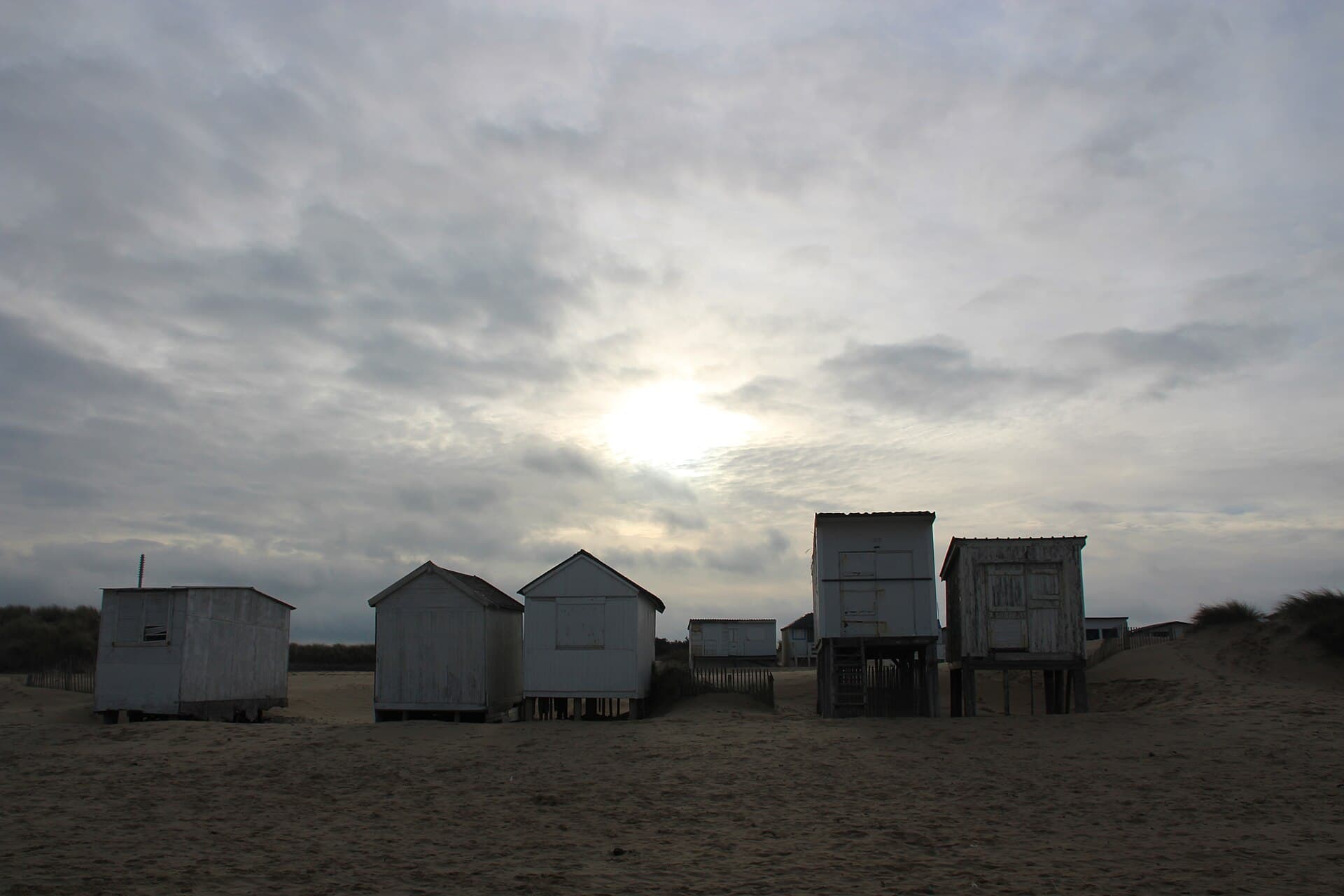
No French beach has better bookkeeping. A local couple has collected Sangatte since 2014 and weighs every haul: more than 22 kilos in their best year, over 56 kilos all told, bottle bottoms and wired safety glass among the everyday colours. The beach itself is a long ribbon of Channel sand below the village dike, a few minutes from Calais and a day trip from the UK. Honesty requires the caveat: their recent tallies are far leaner than the glory years, so treat Sangatte as a real but working beach, best after the autumn and winter storms that redo the coast every year. See the Plage de Sangatte spot.
3. Plage du Centenaire, Nice: The Riviera's Proven Producer
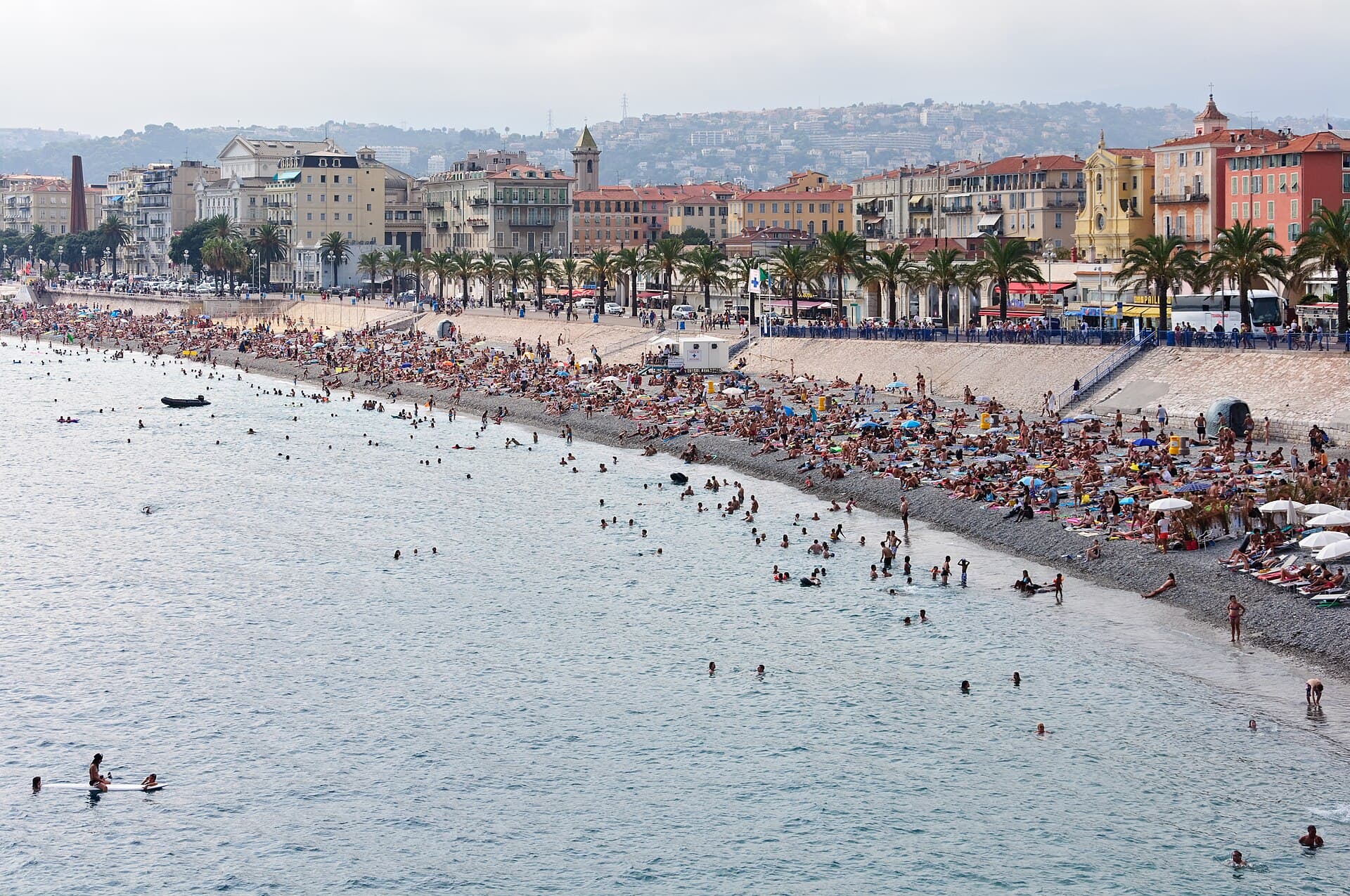
No sea glass spot in France has more independent collector reports than the pebble beaches at the eastern end of Nice's Promenade des Anglais. Visiting collectors have logged a hundred pieces in under an hour here: mostly greens, with white, cobalt and amber, and the lucky ones report orange and even a red. The stretch east of Avenue Gustave V is the one collectors name again and again, and the harvest continues toward the old port. The Riviera has almost no tide, so the sea's mood is everything: locals hunt from mid-March to June and again in early autumn, after rough seas have turned the pebbles over. Bring shoes you can wade in; the pebbles are unkind to bare feet. See the Centenaire Plage, Nice spot.
4. Plage Marquet, Cap-d'Ail: An Hour From Monaco, Sixty Pieces
A pebbly harbour beach one headland west of Monaco, Plage Marquet earned its place with one of the most precise reports in the Odyssey Sea Glass archive: around sixty well-tumbled pieces in twenty minutes, half of them green, with white, a few browns and a handful of small cobalt. The reporter's tip was charmingly specific: the glass concentrated in front of the beach restaurant with the blue chairs. It makes a perfect hunt for anyone based in Monaco or Nice, reachable by coastal path and train. See the Plage Marquet, Cap-d'Ail spot.
5. Plage des Aigues Douces, Port-de-Bouc: The 2025 Discovery
The most exciting recent report in France comes from an unglamorous corner of Provence. The small urban beaches facing the seventeenth-century Fort de Bouc, where the Canal de Caronte meets the Golfe de Fos, stunned a visiting collector in early 2025: more glass than they could pick up, let alone carry, some of it still embedded in the beach. A second collector, years earlier, kept a jar of Martigues glass, so the signal is not a one-off. This is industrial-harbour glass in an industrial setting, the Provençal cousin of England's factory beaches, and it is barely known even to French collectors. See the Plage des Aigues Douces, Port-de-Bouc spot.
6. Sainte-Maxime: The Moody One
Across the gulf from Saint-Tropez, Sainte-Maxime has one of the strangest track records in France: three separate collectors report fantastic hauls, and one of them returned the next year to the same beach and found nothing at all. That is the Mediterranean in miniature. With no tide to restock the shore on schedule, everything depends on what the last blow stirred up. Come in spring or after rough weather, treat a good day as a gift, and if it is bare, Les Issambres is ten minutes away.
7. Plage San Peïre, Les Issambres: Turquoise and Black Glass
The main beach of Les Issambres delivered one of the most detailed first-hand accounts on the French Mediterranean: glass genuinely plentiful, and honest, too, since much of it is rough green craft grade. The rewards for patience were the colours: turquoise, a light amber so pale it read almost yellow, and old black glass that only shows its deep olive against the sun. The small cove a scramble to the south of the main beach produced as well, straight out of the water. See the Plage San Peïre, Les Issambres spot.
8. Granville and Carolles: The Bay of Mont-Saint-Michel
This is the chapter the community wrote. Within days of Sea Glass Map opening up, collectors logged Le Herel at Granville with cobalt, red and orange among the finds, and the neighbouring harbour of Barfleur further up the Cotentin. One bay south, a visiting beachcomber reported Carolles-Plage strewn with shells and sea glass at low water. The engine here is the bay of Mont-Saint-Michel itself, home to some of the largest tides on the planet: twice a day the sea retreats across enormous flats and rewrites the strandlines. Follow the falling tide, and mind it on the turn; it comes back famously fast.
9. Le Havre: Glass With a Backstory
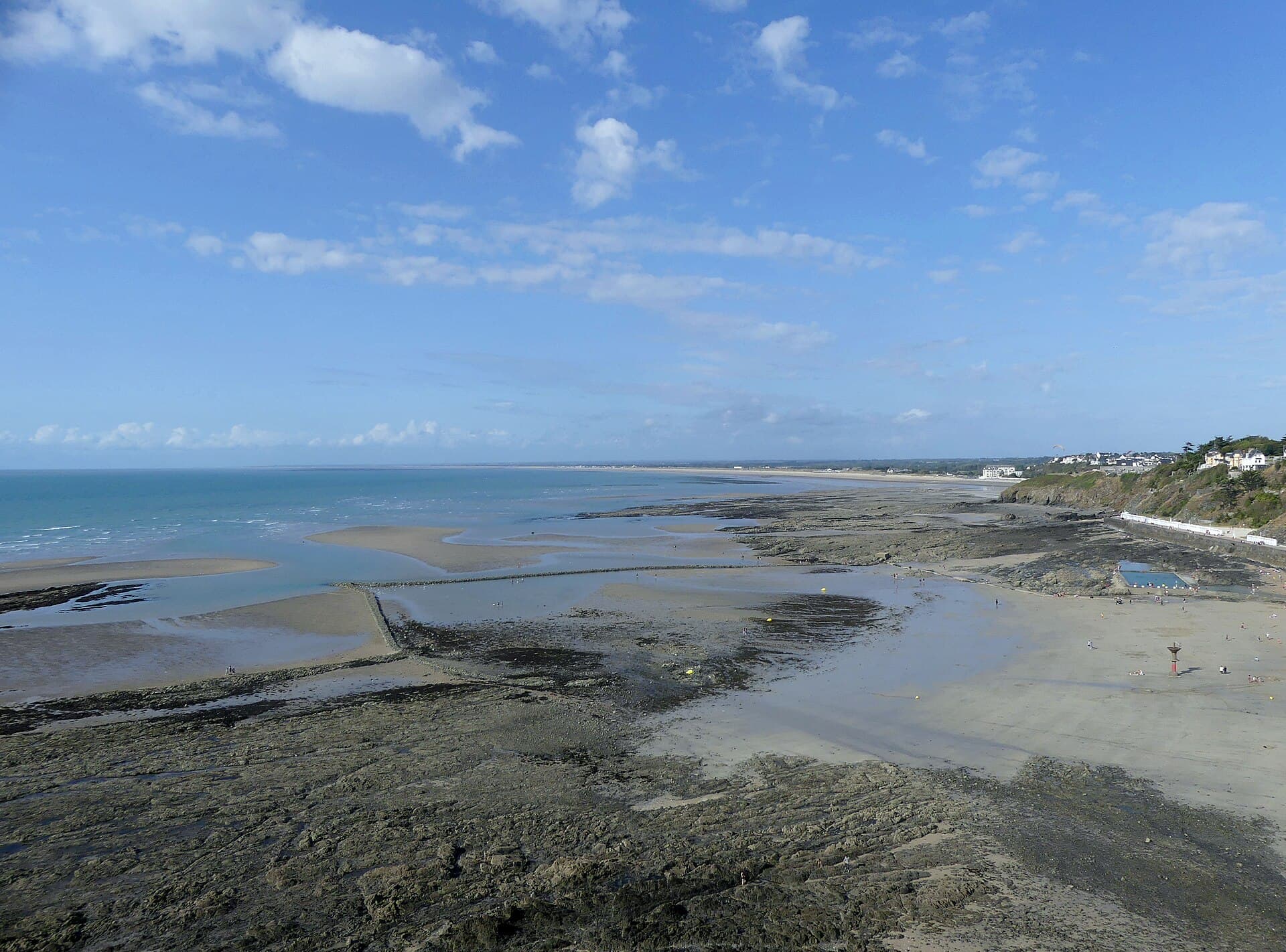
The long pebble beach of Le Havre is a proper city hunt, minutes from the UNESCO-listed rebuilt centre, and locals find frosted greens on an ordinary walk to work. The story behind it is sobering: from 1945 to 1999 the city tipped its rubble and refuse, the wreckage of a town obliterated in 1944, over the cliffs at Dollemard just up the coast, and the sea has been redistributing it ever since. A word of caution and of conscience: the debris field directly below the Dollemard cliffs is no place to comb (it is rough ground, a protected Natura 2000 site, and a clean-up operation has been underway since 2025), and as that remediation advances, the glass supply here will slowly fade. Enjoy the city beach; it is the right place for this glass to be found and taken home.
10. Plage de Sorlock, Mesquer: A Collector's Gift
Sea glass hunters guard their spots, which is what makes Sorlock special: one of the most prolific French collectors on the international forums, whose southern Brittany finds run deep into past centuries, published the exact location of this quiet sandy beach on the Pointe de Merquel himself. It faces the salt marshes of Guérande across the bay, it sees a fraction of the footfall of the resort coasts, and it is the right kind of place to learn what Breton glass looks like: aged, frosted thick, and worth the drive. See the Plage de Sorlock, Mesquer spot.
The Beaches We Left Off, and Why
- Omaha Beach, Normandy: See the Omaha Beach, Vierville-sur-Mer spot, and collectors do find small, well-frosted pieces near the rocks, but the honest quantity is modest, and the place asks for a different kind of attention anyway.
- The Côte Bleue (Carro, Sainte-Croix): often cited, but every citation we traced led back to photo captions rather than anyone actually reporting finds. Needs a first-hand report; if you have one, pin it.
- Corsica, Biarritz, Royan, Oléron: all have credible first-hand accounts of good glass, and not one of them names a beach. The collectors are keeping their spots, which is their right; these coasts are blank on the map until someone shares.
- The Dollemard cliffs, Le Havre: never comb directly below the old landfill. Protected site, unstable debris, active clean-up works.
What Sea Glass Colours to Expect in France
France splits into two palettes. The Channel and Atlantic coasts run on history: everyday whites, greens and browns, with Saint-Malo's dark olive and black pirate glass at the antique end of the spectrum, and the huge-tide beaches of Normandy turning up the occasional cobalt, red or orange for the collectors logging them on the map. The Mediterranean runs on variety: Riviera reports lean green but reach turquoise, amber, cobalt and, rarely, orange and red. Treat any beach-by-beach colour promise with suspicion (ours included): the honest claims above come from collectors reporting one beach at a time, and 'not yet documented' in our table means exactly that, not 'nothing there'. For how colour maps to age and origin, see our identification guide.
When to Hunt Sea Glass in France
Two seas, two calendars. On the Channel and Atlantic, France plays by British rules: October to March, after storms with onshore wind, at low tide on a big spring-tide day, and first thing in the morning. The tides are the gift here; Saint-Malo and the bay of Mont-Saint-Michel uncover ground twice a day that smaller seas never show you. The Mediterranean has virtually no tide, so storms do all the work: Riviera collectors swear by mid-March to June and September to October, once rough seas have churned the pebbles, and skip the flat calm of high summer, when the beaches are at their busiest and their barest. Everything else from our general guide applies: hunt the pebble bands and rock traps, not the open sand.
Is It Legal to Collect Sea Glass in France?
Yes, and France is refreshingly clear about it, in a way no other country we have researched matches. The official public-administration guidance states that collecting sea-polished glass is permitted because it contributes to keeping the beach clean. The same guidance is equally clear about what you may not take: pebbles, sand and shells are protected as part of the shoreline's natural defences, and removing them is punishable with fines that can reach 1,500 euros, a rule that is actually enforced (Étretat fines pebble-takers per stone). So the French position is the exact inverse of what most visitors assume: take all the glass you like, and leave every pebble where it lies. Two footnotes: protected areas such as nature reserves and national park shores can restrict removing anything at all, so read the signs, and in Corsica the rules on removing natural material are policed with particular zeal. When in doubt, glass in the pocket, everything else on the beach.
Tips for Sea Glass Hunting in France
- Pick your sea by season. Channel and Atlantic from October to March after storms; Mediterranean in spring and early autumn after rough seas.
- On the Channel, chase the spring tides. The low-water lines at Saint-Malo and Granville expose ground most seas never uncover. Check a tide table (an annuaire des marées) and follow the water out.
- Take the glass, leave the pebbles. In France this is not just etiquette, it is the law, and it is the best-natured law in the hobby.
- Read the beach like a local. Glass gathers in the shingle bands, the rock traps below headlands and harbour walls, and along the strandline, not on open sand.
- Log what you find. France's map is young and its collectors have been quiet: a pinned find with a photo on Sea Glass Map does more for the next hunter here than anywhere else in Europe.
Frequently asked questions
What is the best sea glass beach in France?
Saint-Malo makes the strongest overall claim: centuries-old 'pirate glass' below the ramparts, reports of a hundred pieces an hour at low tide, and several distinct beaches around the walled city. For sheer colour variety, the Riviera beaches around Nice are the best-documented in the country, and Sangatte on the Côte d'Opale has a decade of weighed hauls behind it.
Is it legal to collect sea glass in France?
Yes. Official French guidance explicitly permits collecting sea-polished glass because it counts as cleaning the beach. The protected things are the pebbles, sand and shells, which may not be removed and can carry fines up to 1,500 euros. Protected areas like nature reserves can restrict everything, so check signs locally.
When is the best time to find sea glass in France?
On the Channel and Atlantic coasts, October to March, at low tide after a storm with onshore wind, and ideally on a spring tide. On the Mediterranean, where there is almost no tide, hunt from mid-March to June and in September and October, after rough seas have turned the beaches over.
Is there sea glass in the Mediterranean?
Plenty. The French Riviera between Nice and the Gulf of Saint-Tropez is one of the better-documented sea glass coasts in Europe, with collector reports at Nice, Cap-d'Ail, Sainte-Maxime and Les Issambres. Because the Mediterranean has virtually no tide, finds depend on storms rather than tide tables, which makes the beaches moodier than Atlantic ones.
Which sea glass beaches are closest to Paris?
The Normandy and Channel coasts are the realistic day trip: Le Havre is about two hours from Paris by train with a productive city beach, and Dieppe and the alabaster coast are similar. Sangatte near Calais and the beaches of the bay of Mont-Saint-Michel reward a weekend rather than a day.
 France