18 Best Sea Glass Beaches in the US: State-by-State Guide (2026)
Victor
Founder of Sea Glass Map
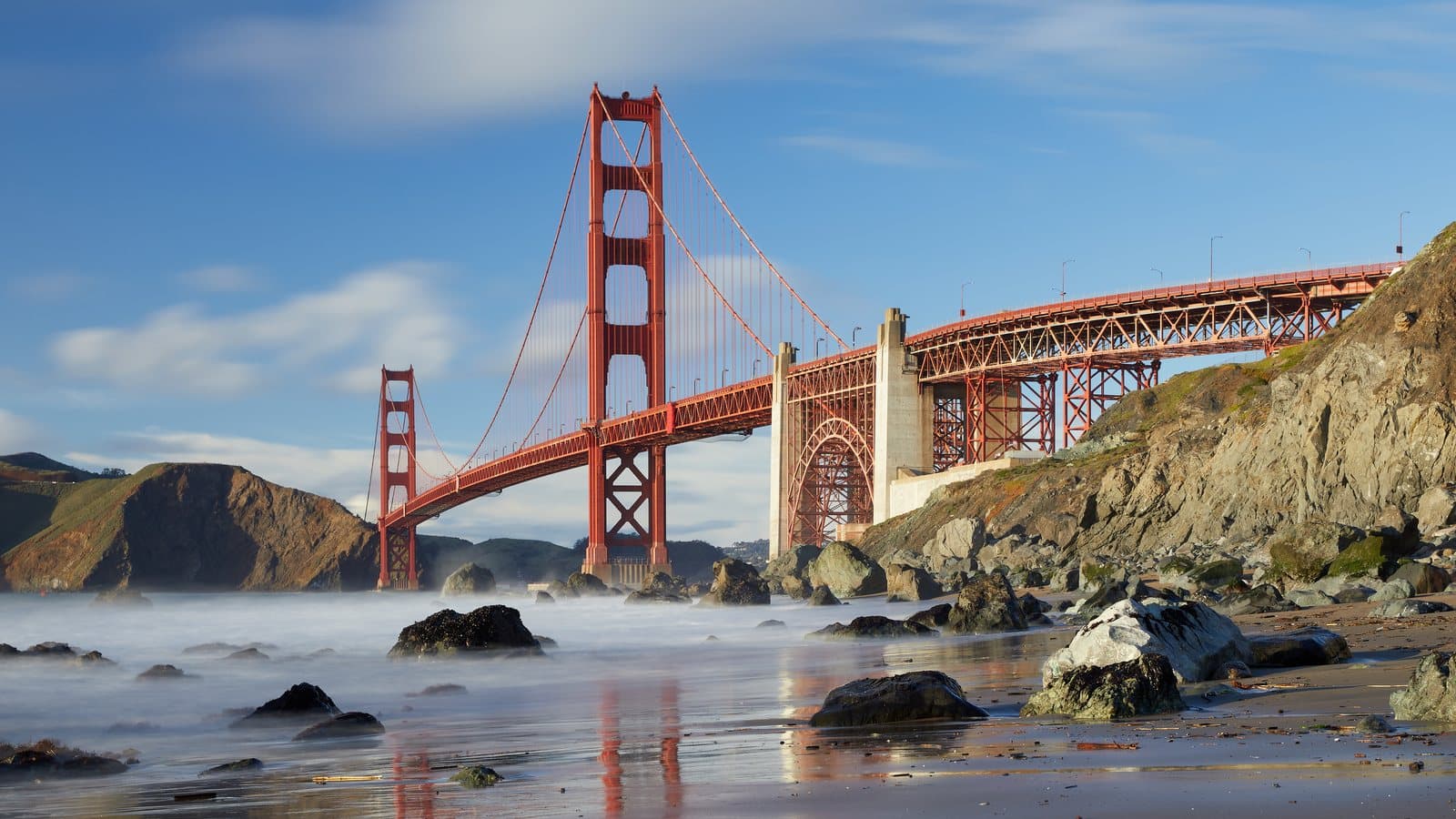
The best sea glass beaches in the US are Glass Beach at Fort Bragg, California (the world's most famous, now a look-but-don't-take state park), Port Townsend's Glass Beach in Washington, a long, tide-ruled hike that still pays in cobalt and marbles, Spectacle Island in Boston Harbor, and, for collectors who can keep what they find, Simmons Island in Kenosha, Wisconsin and the Texas City Dike on Galveston Bay. Beach glass hunting is at its best from late autumn to early spring, at low tide after an onshore storm. The rules matter too: America's two most famous glass beaches both prohibit collecting.
This guide covers 18 beaches across 14 states, all verified against collector reports and local sources, each with what you can realistically expect and what the land manager says about taking glass home. Every one of them is pinned on Sea Glass Map, where collectors log what a beach is actually producing right now. One honest note up front: American sea glass is a finite, fading resource. Several famous beaches on this list are visibly thinner than they were a decade ago, which is why taking a few pieces and leaving the rest is part of the deal.
| Beach | State | Why it's good | Take glass? |
|---|---|---|---|
| Glass Beach, Fort Bragg | CA | The world-famous glass cove | No (state park) |
| Davenport Beach | CA | Multicolor art glass | Look first: hazardous |
| Glass Beach, Port Townsend | WA | Cobalt, marbles, solitude | Yes |
| Glass Beach, ʻEleʻele | HI | A cautionary sight | Please leave it |
| Spectacle Island | MA | Boston's dump, now a park | No (park rule) |
| Pavilion Beach, Gloucester | MA | Working-harbor glass | Yes |
| East End Beach, Portland | ME | Maine's everyday hunt | Yes |
| Bar Island Bar, Bar Harbor | ME | Low-tide gravel bar | Town side only |
| Rocky Point, Warwick | RI | Amusement-park era glass | Yes |
| Bradley Point, West Haven | CT | Old Savin Rock shore | Yes |
| Sunset Beach, Cape May Point | NJ | Delaware Bay currents | Yes |
| Van's Beach, Leland | MI | 'Leland Blue' slag | Yes, gently |
| Presque Isle, Erie | PA | Collecting expressly allowed | Yes |
| Headlands Beach, Mentor | OH | Lake Erie's long catch | Yes |
| Walnut Beach, Ashtabula | OH | Festival town | Yes |
| Simmons Island, Kenosha | WI | Lake Michigan's best | Yes |
| Texas City Dike | TX | The Gulf's honey hole | Yes |
| Jensen Beach | FL | Florida's honest option | Yes |
Why America's Beaches Are Full of Glass
By 1917, American factories were turning out over three billion bottles a year, and for most of the century that followed, the way a coastal town got rid of its trash was simple: over the cliff, into the bay, onto the shore. Fort Bragg pushed three successive dumps into the Pacific; Port Townsend tipped its refuse off a hundred-foot bluff; Boston barged its garbage to an island in the harbor. The ocean has spent the decades since grinding that carelessness into something lovely. Every frosted shard still carries its history, if you know how to read it.
West Coast & Hawaii
1. Glass Beach, Fort Bragg (California)
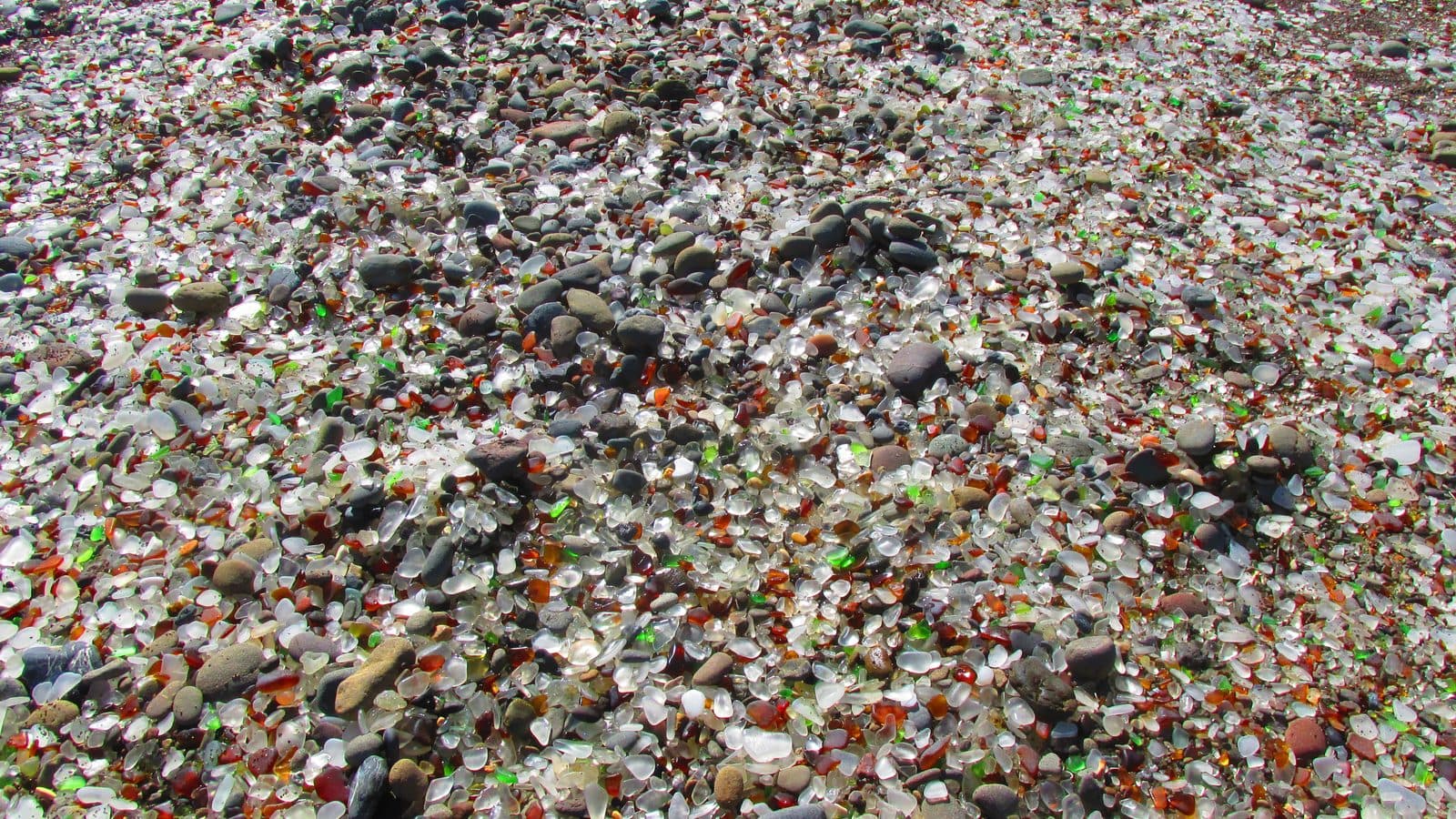
The most famous sea glass site on earth, and the first thing to know is that collecting is prohibited: the celebrated cove has been part of MacKerricher State Park since 2002, rangers patrol it, and California State Parks asks visitors not to take glass anywhere on its coast. Three town dumps went over these bluffs between 1906 and 1967, and even 'greatly diminished', the park's own word, the shingle of frosted color at low tide is worth the trip on its own. Come for the spectacle, and read the full story of the rules before you go. See the Glass Beach, Fort Bragg spot.
2. Davenport Beach (California)
Half an hour north of Santa Cruz, Davenport is unlike anywhere else in America: in the 1970s a flood washed an art-glass studio's waste down San Vicente Creek, so the sea returns multicolored nuggets, reds and oranges and pinks that never existed as bottles. It is also genuinely hazardous: the productive zone sits below a steep, crumbling bluff in serious surf, and injuries are commonplace. Treat it as a spectacle with a bonus, never a swim. See the Davenport Beach spot.
3. Glass Beach, Port Townsend (Washington)
The best legal sea glass hunt in America makes you earn it: a nine-kilometer round trip along the shore from North Beach County Park to McCurdy Point, under bluffs the town used as its dump until 1962. The reward is glass in quantity: cobalt in numbers most beaches never produce, marbles, stoppers, old china. The tide is the gatekeeper: the beach pinches to nothing against the cliffs at high water, so go out and back on a falling tide, and start from the county park (the point's road is private). See the Glass Beach, Port Townsend spot.
4. Glass Beach, ʻEleʻele (Kauai, Hawaii)
Kauai's Glass Beach is on this list as a lesson as much as a destination. A century of industrial dumping near Port Allen once paved this little cove in glass; by late 2024, local reporting put it at more than 99 percent gone, carried away a jarful at a time. Hand-lettered signs now ask visitors to leave what remains. Go if you're passing, look hard at what a beach becomes when everyone takes 'just a few', and leave your pockets empty. See the Glass Beach, Port Allen, Kauai spot.
New England
5. Spectacle Island, Boston Harbor (Massachusetts)
A short ferry from Long Wharf lands you on Boston's old municipal dump, capped and landscaped into a harbor island park, with beaches so thick in sea glass and old china that the park wrote the glass into its own rules: everything stays, and rangers mean it. As a place to *see* sea glass in abundance, and to teach kids why it exists at all, nothing on the East Coast comes close. Ferries run May to October. See the Spectacle Island spot.
6. Pavilion Beach, Gloucester (Massachusetts)
America's oldest fishing port keeps a rocky pocket beach right on its working harbor, and two centuries of boat traffic have salted its shingle with glass. It's an easy, honest town-beach hunt: park along Western Avenue, wait for low tide, and work the pebble bands. See the Pavilion Beach, Gloucester spot.
7. East End Beach, Portland (Maine)
Portland's town beach below the Eastern Promenade is Maine's most dependable everyday hunt. A century of Casco Bay harbor traffic feeds the rocky end with whites, ambers, greens and the occasional soft blue. Locals treat a slow low-tide walk here as a lunch break; three pounds in an afternoon has been done. See the East End Beach, Portland spot.
8. Bar Island Bar, Bar Harbor (Maine)
Twice a day the sea pulls back and a gravel bar rises out of Frenchman Bay, joining Bar Harbor to Bar Island, and its flanks collect the old town waterfront's glass. You get roughly ninety minutes either side of low water before the bar drowns again, so check the tide table and don't push it. One boundary matters: Bar Island itself is Acadia National Park, where removing anything is prohibited, so hunt the town side. See the Bar Island Bar, Bar Harbor spot.
9. Rocky Point State Park, Warwick (Rhode Island)
For over a century this headland was Rocky Point Amusement Park; the rides closed in 1995 and Narragansett Bay has been handing back the park's glass ever since the shoreline reopened. The mother-lode years are over, but a patient walk after a blow still turns up aqua, seafoam and lavender among the standards. See the Rocky Point State Park, Warwick spot.
10. Bradley Point, West Haven (Connecticut)
The shore walk at Bradley Point crosses the ghost of Savin Rock amusement park, Connecticut's Coney Island from the 1870s to the 1960s. Long Island Sound is a gentle tumbler, so this is a few-good-pieces-an-hour beach rather than a haul, but they come well frosted. Keep off Sandy Point across the harbor; it's a nesting-bird sanctuary. See the Bradley Point, West Haven spot.
Mid-Atlantic
11. Sunset Beach, Cape May Point (New Jersey)
The tip of Cape May is famous for its 'diamonds', and it's worth being clear about what those are: quartz pebbles polished by Delaware Bay, not sea glass. The same currents that concentrate the quartz carry real glass onto the same sand, though, in front of the concrete wreck of the SS Atlantus. Summer crowds strip it daily; go on a winter morning. See the Sunset Beach, Cape May Point spot.
Great Lakes
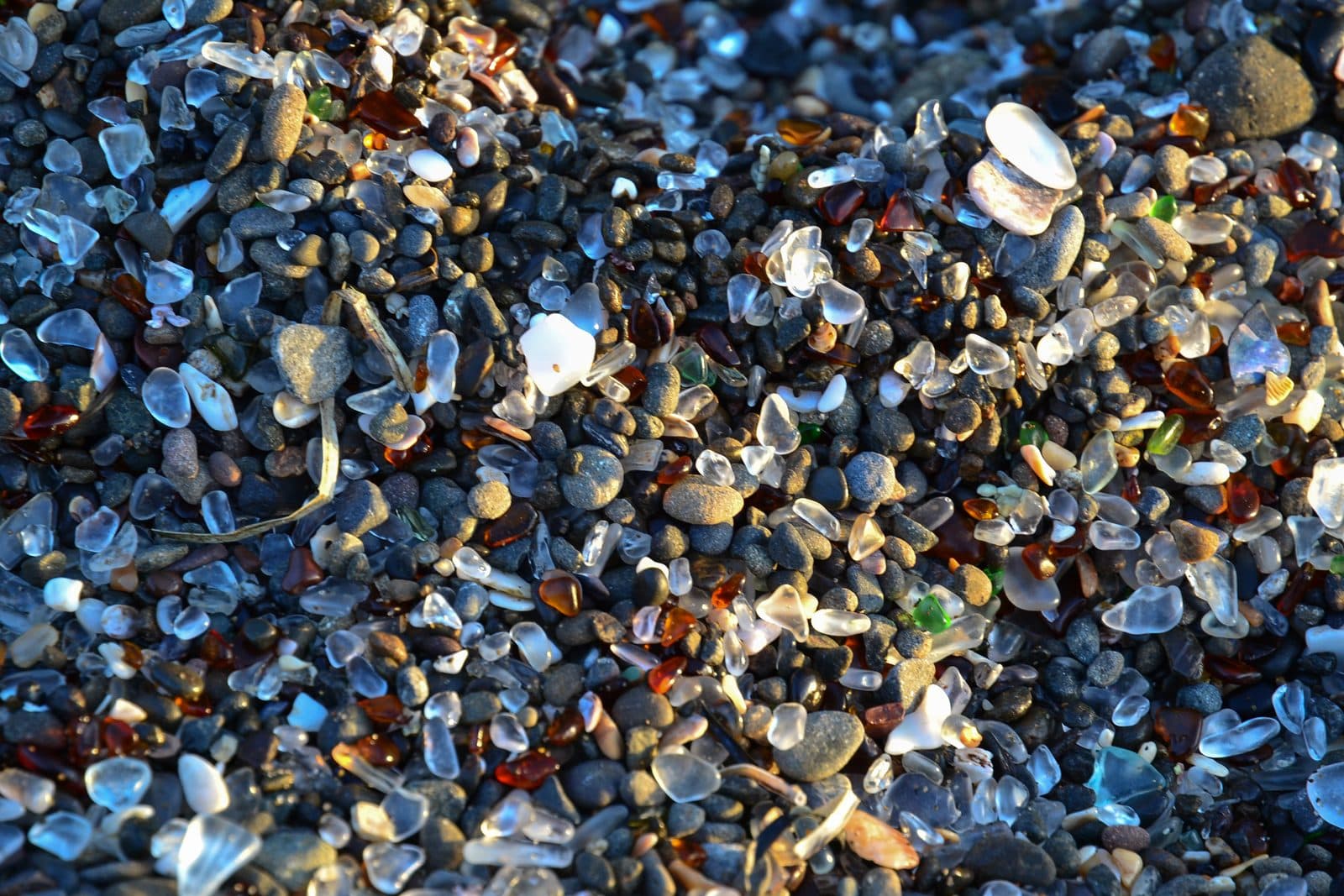
The Great Lakes are beach glass country: same hobby, fresh water. Two things change: there's no meaningful tide (wind and storms do all the restocking), and the glass frosts more slowly, so prime pieces are older. The lakes' industrial-port history makes up for it. For hunting technique that translates to the lakes, see our guide to finding sea glass.
12. Van's Beach, Leland (Michigan)
Leland's treasure is not bottle glass at all. From 1870 to 1884 an iron smelter dumped its slag into the harbor, and Lake Michigan has spent 140 years tumbling it into 'Leland Blue': matte blue, purple-grey and green stones, often laced with tiny bubbles. One furnace made all of it and no one is making more, so take a piece and leave the rest. Bigger stones surface in the storm months, October to April. See the Van's Beach, Leland spot.
13. Presque Isle State Park, Erie (Pennsylvania)
A rarity worth celebrating: a park that explicitly allows beach glass collecting. Glass is man-made, so taking it is treated as cleanup, and the park even runs beach-glass craft workshops. Lake Erie buried a century of the city's bottles offshore and returns them steadily, though the easy stretches get picked over; the rockier southwest beaches after a storm are the play. See the Presque Isle State Park, Erie spot.
14. Headlands Beach State Park, Mentor (Ohio)
Ohio's longest natural beach sits at the industrial mouth of the Grand River and works like a net for Lake Erie's dumping-era glass. Walk east toward the Fairport Harbor breakwater lighthouse and read the pebble lines: whites and greens, aqua, the occasional cobalt. It rewards patience and off-season visits. See the Headlands Beach State Park, Mentor spot.
15. Walnut Beach, Ashtabula (Ohio)
Ashtabula loaded coal and iron ore for a hundred years, and the beach west of its breakwater still pays out harbor glass on a slow low-water walk. The town has made the hobby its own: the Ashtabula Harbor Beach Glass Festival has filled the harbor district every June since 2010. See the Walnut Beach, Ashtabula spot.
16. Simmons Island Beach, Kenosha (Wisconsin)
The strongest beach-glass shore on Lake Michigan, fed by a factory-era lakefront and early city dumps. A patient morning here still fills a small pouch: ambers and whites alongside cobalt, teal and lavender, with reds and even orange reported by collectors who put the winters in. Kenosha's own visitor guide cheerfully tells you where to look, which says everything about how this town regards the hobby. See the Simmons Island Beach, Kenosha spot.
The South
17. Texas City Dike (Texas)
The Gulf's honey hole is a five-mile man-made finger poking into Galveston Bay. A century of ship-channel traffic and early-1900s bayside dumping washes glass onto the rocks of the dike's north side: whites, ambers and greens with aqua, lavender and now and then a red. Drive the dike road, pull off where the rocks look promising, and mind your footing on the riprap. See the Texas City Dike spot.
18. Jensen Beach, Hutchinson Island (Florida)
Florida is shelling country, and Jensen Beach is its one honest sea glass option: ordinary Atlantic bottle glass, frosted properly by coarse sand and real surf. Expect a piece here and there on a heads-down walk, best at low tide after onshore wind. See the Jensen Beach, Hutchinson Island spot.
Famous Beaches That Didn't Make the List
- Dead Horse Bay, Brooklyn NY: the legendary 'Glass Bottle Beach' has been fenced off since 2020 for radiological contamination and remains closed. Don't plan a trip.
- Lincoln City, Oregon: the famous 'Finders Keepers' glass floats are art pieces deliberately hidden by volunteers, not sea glass.
- Sanibel & Captiva, Florida: world-class for shells; the sea glass claims are copy-paste listicles.
- Rialto and Ruby Beach, Washington: agate and driftwood beauties inside a national park, not glass beaches.
- Benicia, California: a legal city-beach hunt on San Francisco Bay, but a modest, picked-over one these days, with much of the glass young and half-frosted. We cover it in our California guide.
When to Hunt, and How to Do It Right
Everything in our how-to guide applies doubly in the US: winter over summer, a falling tide over a rising one, the day after an onshore storm over a calm week, pebble patches over open sand. The American lesson, written on two coasts, is about restraint. Fort Bragg and Kauai are what a glass beach becomes after decades of full pockets. Take a little, leave plenty, and when you find a producing beach, log it on the map so the community's picture of the coast stays honest.
Frequently asked questions
What is the best sea glass beach in the US?
Glass Beach at Fort Bragg, California is the most famous, but collecting there is prohibited: it sits inside MacKerricher State Park. For collectors, the standouts are Glass Beach near Port Townsend, Washington (a long tide-dependent hike rich in cobalt and marbles), Simmons Island in Kenosha, Wisconsin on Lake Michigan, and the Texas City Dike on Galveston Bay.
Is Glass Beach in Fort Bragg worth visiting if you can't collect?
Yes, at low tide. Even diminished from its heyday, the coves still read as a shoreline made of glass, and the walk through MacKerricher State Park makes a fine morning either way. Go to look and photograph, and leave the glass where it lies; the collecting rules are covered beach by beach in our rules guide.
Where can you find beach glass on the Great Lakes?
The best-documented spots are Simmons Island Beach in Kenosha, Wisconsin and Presque Isle State Park in Erie, Pennsylvania, where collecting is explicitly allowed, plus Headlands Beach and Walnut Beach on Ohio's Lake Erie shore, and Van's Beach in Leland, Michigan for the famous 'Leland Blue' smelter slag. There are no tides on the lakes: storms do the restocking, so hunt after big autumn and winter blows.
Is Dead Horse Bay in Brooklyn still open for sea glass?
No. Dead Horse Bay's 'Glass Bottle Beach' has been closed and fenced since August 2020 because of radiological contamination discovered in the old landfill, and the federal cleanup investigation is still under way. It should not be visited.
When is the best time to find sea glass in the US?
Late autumn through early spring, at low tide (ideally a falling spring tide), a day or two after a storm with onshore winds. Summer beaches are crowded and picked over, and on most coasts the winter waves strip away the sand that buries the gravel where glass hides. On the Great Lakes, ignore tides and follow the storms.

 United States