10 Best Sea Glass Beaches in Italy (2026 Guide)
Victor
Founder of Sea Glass Map
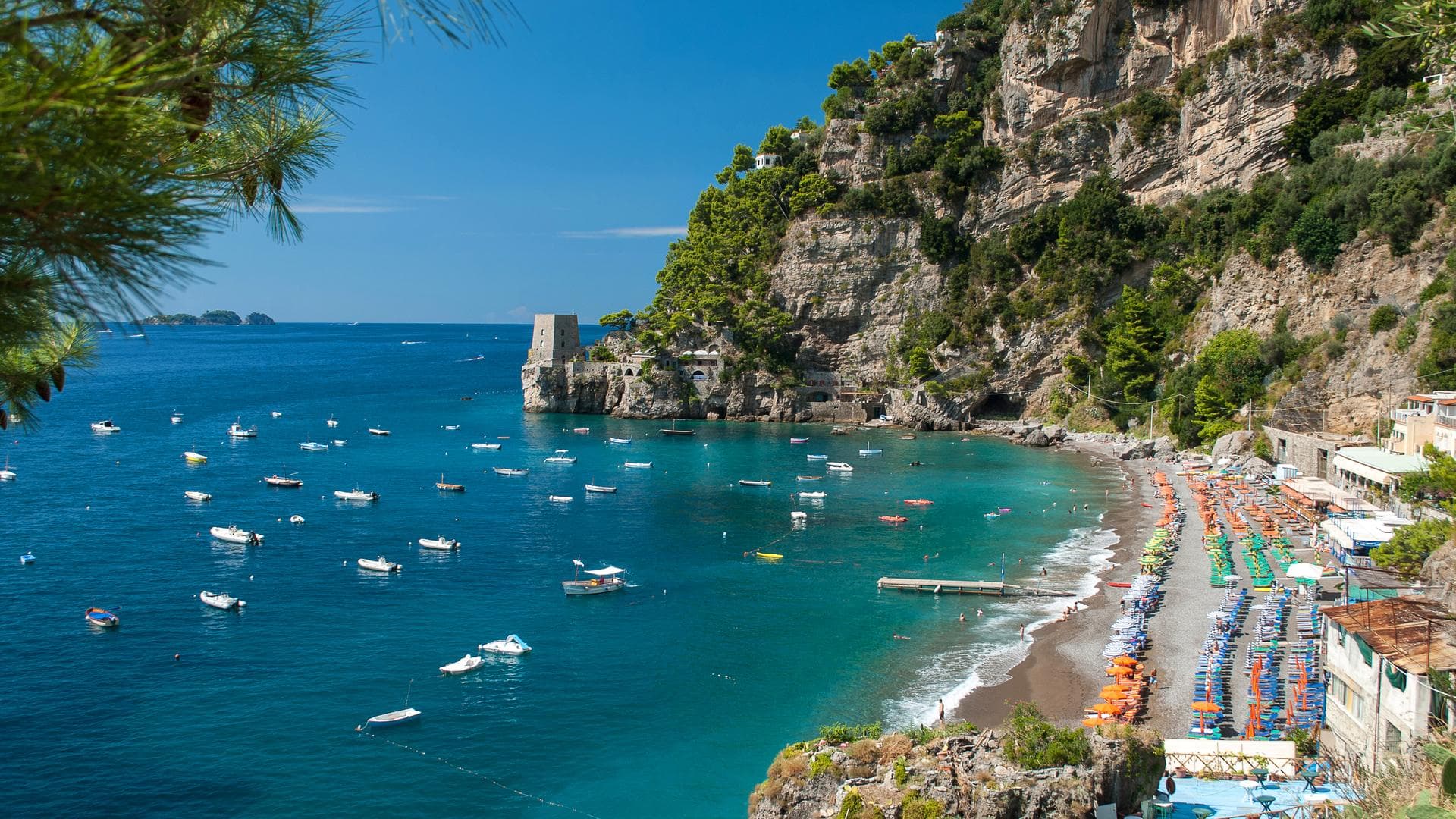
The best sea glass beaches in Italy are Cala Rossa on Ortigia in Syracuse, a pebble cove below a city that has been lived in for around 2,700 years and gives up nearly every colour in one visit, and Mottagrossa near Vasto in Abruzzo, where ships put their cargo ashore until the 1950s and left black glass and old marbles behind. Italy has no single famous glass beach the way Fort Bragg or Seaham do. Its glass is spread thin along old ports, river mouths and pebble shores, and the whole skill is knowing which kind of beach to walk.
Italy is one of the least written-about sea glass coasts in Europe, and that is a fact about the writing rather than the glass. There is very little Italian-language material on where to find it, and most of what exists in English was written by visitors on holiday, so the record clusters on the tourist coast and thins out everywhere else. This guide covers the ten beaches with the strongest first-hand evidence we could find, from collectors who named the place and described the visit, plus what people are logging on Sea Glass Map right now. If you know an Italian beach that belongs here, pin it. This is a map that still has room.
| Beach | Region | Access | Documented colours | Best window |
|---|---|---|---|---|
| Cala Rossa, Ortigia | Syracuse, Sicily | Easy, in the old town | Nearly the full range, sun-purple, red | Off-season, before summer |
| Mottagrossa, Vasto | Abruzzo | Track down through the reserve | Teal, olive, black, lavender, aqua | After a storm |
| Castellammare di Stabia | Bay of Naples | Easy, in town | Aqua, blue, cobalt, lavender | After a storm |
| Maronti, Ischia | Bay of Naples | Easy, bus or water taxi | Quantity over rarity | Early morning |
| Alassio | Liguria | Easy, town beach | Aqua, blue, cobalt | Off-season |
| Fornillo, Positano | Amalfi Coast | Five minutes on foot | Everyday bottle colours | Early, before the beach fills |
| Finale Ligure | Liguria | Easy, seafront | Green, clear, orange, brown, sapphire | Off-season |
| Marina Grande, Sorrento | Bay of Naples | Easy, in the harbour | Very dark olive, green | Any time |
| Santa Teresa, Salerno | Campania | Easy, city beach | Greens, whites, aqua, marbles | Any time |
| Marina Piccola, Capri | Bay of Naples | Easy, bus from Capri town | Small to medium, colours not recorded | Off-season |
Why Hunting in Italy Is Not Like Hunting the Atlantic
If you learned to hunt in Cornwall, Normandy or Nova Scotia, Italy will feel wrong until you adjust one habit. The Mediterranean barely has tides. The range is roughly 20 to 40 centimetres, so the twice-daily reveal that does half the work on an Atlantic beach simply does not happen, and a tide table will not save a bad choice of beach. What replaces it is substrate. Italy's fine, mechanically raked resort sand holds almost nothing, which is why more than a hundred kilometres of the Romagna riviera, the busiest beach in the country, has not produced a single collector report we could find. The glass lives on shingle and gravel, and it collects near the things that put it in the water in the first place: old harbours, fishing wharves, city fronts and the mouths of streams that carry a town's debris down to the sea. Read the ground, not the clock.
1. Cala Rossa, Ortigia: The Oldest Shore on the List
Ortigia is the island heart of Syracuse, continuously inhabited for something like 2,700 years, and Cala Rossa is the pebble cove on its eastern shore. It is the strongest spot in Italy for one simple reason: the people who report it keep coming back. A collector who lived in Sicily worked it repeatedly and described finding a great deal, while a first-timer walked away with almost every colour in a single outing. The signature find is glass that reads as black in your palm and turns deep violet against the light. That is manganese glass, made colourless when it was blown and slowly turned purple by a century of sunlight, so it is old by definition. Colourful ceramic tile turns up alongside it. Come outside high summer if you can. See the Cala Rossa, Ortigia spot.
2. Mottagrossa, Vasto: The Cargo Beach
North of Vasto, a track drops through the Punta Aderci reserve to a cobble beach that is usually empty even in season, and the sound of the sea working the stones is the first sign you are in the right place. The history is specific and checkable: until the modern port at Punta Penna opened in the 1950s, this stretch was where ships put their cargo ashore. A local collector traces the palette to it. The oldest glass is black, from centuries of bottles made dark to keep light off oil and wine. Teal and green come from old electrical insulators. The aqua and sea-foam marbles came out of gassosa bottles made in nearby Molise in the early 1900s. Deep teal, frosted olive, lavender and whites all turn up. See the Spiaggia di Mottagrossa, Vasto spot.
3. Castellammare di Stabia: The Bay of Naples Workhorse
Across the bay from Naples, Castellammare is an unglamorous working town with a long shipbuilding and industrial history, and it produces the most colourful glass on this list. Aqua, blue, cobalt and lavender are all logged here, which is an unusual spread for a Mediterranean beach and speaks to a long, varied stream of everyday glass going into the water. It is an urban shore, easy to reach and easy to walk, and it rewards the day after weather. If you are basing yourself in Naples or Sorrento and want one reliable hunt rather than a scenic one, this is the choice. See the Castellammare di Stabia spot.
4. Maronti, Ischia: The Volume Beach
Two kilometres of dark volcanic sand and small stones run under the cliffs of Barano on Ischia's south coast, and this is the beach that collectors staying over in Sorrento are told to take the ferry for. Reviews describe glass in quantity rather than anything unusual, which is the honest way to sell it. The coarse volcanic grit does the tumbling. Bus 5 from Ischia Porto drops you at one end and a water taxi from Sant'Angelo reaches the other, so you can walk the whole length one way and ride back. Give yourself real time here, because the length is the asset. See the Spiaggia dei Maronti, Ischia spot.
5. Alassio: The Riviera Bay
Liguria is the region every Italian guide names and none of them pins down, so it is worth saying plainly where the actual reports are. Alassio is one. A complete beginner spent two days on the town's beaches and came away with aqua, a good deal of blue and one dark cobalt piece, which is a strong return for a first attempt. It is a long sandy bay on the Riviera di Ponente, easy to reach and easy to walk, though much of the seafront is taken up by paid lidos. Aim for the free stretches and work the sand near the groynes, where the sea tends to leave things. See the Alassio spot.
6. Fornillo, Positano: The Quiet Amalfi Cove
Positano's second beach sits five minutes on foot from Spiaggia Grande along the Via Positanesi d'America path, and it is pebbles rather than sand, which is exactly what tumbles glass. A collector reported filling a pocket in about an hour along the waterline. The most useful corroboration is commercial: a Positano family that has made jewellery from local glass for generations counts Fornillo among the beaches it works itself, which is a good sign the material genuinely exists. Amalfi glass runs small, and the larger pieces come from coves you can only reach by boat, so calibrate your expectations and go early. See the Spiaggia di Fornillo, Positano spot.
7. Finale Ligure: The Best-Described Palette in Italy
A gravel seafront on the Ligurian ponente, broken up by groynes that trap and tumble whatever the sea brings in, and the local method is simply to walk the strip between two groynes and back. Finale earns its place here for the quality of the account rather than the size of the haul: the collector who described it ranked the colours by frequency and, unusually, said which ones are absent. Green in several shades and frosted clear come top, then orange and brown, with sapphire blue turning up now and then. Violet and red, she says, are practically unfindable. A guide that tells you what you will not find is worth more than one that promises a rainbow. See the Finale Ligure spot.
8. Marina Grande, Sorrento: Work the Harbour, Not the Beach
Sorrento has a reputation among collectors for giving up very little, and the advice on the forums is usually to get on a ferry to Ischia. That advice is half right. The town beaches are thin, but the old fishing harbour is a different proposition: a collector who spent a few hours along the waterfront there came away with olive glass so dark it reads as black until you hold it up, plus a piece of wired window glass, which points at old building debris. Marina Grande is still a working corner rather than a resort strip, and it is a short walk down from the centre. See the Marina Grande, Sorrento spot.
9. Santa Teresa, Salerno: The City Beach
Salerno's city beach runs right beside the commercial port, a short walk from the centre and easy to reach by train, which makes it the most convenient hunt in Campania. One collector's report is the most detailed colour account in southern Italy: greens, whites, a little blue and aqua in many shades, in every size from small to large, along with several marbles. Marbles are a useful tell, because they usually mean old household waste somewhere in the mix rather than recent litter. It is not a beautiful beach and it does not need to be. Worth an hour if you are passing through. See the Spiaggia di Santa Teresa, Salerno spot.
10. Marina Piccola, Capri: Look Under the Decks
Capri's south-side harbour sits below the Faraglioni, and its beach is gravel and pebbles, split in two by the Scoglio delle Sirene. The glass is not out on the open shingle. A collector who landed here worked the rocks under a restaurant deck and came away with two large handfuls of small to medium pieces, and an earlier visitor described glass glinting all through the pebbles. The most recent of those reports dates from 2018, so treat this as a beach worth an hour rather than a sure thing. Come out of season if you can: in summer it is one of the busiest beaches on the island, and there is little left to find under a hundred sunbeds. See the Marina Piccola, Capri spot.
The Beaches We Left Off, and Why
- All of Sardinia: collectors do find glass there, but in the whole island we could not find one report that names a beach, and the physics explain it. The tides are tiny, the coast is overwhelmingly fine sand rather than shingle, and much of it is far from any historic settlement. Sardinia also has Italy's one hard law on beach material, so it is the wrong island to fill a pouch on.
- Isola Bella, Taormina: a spectacular cove where a visitor recently reported a large haul, and it is inside a nature reserve whose regulation prohibits removing finds of any nature, even loose surface fragments, along with sand, earth or other materials. That is the clearest text in Italy on this subject. Look, photograph, leave it.
- Le Ghiaie, Elba: a pebble beach being actively stripped by souvenir hunters, inside a protection zone, with a local campaign asking people to stop. Not a beach to send collectors to.
- Carrione, Marina di Carrara: this river mouth beside the container port was on this list until October 2026. The port is now rebuilding the area around it (a new rail bridge went in in May 2026, and a new access road follows until mid-2027), the beach is closed off and guarded, and a reader who knows the area warned us it is not safe. Not a beach to send anyone to.
- Murano and the Venice lagoon: see the section below. There is glass, but there is no glass beach.
- Bagnoli in Naples, Rosignano Solvay, Gela, Augusta and Priolo: former heavy industry sites with real contamination. At Bagnoli you are not even permitted to dig a hole in the sand. Whatever is down there, it is not worth it.
About Murano: There Is No Glass Beach
This is the question everyone asks about Italy, so it deserves a straight answer. Murano has made glass since 1291, when Venice moved every furnace to the island, and centuries of furnace waste went into the lagoon. But Murano has no beach. Its edge is stone fondamenta, like the rim of a swimming pool, and Venice residents will tell you so bluntly. What exists is a small strip of sand and rock near the lighthouse jetty, exposed only at low water and described by the people who found it as not officially accessible. Collectors who work the genuine lagoon dumps, where art glass, millefiori and chandelier fragments really do turn up, reach them by boat or by snorkelling in remote spots, and say the tides and mud have buried the best of it. The romance is real. The beach is not.
Can You Collect Sea Glass in Italy?
The short version is that no Italian law mentions sea glass, and that is not the same as permission. What Italian law protects is the natural material of the beach. Nationally, article 1162 of the Codice della Navigazione makes it an offence to remove sand, algae, gravel or other materials from the maritime domain, and Italian beaches are state property, so nothing you pick up is technically yours. That article was written about extraction, and every case and seizure we could find behind it involves sand, pebbles or shells rather than tumbled bottle glass, which is manufactured debris. Sardinia is the exception to treat as a no: its regional law fines anyone who takes even small quantities of sand, pebbles, stones or shells, and it is enforced at airports and ferry ports, with tonnes of material seized every year. Glass is not on that list, but a departure gate is a poor place to argue the point. Everywhere else it genuinely depends on the comune, because each town issues its own bathing ordinance and they differ enormously, so the habit worth keeping is to read the signs at the access. Stop entirely inside a marine protected area or a nature reserve, where removing material is prohibited outright. And one thing specific to Italy: if a piece looks genuinely ancient rather than tumbled bottle glass, it may be an archaeological find, which belongs to the state the moment it surfaces and should be reported. Photograph it, mark the spot, leave it. For the picture country by country, see Can You Take Sea Glass Home?.
What Sea Glass Colours to Expect in Italy
Greens and frosted clear dominate, as they do almost everywhere, with orange and brown close behind. What Italy adds is age. Ortigia's sun-purple glass and Vasto's black bottle glass both come from a coastline that has been throwing things into the sea for a very long time, and the manganese violet in particular is a reliable marker of glass made before about 1920. The other Italian speciality is not glass at all. Sea pottery is everywhere here, in a country that has been making majolica and painted tile for centuries, and collectors on the Amalfi Coast and in Sicily routinely come home with more ceramic than glass. Treat any beach-by-beach colour promise with a little suspicion, ours included: several beaches in this guide are documented for their glass but not for their exact palette, so we have listed the regional commons rather than invent a rainbow. For how colour maps to age and origin, see our identification guide.
Tips for Sea Glass Hunting in Italy
- Forget the tide, read the ground. With 20 to 40 centimetres of range, timing matters far less than choosing a shingle beach over raked sand.
- Go where the town meets the water. Old harbours, fishing wharves, city fronts and stream mouths are where Italian glass concentrates. Scenic empty coves usually are not.
- Hunt outside high summer. Collectors on busy coasts describe the season starting as the end of their hunting, both for crowds and for beach cleaning.
- Pick up the pottery. In Italy the painted ceramic is often the better find, and nobody else is competing for it.
- Leave the sand, pebbles and shells. That is what the law actually protects, and it costs you nothing to respect it.
- Log what you find. Italy's map is thin, and it is thin because nobody has written it down. A pinned find on Sea Glass Map genuinely adds to what is known.
Frequently asked questions
What is the best sea glass beach in Italy?
Cala Rossa on Ortigia in Syracuse is the strongest pick, reported repeatedly by collectors including someone who lived in Sicily, and it produces nearly the full colour range including old sun-purple glass. Mottagrossa near Vasto in Abruzzo is close behind for its cargo-landing history.
Is there a sea glass beach in Murano or Venice?
No. Murano has made glass since 1291 but it has no beach, only stone fondamenta at the water's edge. There is one small strip of sand and rock near the lighthouse jetty that appears at low water, described by those who found it as not officially accessible. The genuine lagoon glass dumps are reached by boat or by snorkelling, not on foot.
Can you take sea glass home from Italy?
No Italian law mentions sea glass, which is not the same as permission. What the law protects is natural beach material: article 1162 of the Codice della Navigazione covers sand, gravel and algae, and Sardinia fines anyone taking even small amounts of sand, pebbles, stones or shells. Rules vary by comune, so read the signs at the beach access, and never collect inside a marine protected area or nature reserve.
Where in Italy is the best region for sea glass?
Three regions carry this guide. Sicily has the single best spot at Ortigia. The Bay of Naples and the Amalfi Coast have the most reports overall, spread across Castellammare di Stabia, Ischia, Capri, Sorrento, Positano and Salerno. Liguria's pebble coast is the one every Italian guide names, with Alassio and Finale Ligure the two beaches actually documented.
Why is there so little information about sea glass in Italy?
Because there is very little Italian-language writing about where to find it. Almost all the usable documentation comes from visiting collectors, mostly English-speaking, which is why the record clusters on the tourist coast and disappears elsewhere. The glass exists in places nobody has written up, which is exactly why logging finds on a map is worth doing here.
 Italy
Italy