10 Best Sea Glass Beaches in Canada (2026 Guide)
Victor
Founder of Sea Glass Map
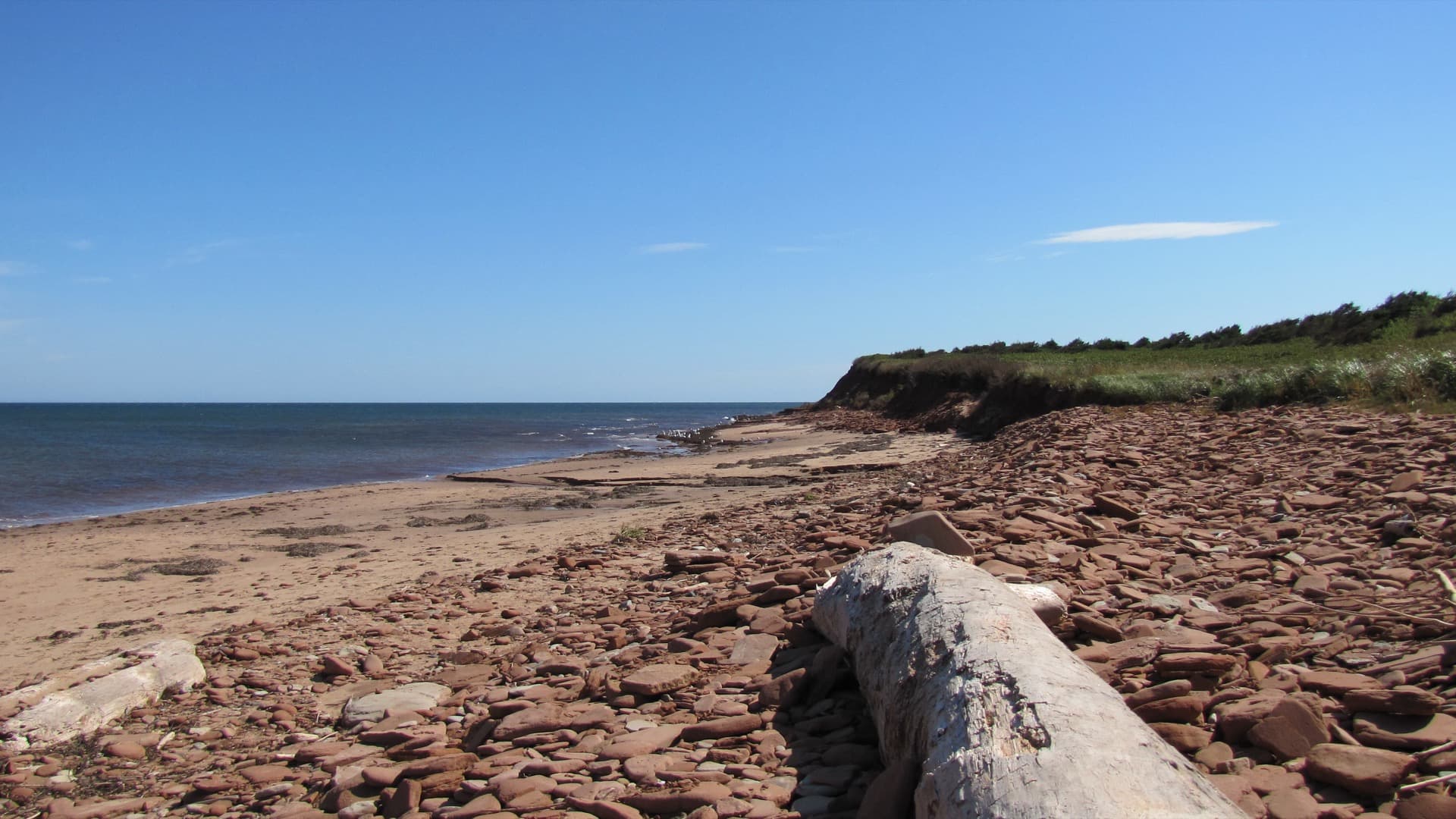
The best sea glass beaches in Canada are on the Maritime coasts: Inverness Beach on Cape Breton, where an old town dump has seeded the sand with glass for a century, the calm Northumberland shore of Prince Edward Island, where Souris keeps a sea glass museum and West Point is called a goldmine, and Spencer's Island on the Bay of Fundy, where the highest tides on Earth turn the shore over twice a day. Canada's glass is a Maritime story with a Pacific coda: two coasts, a great deal of shipbuilding and industrial history, and tides that do the polishing for you.
Canada earned its sea glass the way it earned its coastlines. Fishing wharves and coal piers, shipyards that built wooden fleets, and seaside towns that tipped their bottles over the bank long before anyone recycled, all fed the shore, and the Bay of Fundy and the Gulf of St Lawrence have been rounding the pieces ever since. Out on the Pacific, Vancouver Island has a genuine glass beach of its own. This guide covers the ten beaches with the strongest first-hand evidence we could find, plus what collectors are logging on Sea Glass Map right now. If you hunt one of them, pin your finds so the next collector knows the coast is producing.
| Beach | Region | Access | Documented colours | Best window |
|---|---|---|---|---|
| Inverness Beach | Cape Breton, NS | Easy, boardwalk | White, green, brown, the odd blue | Low tide, mornings |
| Souris Beach | PEI, east shore | Easy, provincial park | White, green, brown, old black | Two hours off low tide |
| West Point (Cedar Dunes) | PEI, southwest | Easy, miles of beach | White, green, brown | Low tide, after storms |
| Spencer's Island | Bay of Fundy, NS | Easy, drive-up | White, green, brown, rare cobalt | Low tide, after storms |
| Big Glace Bay & Table Head | Cape Breton, NS | A short walk | White, green, brown | Low tide |
| Glass Beach, Sidney | Vancouver Island, BC | Easy, in town | White, brown, soft blue, cobalt | Low tide |
| Tea Hill | PEI, near Charlottetown | Easy, provincial park | White, green, brown | Low tide |
| Panmure Island | PEI, east shore | Easy, causeway | White, green, brown | Two hours off low tide |
| John's Cove, Cape Forchu | Southwest NS | A walk to the point | White, green, brown | Low tide |
| Clover Point | Victoria, BC | Easy, city park | White, frosted white, brown | Low tide |
Why Canada Is Maritime Sea Glass Country
The centre of gravity for Canadian sea glass is the Maritimes, and the reason is written into the coast. The Bay of Fundy carries the largest tides on the planet, so its beaches are scoured and rebuilt twice a day, and the Gulf of St Lawrence wraps Prince Edward Island in calm, red-sand shores where glass settles instead of shattering. Layered on top is a century and a half of coastal industry: shipyards, coal piers, fishing wharves and the ordinary town dumps that emptied over the bank before recycling existed. That is the raw material, and the sea has had generations to polish it. The Pacific adds a coda rather than a second act, one standout glass beach on Vancouver Island and a scattering of stony city points, so this guide leans east, where the evidence is, and visits the west coast for the two spots that earn it.
1. Inverness Beach, Cape Breton: The Island's Glass Beach
Ask anyone on Cape Breton where the sea glass is and the answer is Inverness. The reason is unromantic and reliable: from the late 1800s the town tipped its refuse near this shore, the dump closed more than fifty years ago, and the ocean has been rounding the leftovers ever since. Whites and greens come up easily on the fine sand along the Ceilidh Trail, and a dig through the stone piles turns up browns and the occasional blue. It is also one of the most walkable beaches on the island, with a long boardwalk, so come early before the shore is picked over and work both directions at low tide. See the Inverness Beach spot.
2. Souris Beach, Prince Edward Island: The Capital of Island Glass
If Canada has a sea glass town, it is Souris, on PEI's calm eastern shore. The place wears the hobby openly, with a sea glass museum in the lighthouse, a shop in town and an annual festival, and the glass earns the attention: collectors describe it as unusually smooth and frosty, whites and greens and browns for the most part. The island's long rum-running past shows up now and then as a heavy shard of old black glass from a bottle two centuries old, a piece of history rather than a prize to chase. Walk out along the points for the better stretches, two hours either side of low tide. See the Souris Beach spot.
3. West Point, Prince Edward Island: The Goldmine
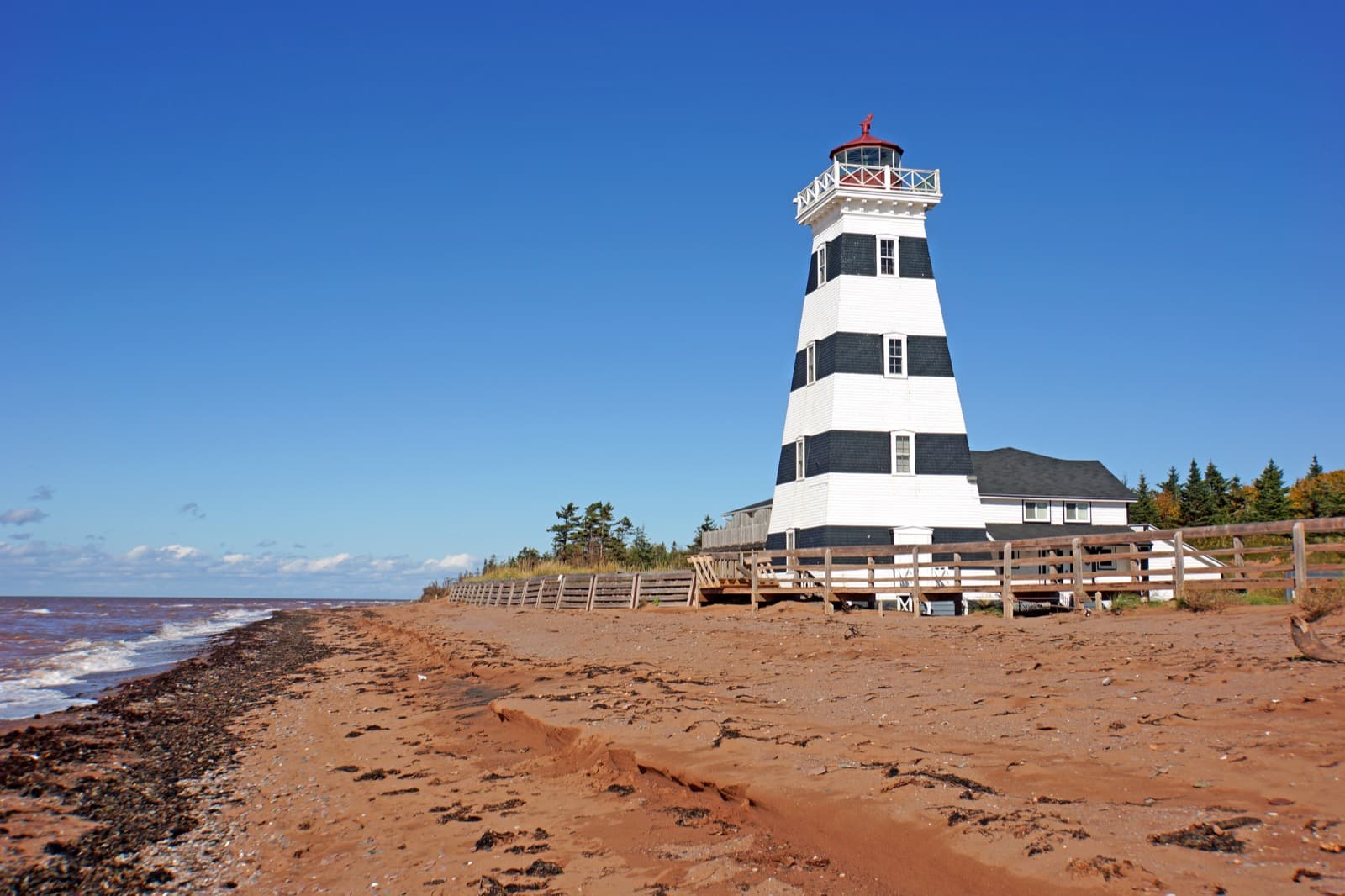
At the island's southwest tip, beside the candy-striped West Point lighthouse in Cedar Dunes Provincial Park, the beach runs for miles along the calm Northumberland Strait. Local collectors call it a beach where you do not have to look hard, and say the pieces run larger than elsewhere, helped along by the lobster wharves nearby. The colours are the Maritime everyday, whites, greens and browns, but the quantity is the draw. The beach is long, so walk to spread out from the busy end, and come at low tide or the morning after a storm. See the West Point Beach spot.
4. Spencer's Island, Bay of Fundy: Shipbuilder's Glass
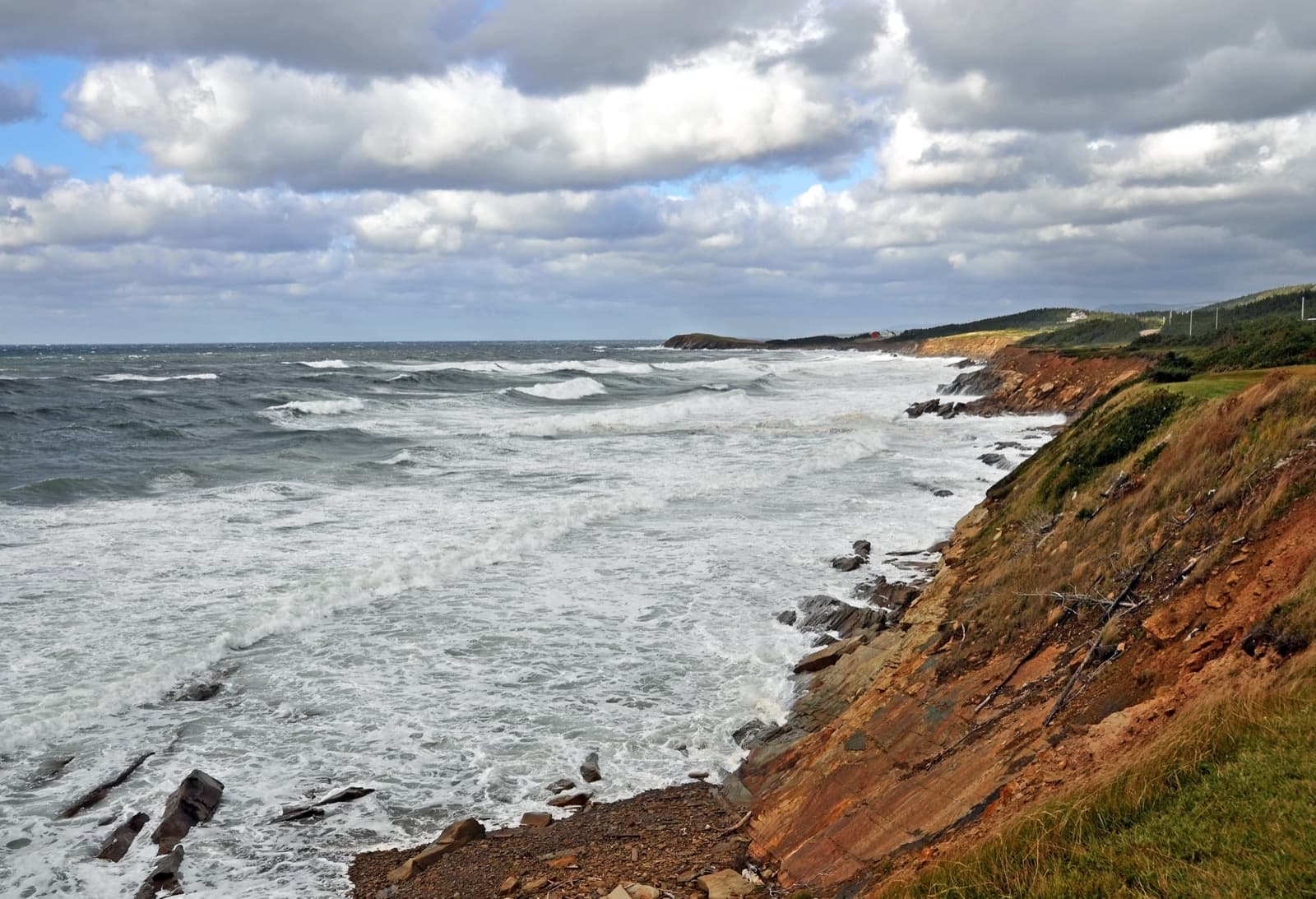
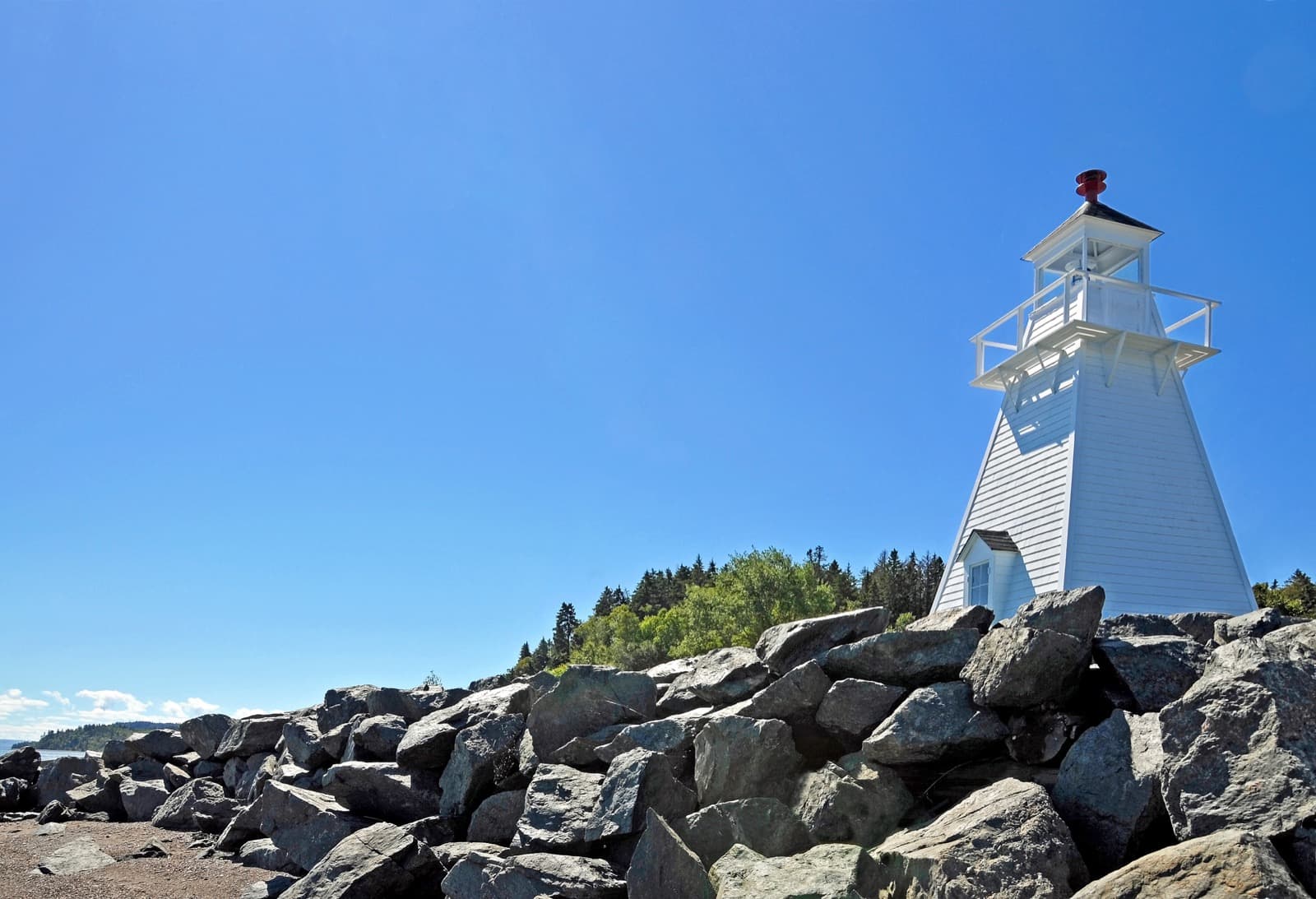
Spencer's Island is a quiet drive-up beach on the Minas Channel, and its engine is the Bay of Fundy, whose tides are the highest on the planet and turn the whole shore over twice a day. The town was a serious shipbuilding port in the 1800s, the birthplace of the Mary Celeste, so the whites, greens and browns here can carry real age from old bottle glass, with a cobalt or red piece now and then. The lighthouse and a small picnic park sit right by the sand. Go at low tide or after a storm, when the huge Fundy range has just reworked the beach, and watch your footing on the rocks. See the Spencer's Island spot.
5. Big Glace Bay and Table Head, Cape Breton: The Industrial Coast
This is old coal country, and the shore around Glace Bay carries the history in the glass. At Table Head the black coal sand frosts the pieces in its own way, and a local collector known around Sydney as the sea glass archaeologist has traced yellow shards here to Marconi's wireless station, which sent the first transatlantic signal from this very headland in 1902. The everyday finds along the mile of sand are the usual whites, greens and browns. The productive stretches are a walk from the road, so give yourself time and go at low tide. See the Big Glace Bay Beach spot.
6. Glass Beach, Sidney: The Pacific Glass Beach
Canada's west coast has its own proper glass beach, a small pocket of shore by the Bevan pier in the seaside town of Sidney, on Vancouver Island. The origin is a real one: a waterfront glass factory burned down in the 1950s and was pushed into the sea, and sixty years of tumbling has done the rest. It is well worked these days but still gives up whites and browns, soft blues, and the cobalt it is known for among the pebbles. It is a short walk from downtown, so hunt it at low tide and dig into the pebble catchall at the far end where the heavier pieces settle. See the Glass Beach, Sidney spot.
7. Tea Hill, Prince Edward Island: The Current Favourite
Just east of Charlottetown, Tea Hill is the beach PEI collectors point to right now, credited to its spot near the mouth of Charlottetown Harbour. It is a rocky red-sand shore on the calm Northumberland side, and at low tide the water pulls far back across the sandbars to open up a long stretch to comb. The finds are the Maritime standards, whites, greens and browns. Go at low tide, watch your step on the rocks under the red sand, and try Keppoch beach right next door on the same shore. See the Tea Hill spot.
8. Panmure Island, Prince Edward Island: The Sheltered Bay
Reached by a short causeway on PEI's east shore, Panmure Island has a historic lighthouse and beaches on both sides. The one to work is the sheltered red-sand bay facing St Mary's Bay, where the calmer water lets the glass gather along the tide line. The colours are whites, greens and browns, the reliable island trio. Work the bay side rather than the open ocean beach, two hours either side of low tide. See the Panmure Island spot.
9. John's Cove, Cape Forchu: The Yarmouth Headland
Out on the windswept headland beyond Yarmouth, about a kilometre before the Cape Forchu lighthouse, a pair of rocky coves called John's Cove and False Harbour face each other. Local collectors name them among the best beach glass spots in southwest Nova Scotia, and the whites, greens and browns work up along the rocks and the tide line on the walk out to the point. It is exposed and rocky, so wear proper shoes, keep an eye on the sea, and time it for low water. See the John's Cove, Cape Forchu spot.
10. Clover Point, Victoria: The Easy City Hunt
Back on Vancouver Island, Clover Point is a stony point on Victoria's Dallas Road waterfront, looking out over the Strait of Juan de Fuca a few minutes from downtown. The driftwood-strewn beaches below the point are an easy urban beachcombing stop, where whites, frosted whites and browns turn up among the stones. It is a modest haul rather than a big one, best at low tide, and it pairs naturally with the Sidney glass beach up-island for a day on the coast. See the Clover Point spot.
The Beaches We Left Off, and Why
- Lawrencetown and Martinique, Nova Scotia: both are fine provincial-park beaches where people find the odd piece after a storm, but the sea glass reports are thin, and Nova Scotia's provincial-park rules ask you to leave natural material where it lies. Martinique is also a piping-plover refuge. Beachcomb by all means, but this is not where we would send you to fill a jar.
- Botanical Beach, British Columbia: a world-class tide-pool shelf near Port Renfrew, and firmly off-limits for collecting. It sits inside Juan de Fuca Provincial Park, where BC Parks states plainly that shells, plants and other natural objects are protected under the Park Act. Go for the tide pools, take photographs, leave everything.
- The north shore of PEI (Cavendish, Brackley, Greenwich): beautiful, and inside PEI National Park, where Parks Canada prohibits removing natural objects. The calm south and east shores in this guide are both richer for glass and free of that restriction.
- The Great Lakes: Ontario's lakes are proper beach-glass country, but that is fresh water and a guide of its own. This one stays on salt water.
What Sea Glass Colours to Expect in Canada
Canada is a whites, greens and browns country, the everyday palette of a coast built on clear, beer and liquor bottles. That is honest rather than a letdown: those are the colours that fill a jar, and the Maritimes produce them in quantity. The grace notes are regional. PEI's old rum-running bottles turn up as heavy black glass at Souris, Cape Breton's dumps and shipyards give Inverness and Spencer's Island the occasional blue or cobalt, and the Sidney glass beach on the Pacific is the one spot in this guide with cobalt as a signature rather than a surprise. Treat any beach-by-beach colour promise with a little suspicion, ours included: several of the beaches here are documented for their glass but not yet for their exact palette, so we have listed the regional commons rather than invent a rainbow. For how colour maps to age and origin, see our identification guide.
When to Hunt Sea Glass in Canada
The Maritime coasts play by tide-and-storm rules. Work low tide, and the day after a blow with onshore wind, when the sea has just rebuilt the strandline. The Bay of Fundy is the extreme case: its tides are the largest on Earth, so a beach like Spencer's Island uncovers ground twice a day that gentler seas never show, and the water comes back fast enough that you keep one eye on it. On PEI's calm Northumberland shore the tide is smaller but still the clock you hunt by, since the sandbars only open at low water. Winter storms do the restocking, but the practical Canadian season is the long stretch from late spring through autumn when the shore is walkable. On the Pacific, at Sidney and Clover Point, low tide is what matters most. Everything else from our general guide applies: hunt the pebble bands and rock traps, not the open sand.
Can You Collect Sea Glass in Canada?
Usually yes, with two lines worth knowing. On municipal and unmanaged beaches, which is most of this guide, picking up sea glass is ordinary and uncontroversial. The lines are the parks. In national parks, Parks Canada prohibits removing natural objects, which is why the PEI National Park shore is left out of this guide, and some provincial parks say the same: Nova Scotia's provincial-park rules ask you to leave natural material, and British Columbia's Park Act protects it outright, as at Botanical Beach. The beaches we recommend sit on town shores or in provincial parks that welcome beachcombing, PEI's among them, but the sensible habit anywhere is to read the signs at the access point. For the fuller picture, country by country, see Can You Take Sea Glass Home?.
Tips for Sea Glass Hunting in Canada
- Hunt the tide. Low water is the rule on both coasts, and on the Bay of Fundy the range is so big it doubles your beach. Check a tide table and follow the water out.
- Go after the storm. An onshore blow rebuilds the strandline overnight, so the morning after is prime, especially on the Atlantic.
- Dig the stone piles. At Inverness and Sidney the surface is picked over, but the heavier pieces settle into the pebble bands, so a gentle dig beats a scan.
- Mind the parks. Town beaches are fine, national parks and some provincial parks are not. When in doubt, read the sign at the access.
- Log what you find. Canada's map is young. A pinned find with a photo on Sea Glass Map tells the next collector the coast is producing, and builds the map beach by beach.
Frequently asked questions
What is the best sea glass beach in Canada?
For abundance and reliability, Inverness Beach on Cape Breton is the strongest pick, with a century-old town dump feeding the sand and glass that is genuinely easy to find. Prince Edward Island's Souris and West Point are close behind, and Spencer's Island on the Bay of Fundy is the best place to hunt the world's biggest tides. On the Pacific, Glass Beach in Sidney is Canada's one true west-coast glass beach.
Where is the sea glass beach in Canada?
There is more than one. The most famous is Inverness Beach on Cape Breton in Nova Scotia, born from an old town dump. Vancouver Island has Glass Beach in Sidney, created by a glass factory that burned down in the 1950s. Prince Edward Island's calm south and east shores, around Souris, West Point and Tea Hill, are the richest region overall.
Can you take sea glass home in Canada?
On town and unmanaged beaches, yes. The exceptions are the parks: national parks prohibit removing natural objects, including the PEI National Park shore, and some provincial parks in Nova Scotia and British Columbia do too. The beaches in this guide are all on shores where collecting is allowed, but it is always worth reading the signs at the access point.
When is the best time to find sea glass in Canada?
Low tide, and the day after a storm with onshore wind. On the Bay of Fundy the enormous tides uncover fresh ground twice a day; on PEI's calm shore the sandbars open only at low water. The workable season runs from late spring through autumn, when the beaches are walkable, though winter storms do the restocking.
Is there sea glass on Prince Edward Island?
Plenty, and it is Canada's best region for it. The calm Northumberland shore on the island's south and east, around Souris, West Point, Tea Hill and Panmure Island, produces smooth, frosted whites, greens and browns, with old black glass turning up at Souris. Avoid the north-shore national park beaches, where collecting is not allowed.
 Canada