Sea Glass in Greece: 5 Beaches Collectors Vouch For (2026)
Victor
Founder of Sea Glass Map
The best sea glass beaches in Greece are Grotta on Naxos, Elli Beach in Rhodes Town, Anaxos on Lesbos, Aliki on Paros, and the little bay under the Temple of Poseidon at Cape Sounion. None of them is a Seaham-style glass carpet. Greece plays a different game: three thousand years of harbour towns have seeded the shorelines of the old ports with frosted glass, a piece here and a piece there, and the wind does the tumbling that tides do elsewhere. Collecting sea glass is legal everywhere in Greece, with two things to respect: the pebbles at a handful of protected beaches, and anything that might be genuinely ancient.
Greek sea glass is one of the least documented in Europe, which is half the appeal. The five beaches below are the ones where collectors have published first-hand finds, with photos, that we could verify. Every one of them is pinned on Sea Glass Map, and if you comb one this summer, log what you find: for most of these shores, your handful would be the first colour data anyone has recorded.
| Beach | Where | Access | Colours documented | Why the glass is there |
|---|---|---|---|---|
| Grotta | Naxos Town, Cyclades | In town, on foot | Not yet logged | 3,000 years of harbour life |
| Elli Beach | Rhodes Town, Dodecanese | Town beach | White, green, amber | Old port, Cold War ship, coastal landfill |
| Anaxos | North Lesbos | Resort village beach | Not yet logged | Unknown; the finds are real |
| Aliki | SW Paros, Cyclades | Village beach + coves | Not yet logged | Fishing harbour |
| Sounio Beach | Cape Sounion, Attica | Organized beach | Not yet logged | Ships rounding the cape since antiquity |
Why Greece Is a Different Kind of Hunt
Britain got its sea glass from bottle works and rubbish tips; Greece got it from time. There was no cliff-top glass factory tipping 20,000 bottles a day into the Aegean, so you will not find a beach paved with frosted pieces. What Greece has instead is the longest continuous harbour life in Europe. People have been dropping glass into the water at Naxos since the Bronze Age, and every island port has centuries of ferry traffic, fishing boats and waterfront tavernas behind it. The glass is real, it is often beautifully aged, and it concentrates exactly where you would guess: the pebbly town beaches of the old ports, not the famous sandy coves from the postcards.
One more thing sets Greece apart. On most coasts, the oldest thing you might pick up is a Victorian bottle shard. On a Greek beach, a worn piece of pottery or a thick, iridescent lump of glass can be two thousand years old, and Greek law (the Antiquities Law, 3028/2002) is unambiguous that anything ancient stays where it is. Frosted bottle glass is fine. If a find looks like it came off an amphora, admire it, photograph it, and put it back. Our identification guide helps you tell a 1960s soda bottle from something older.
1. Grotta Beach, Naxos Town
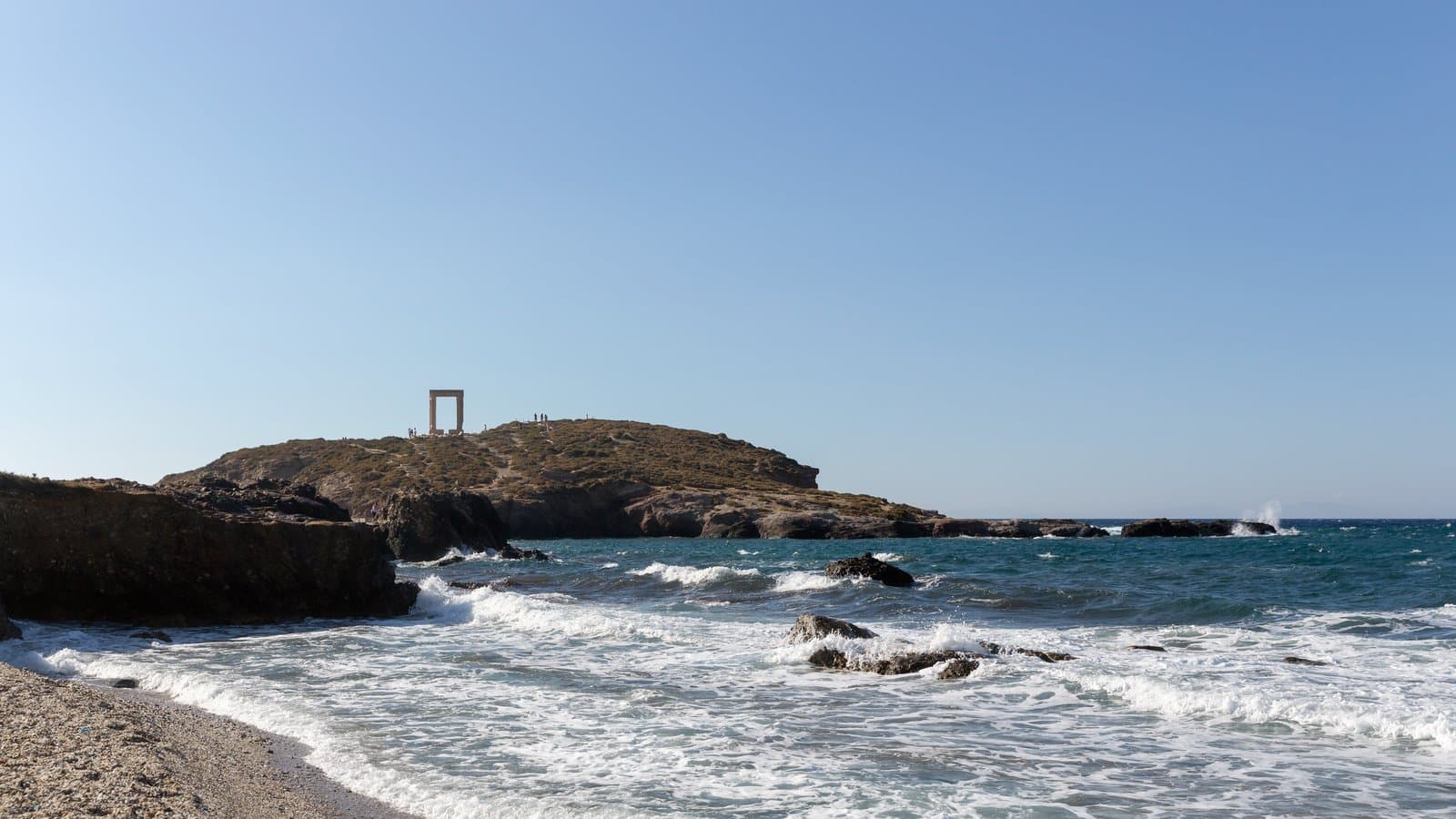
The pebble shore on the north side of Naxos Town, immediately behind the Portara, the great marble doorway of the unfinished Temple of Apollo. This bay has been inhabited for three thousand years, the meltemi hammers it head-on all summer, and the two facts together make it the most reliable sea glass beach in the Cyclades. A collector who stopped here recently described the beach as loaded, and a professional collector who spent years sailing the islands rated this same harbour-approach shore over a decade earlier. Mind two things: the swimming currents are strong even on calm days, and the submerged Mycenaean ruins offshore are a marked archaeological zone, so every piece of pottery stays on the beach. See the Grotta Beach, Naxos spot.
2. Elli Beach, Rhodes Town
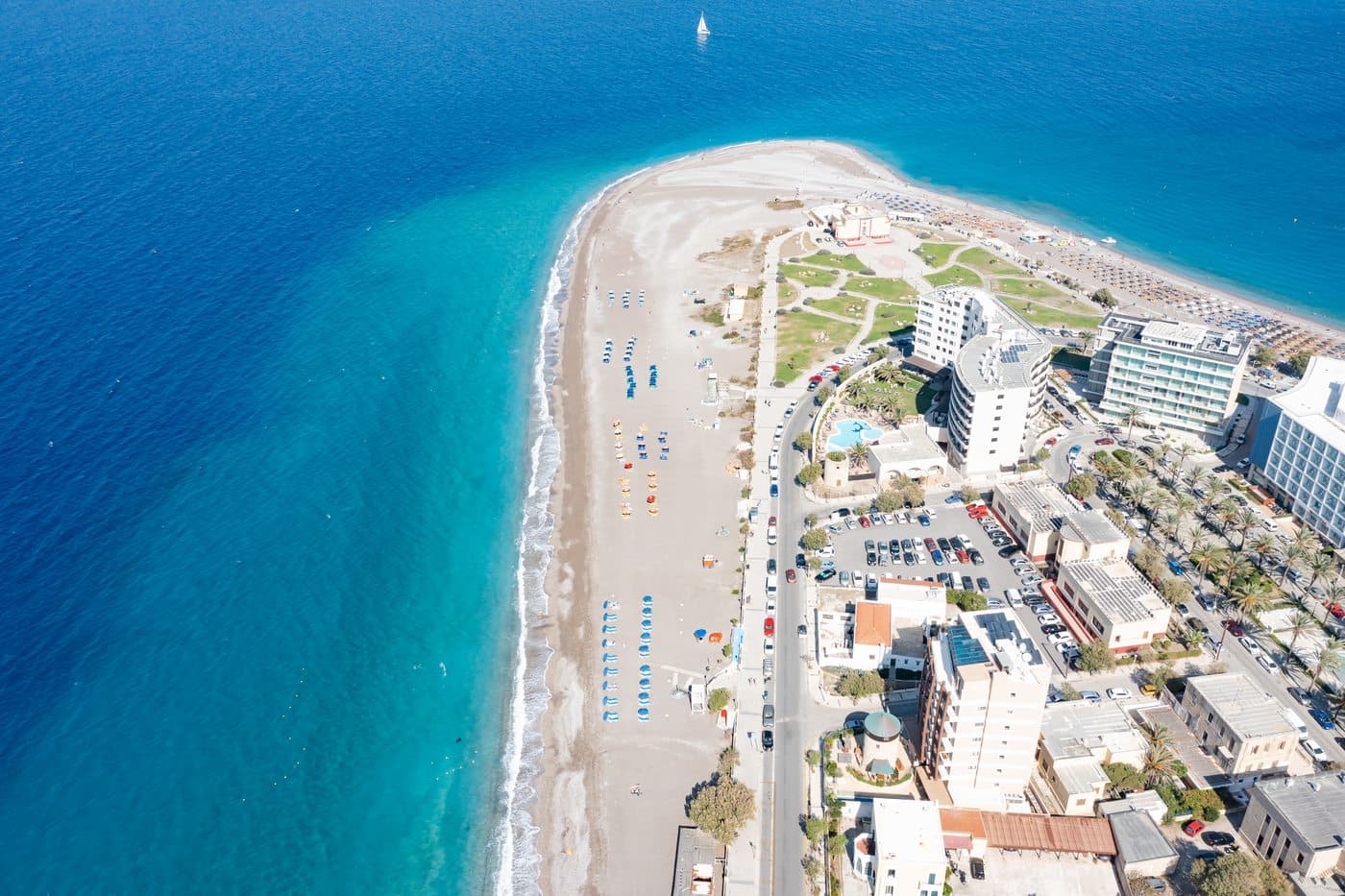
The town beach that wraps the northern tip of Rhodes, a short walk from Mandraki harbour and the medieval walls, and the best origin story in the Aegean. Alongside the usual centuries of port glass, an American radio ship, the USCGC Courier, sat anchored off this shore through the Cold War broadcasting Voice of America, and its exchange store fed the sea with distinctly American glass. A Rhodes resident who combs this coast in winter still finds mint-green Fire-King and vintage Pyrex among the whites, greens and ambers, washed out of an old shoreline landfill by the winter waves. Work the pebbly stretch nearest the port, and go between October and March if you can. See the Elli Beach, Rhodes Town spot.
3. Anaxos, Lesbos
A long curve of sand and dark pebbles on the north coast of Lesbos, just west of Molyvos. Anaxos is the wildcard on this list: nobody has traced where its glass comes from, but the finds are beyond argument. A collector staying in the village called it a rich hunting ground, had frosted pieces in hand within two minutes, and noted that most of the stretch was still unexplored. Lesbos as a whole quietly produces good glass, and this shore faces the open Aegean, so the wind restocks it. Easy access, tavernas behind the sand, and far fewer eyes on the tideline than anywhere in the Cyclades. See the Anaxos Beach, Lesbos spot.
4. Aliki, Paros
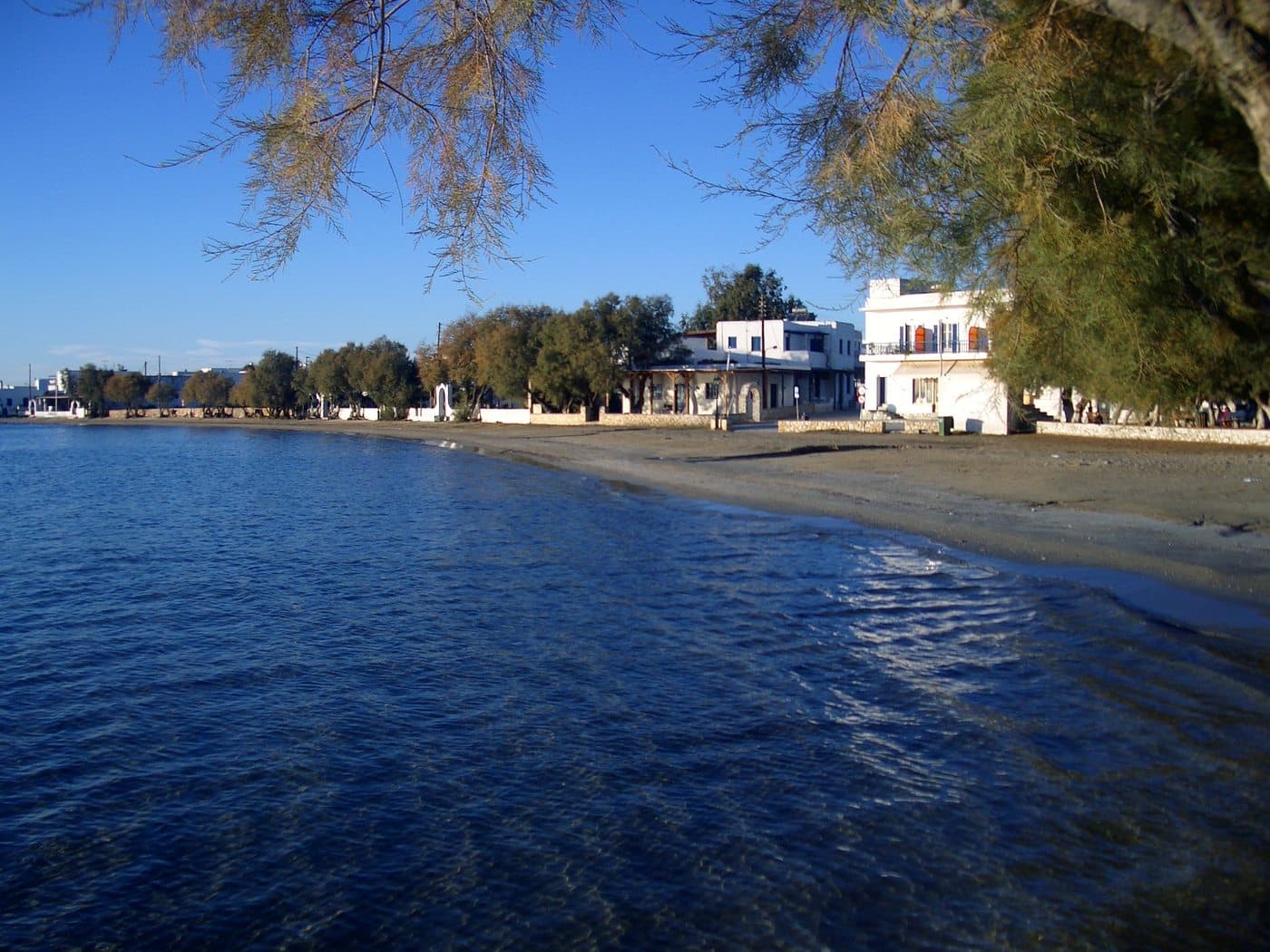
A small fishing village on the south-west corner of Paros where the beaches quietly gather sea glass and driftwood. Local beachcombers rate the little coves west of the village, out towards the hamlet of Makria Miti, over the main village beach. Paros holds a special place in sea glass history: it is the island where the founder of Odyssey Sea Glass, the oldest collecting site on the web, first pulled up a pile of frosted glass and got hooked, filling jars within months. The island has been producing ever since, and Aliki is the corner of it with named, walkable beaches. See the Aliki, Paros spot.
5. Sounio Beach, Cape Sounion
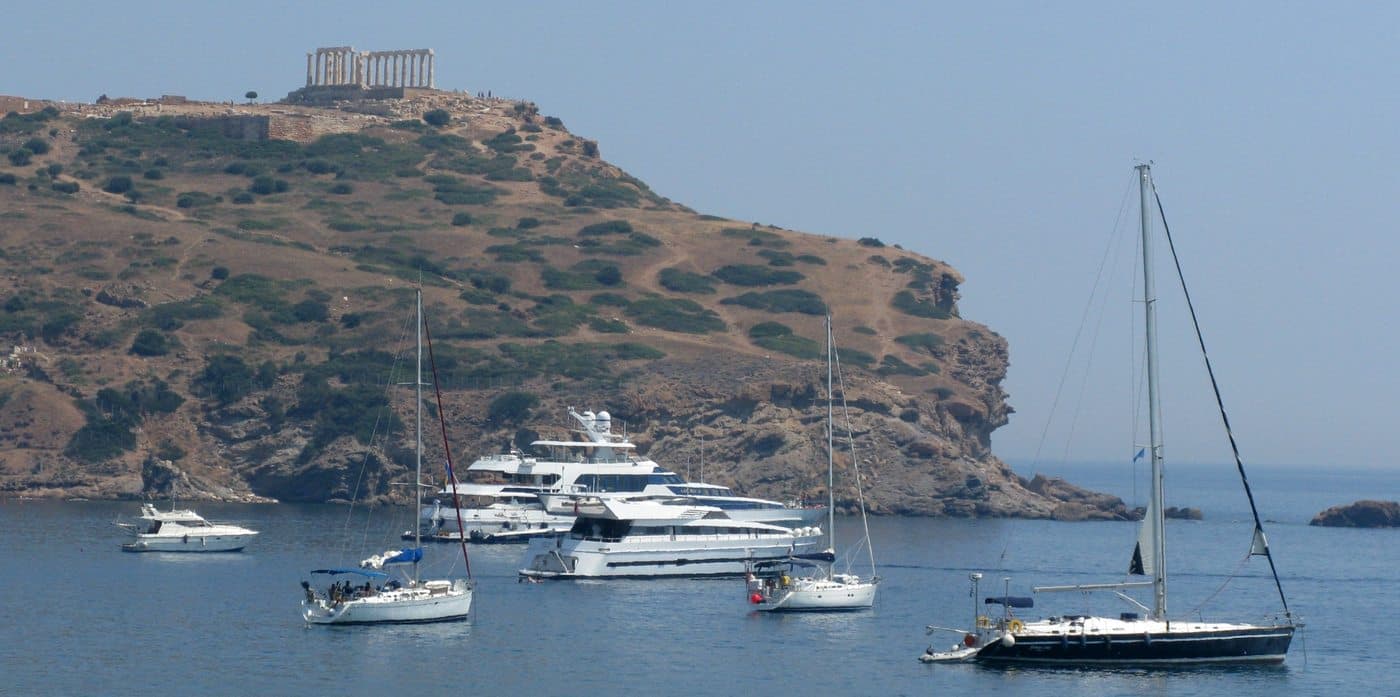
The little bay directly below the Temple of Poseidon, an hour down the coast from Athens and the easiest spot on this list to reach without a ferry ticket. The sand is organized-beach territory; the glass is not in it. Walk to the rocky north end behind the fish tavern, where frosted pieces sit tumbled in with the pebbles. Ships have rounded this cape for as long as there have been ships, and the tavern alone has been feeding people on this exact shore since 1887. The whole cape is a national park with the archaeological site above, so the ancient-stays rule applies with full force here. See the Sounio Beach, Cape Sounion spot.
The Beaches Collectors Whisper About
Greek sea glass hunting has a frontier feel, and several beaches sit one good report away from making this list. Kea, the closest Cycladic island to Athens, has produced two lovely documented finds near its port, but neither collector named the exact beach. Piraeus itself yields glass to those who know which corner of the harbour city to comb. On Rhodes, a local collector reported fine one-day hauls at Kallithea years ago. Ermoupoli on Syros, the great industrial port of 19th-century Greece, is exactly the kind of town that should be rich and has almost no collecting record. And somewhere near Chania in Crete is a small bay a visitor once described glowing with jadeite and aqua, which nobody, including a local who searched for years, has ever managed to find again. If you hunt any of these, pin what you find: a single photographed haul would put them on the map for everyone.
Can You Take Sea Glass Home from Greece?
Yes. No Greek law names sea glass, and man-made beach glass falls outside both the rules protecting natural beach material and the ones protecting antiquities. Three real rules sit nearby, and they are worth knowing:
- Pebbles are protected where signposted. The famous case is Lalaria on Skiathos, where taking the white marble pebbles carries fines of €400–1,000 and bags are checked at the harbour. Serifos has warned visitors similarly. These rules police pebbles, sand and shells, not glass.
- Anything possibly ancient stays. The Antiquities Law 3028/2002 covers cultural objects from every period, on land and in Greek waters, and removing them is a criminal offence. Worked pottery, amphora fragments and very thick iridescent glass all qualify. When in doubt, leave it.
- Airport checks are real. Security at island airports occasionally questions bags of beach material. A pocketful of frosted bottle glass has never been the problem; a kilo of pebbles has.
The travel press periodically announces a Greece-wide fine for taking anything from any beach. We looked for the law behind the headline and could not find one; the true rules are the local, signposted ones above. For how other countries handle the same question, see Can You Take Sea Glass Home?
When to Hunt Sea Glass in Greece
Forget the tide tables. The Mediterranean is nearly tideless, with a range measured in centimetres, so the low-tide strategy that rules British and American hunting barely applies. In Greece the wind is the engine. The meltemi, the dry northerly that blows hard through July and August, churns every north-facing shore in the Aegean, which is exactly why Grotta and Anaxos face the way they do. Hunt the morning after a strong blow. In winter, storms do the same work with more force and no tourists; the Rhodes collectors do their best work between October and March. Two practical notes for summer: go early, because resort beaches are raked clean in season, and the glass hides in the pebble bands at the ends of beaches, not on the groomed sand. For the full playbook, see How to Find Sea Glass.
Tips for Sea Glass Hunting in Greece
- Hunt the old port towns, not the postcard coves. Glass concentrates where people have lived and shipped for centuries: town beaches, harbour approaches, the shore below the tavernas.
- Watch the wind, not the tide. The morning after a meltemi blow, work the north-facing pebble stretches. The sea barely rises and falls here; it throws instead.
- Learn to spot the genuinely old. A thick, bubbled, iridescent piece could predate the bottle era entirely. Ancient finds stay on the beach; it is the law and the right thing.
- Take the pocketful, skip the pebbles. The fines that exist in Greece are for pebbles and sand. Leave the beach itself where it is.
- Log your finds. Greece is nearly blank territory on the colour maps. Pin your haul on Sea Glass Map with a photo, and you become the reference for the next collector.
Frequently asked questions
Are there sea glass beaches in Greece?
Yes. The best-documented are Grotta on Naxos, Elli Beach in Rhodes Town, Anaxos on Lesbos, Aliki on Paros, and Sounio Beach below the Temple of Poseidon in Attica. Greece has no factory-fed glass carpet like Seaham; its glass comes from millennia of harbour life, concentrated at the town beaches of the old ports.
Is it legal to take sea glass home from Greece?
Yes. No Greek law covers sea glass, which counts as man-made debris. What is restricted: pebbles and sand at signposted beaches like Lalaria on Skiathos (fines of €400–1,000), and anything potentially ancient, which the Antiquities Law 3028/2002 makes criminal to remove. Frosted bottle glass in your pocket is fine; amphora fragments are not.
Which Greek island is best for sea glass?
Naxos has the strongest single beach, Grotta, on the north shore of Naxos Town behind the Temple of Apollo. Rhodes is the best-documented island overall, with white, green and amber confirmed at Elli Beach plus vintage American glass from a Cold War radio ship. Lesbos and Paros both produce consistently.
When is the best time to find sea glass in Greece?
After wind, not at low tide: the Mediterranean's tidal range is only centimetres, so waves do the restocking. In summer, hunt the morning after a strong meltemi blow on north-facing beaches. In winter, storms work harder and the beaches are empty; Rhodes collectors rate October to March.
Can sea glass in Greece be genuinely ancient?
Occasionally, yes. Greeks have made and shipped glass for over two thousand years, so a very thick, bubbled or iridescent piece may predate modern bottles entirely. Genuinely ancient material is protected by Greek law and must stay on the beach. Most finds, though, are frosted bottle glass from the last century of port life.

 Greece