Best Sea Glass Beaches in California (2026 Guide)
Victor
Founder of Sea Glass Map
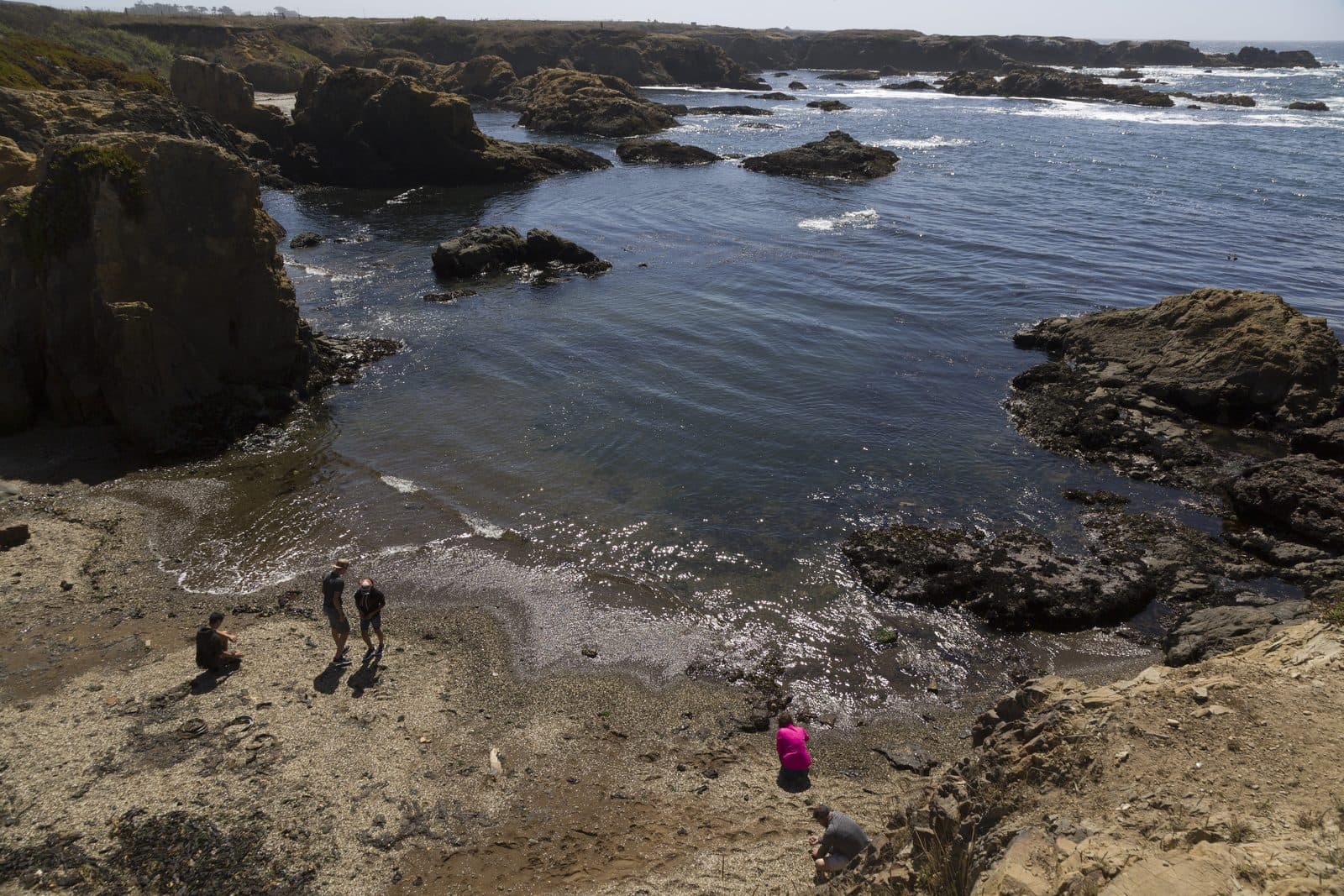
The best sea glass beaches in California are Glass Beach at Fort Bragg on the Mendocino coast and Glass Beach at Benicia on San Francisco Bay, the two most famous glass beaches in the world. The catch is that you can legally keep what you find at only one of them: Fort Bragg sits inside a state park where collecting is prohibited, while Benicia is an ordinary city beach where a pocketful is fine. California sea glass is a winter find, best at low tide on a falling spring tide a day or two after a Pacific storm, from roughly October to April.
California is where the sea glass destination was invented, and where it started to run out. No coast has more famous glass than this one, and none makes the cost of that fame plainer. Fort Bragg's cove became so celebrated that the glass was carried off a jarful at a time until the state stepped in, and today it is a place you go to look, not to fill a bag. That single fact shapes the whole state: the beaches everyone has heard of are mostly protected, and the real collecting happens at quieter, scrappier spots that never made a postcard. This guide covers both, north to south, with what is realistically there and whether you may take it home. When you hunt one, pin your finds on Sea Glass Map so the next collector knows which beaches are producing now. For the rest of the country, see our state-by-state US guide.
| Beach | Where | Access | Colours to expect | Take glass? |
|---|---|---|---|---|
| Glass Beach, Fort Bragg | Mendocino coast (N) | Easy, short trails from town | White, green, amber; rare colours now scarce | No: state park |
| Glass Beach, Benicia | San Francisco Bay | Level, end of West 6th St; low tide only | White, green, amber, old china | Yes: city beach |
| Davenport Beach | North of Santa Cruz | Steep and hazardous | Multicoloured art glass | Look only: state park + danger |
| Pebble Beach, Crescent City | Far north (Del Norte) | Easy, off Pebble Beach Drive | Mostly agates, some glass | Yes: collecting welcome |
| Goleta Beach | Santa Barbara (S) | Easy, county park | White, green, amber, seafoam | Yes: county beach |
| Little Corona del Mar | Newport Beach (S) | Steps down to tidepools | White, green, amber, blue | No: marine reserve |
| Manhattan Beach | Los Angeles (S) | Easy, open sand | Aqua, cobalt (sparse) | Yes: city beach |
Why Is There Sea Glass in California?
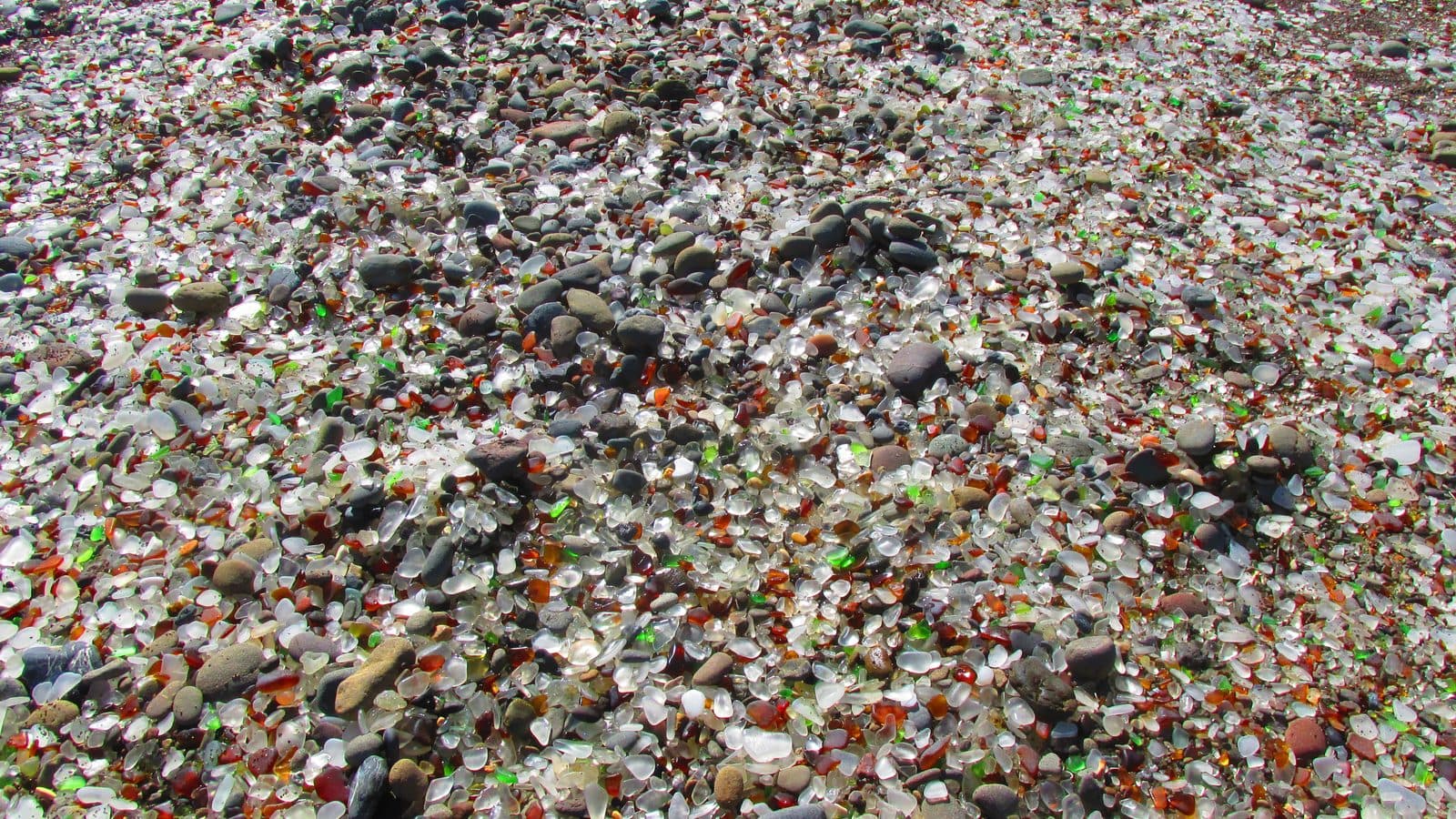
Two different histories put glass in California's surf, and they make two very different beaches. The first is the ordinary one, shared with the whole country: for most of the twentieth century, a coastal town got rid of its rubbish by tipping it over the nearest bluff. Fort Bragg ran three dumps in a row into the Pacific between 1906 and 1967, and Benicia's beach, by local account, collected decades of bottles thrown off the bank above it. The sea did the rest, grinding a century of broken glass into frosted colour. The second history is California's own. At Davenport, north of Santa Cruz, the glass never came from bottles at all: by the story collectors tell, it is the washed-out waste of a local art-glass studio, which is why the beach returns reds, oranges and pinks a bottle dump never could. And more than any other state, California is where sea glass became a protected thing, where the most famous beaches now ask you to leave what you find. To read the colours you do bring home, see our identification guide.
Northern California
1. Glass Beach, Fort Bragg
Fort Bragg is the most famous sea glass site on earth, and the first thing to know is that you cannot collect it. Three town dumps were pushed over these bluffs in sequence between 1906 and 1967, and the sea turned the last of them into a shingle of glass so bright that the cove became a destination, and the destination wore it out. The main beach was folded into MacKerricher State Park in 2002, rangers ask visitors to leave the glass, and California State Parks says plainly that it does not want anyone collecting sea glass anywhere on its coast. Taking a handful is unlikely to earn you a citation, but it could, and the deeper point is the one the whole hobby quotes Fort Bragg for: the glass is visibly thinner than it was, and it is not coming back. Come at low tide, when the wet glass lights up, and come to look. Two older dump sites lie on the headlands nearby, sometimes said to be on city land rather than park land, but the boundary is unmarked, so treat the whole stretch as look-don't-take unless you know you are off park ground. See the Glass Beach, Fort Bragg spot, and the full rules before you go.
2. Glass Beach, Benicia
If Fort Bragg is the beach you go to see, Benicia is the one you can actually work. It is a small pocket beach on the Carquinez Strait at the end of West 6th Street, the city's Raymond J. Bordoni public-access beach rather than a state park, which is exactly why a personal pocketful is fine here when it is not at Fort Bragg. Local lore holds that a bar on the bank above tipped its bottles over the edge for years. What is certain is that the beach still turns up white, green and amber glass along with old bottle bottoms and worn china. Two honest cautions. It floods completely, so there is no beach at high tide: go a couple of hours either side of low water. And temper your expectations, because much of what washes in now is young and only half-frosted, and the beach has been well picked over, so this is a patient hunt for a few good pieces rather than the carpet the photographs promise. See the Glass Beach, Benicia spot. Elsewhere around the bay, the north end of San Francisco's Ocean Beach and the coves at Lands End hold the occasional piece from the old Sutro Baths, but the yield is thin.
3. Davenport Beach
Davenport, half an hour up the coast from Santa Cruz, produces glass unlike anywhere else in the state, and it asks more of you to reach than anywhere else on this list. The colours are extraordinary, multicoloured nuggets and marbles and stoppers in reds and oranges and pinks, because (by the story collectors tell) the glass is not bottle waste but the washed-out cullet of a local art-glass studio, carried to the sea by a flooded creek. It is also genuinely dangerous. The beach sits below a steep, crumbling bluff in heavy Pacific surf, this stretch of coast has a real record of drownings and sneaker-wave rescues, and the productive ground is worked in the water. It lies inside a state park, where State Parks asks visitors not to remove sea glass. Treat Davenport as a spectacle to witness on a calm low tide, never a haul to chase, and never turn your back on the sea. See the Davenport Beach spot.
4. Pebble Beach, Crescent City
On the state's far northern edge, near the Oregon line, Pebble Beach at Crescent City is the opposite of Fort Bragg in the way that matters most: it is a shore where collecting is welcome. This is agate and rockhounding country first, and the draw is the semi-precious stones that wash up along Pebble Beach Drive toward Point St. George, with sea glass turning up among the driftwood as a bonus rather than the main event. If you have spent the drive down the coast being told to keep your pockets empty, this is the antidote, a beach where filling them is the whole idea. Bring the agate-hunter's patience and go at low tide after a blow. See the Pebble Beach spot.
Southern California
Southern California is the harder half of the state for glass, and it is worth being honest about why. The beaches are long, open and sandy, the surf grooms them flat, and there is little of the shingle and gravel that traps glass and holds it. Finds are smaller and scarcer than up north. But a real collecting culture lives here, right down to Santa Barbara's own sea glass festival, and a patient winter low tide still pays.
5. Goleta Beach, Santa Barbara
Goleta Beach is an easy county-park beach just west of Santa Barbara, put on the map by a member as a low-tide sunrise hunt. Be straight about it: Goleta is a pleasant, accessible place to look rather than a proven producer, and the better-known Santa Barbara glass is a little further along at Haskell's Beach. What the area does have is a genuine local scene, including an annual Santa Barbara sea glass and ocean-arts festival, so if you are collecting this coast it is a friendly place to start. See the Goleta Beach spot, and if you find a productive corner, log it so the map catches up.
6. Little Corona del Mar, Newport Beach
Little Corona del Mar is one to see rather than to strip. The rocky tidepools at the north end of the cove are lovely, and a member reports plenty of small glass among the stones, but the whole area is a marine protected area where removing anything, glass included, is against the rules. Go for the tidepools at low tide, photograph what you find, and leave it where it lies. It belongs to the same California lesson as Fort Bragg: some of the state's prettiest glass is exactly the glass you are asked not to take. See the Little Corona del Mar spot.
7. Manhattan Beach, Los Angeles
Manhattan Beach earns its place here as much for honesty as for glass. Los Angeles's wide sand beaches are poor ground for sea glass, with little to catch a piece and hold it, and Manhattan is a tough hunt by every account. A member finds the odd one in winter, at low tide, where small rocks pile up and give the glass somewhere to lodge, and that is the pattern to look for anywhere in the South Bay after a storm. Down the coast it is much the same story in San Diego: no standout glass beach, but Pacific Beach and the odd cove give up a piece or two after a blow. See the Manhattan Beach spot.
What Colours of Sea Glass Can You Find in California?
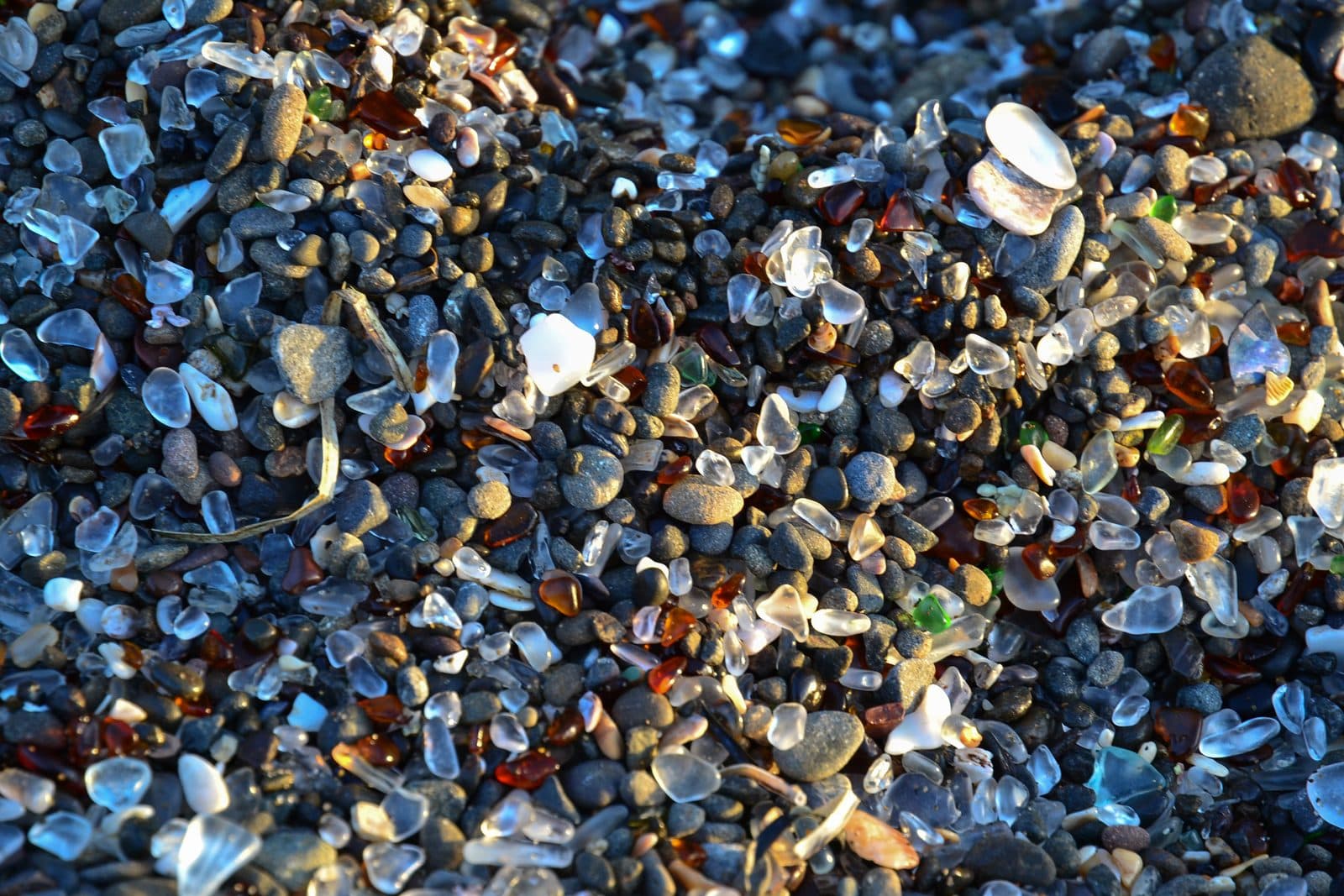
The everyday palette is the one you find on any bottle coast: white, green and amber (brown) make up the great majority, with the soft blues and aquas of old medicine and soda bottles turning up less often. California's interest is in its two exceptions. Fort Bragg, from the sheer volume of a century of household glass, historically threw up the full spectrum, cobalt and red and lavender and teal, though those rarer colours are far scarcer now than the old photographs suggest, and you are there to look rather than take. Davenport is the true oddity: its art-glass origin means reds, oranges and pinks in shades that were never bottles at all. On Sea Glass Map we never rank finds by rarity or price, and a frosted white from a beach you love is worth as much as a red. For the full colour chart and what each one came from, see our guide to what sea glass is.
When Is the Best Time to Find Sea Glass in California?
Winter, and specifically the day or two after a storm, from about October to April. That is when Pacific swells churn the seabed and throw fresh material up the beach, and when the summer crowds that pick these shores clean are gone. Time your walk for low tide, and if you can for a spring tide around the new or full moon, when the sea pulls back furthest. On San Francisco Bay, at a sheltered pocket beach like Benicia, the storm matters less than the tide: get there a couple of hours before low water, because the beach vanishes when the water is up. And mind the Pacific everywhere on the open coast, because the same surf that restocks a beach like Davenport is the surf that drowns people. Check the tide before you go down, and keep your eyes on the water.
Is It Legal to Collect Sea Glass in California?
It depends entirely on who owns the beach, and California draws the line more strictly than most states.
- California State Parks and state beaches: no. Inside a state park unit, the rules that protect the park's own features are applied to sea glass too, both as beach material and, because it is old, as an object of historical interest, and a breach is a misdemeanour. This is the rule that puts Fort Bragg's Glass Beach off-limits, and State Parks has said publicly that it does not want visitors collecting sea glass or agates anywhere on its 340 miles of coast.
- Ordinary city and county beaches: generally yes. There is no statewide California law against pocketing sea glass on a public beach that is not a park, because it is man-made litter rather than a protected natural feature. Benicia's city beach is the clear example.
- Marine protected areas and refuges: no. Stretches like the tidepools at Little Corona del Mar are set aside under rules that forbid removing anything at all, glass included. Read the signs.
- Leave the natural things. Wherever you are, the sand, pebbles, rocks and shells are not yours to take. The exception the law makes is for the rubbish, which is what sea glass is.
None of this makes stripping a beach acceptable. California's most famous glass is famous partly because so much of it has already been carried away. We covered the rules destination by destination in Can You Take Sea Glass Home?, worth reading before a trip if you are unsure.
Tips for Sea Glass Hunting in California
- Go north, and go in winter. The Mendocino and far-northern coasts hold far more glass than the southern beaches, and the day after a storm beats a calm week everywhere.
- Know before you go whether you can keep it. Fort Bragg and Davenport, the two most famous, are both look-don't-take. Benicia and the ordinary city beaches are where you fill a pocket.
- Search shingle, not open sand. Glass settles with gravel and rock. Southern California's flat sand is poor for exactly that reason, so find the pebble patches.
- On the bay, chase the tide, not just the storm. At Benicia and other sheltered beaches, low water is everything, because the beach disappears when the tide is up.
- Respect the Pacific. Sneaker waves and rip currents on the open coast are lethal. Check the tide, keep your eyes on the water, and never work a surf zone with your back to the sea.
- Log what you find. Pin it on Sea Glass Map with a photo and a note, especially in Southern California, where the map is thin and a good report is worth a lot.
Frequently asked questions
What is the best sea glass beach in California?
Glass Beach at Fort Bragg is the most famous, but collecting there is prohibited: it sits inside MacKerricher State Park. The best beach where you can legally keep what you find is Glass Beach at Benicia, a city beach on San Francisco Bay, though it is a modest, picked-over hunt these days. Davenport, north of Santa Cruz, has the state's most extraordinary glass but is dangerous and also inside a state park. As a rule, the northern coast holds far more glass than the south.
Can you take sea glass from Glass Beach in Fort Bragg?
No. The main Glass Beach has been part of MacKerricher State Park since 2002, and California state park rules protect its glass as both beach material and a historical object, so removing it can be a misdemeanour. The glass has also thinned dramatically after decades of visitors taking 'just a few'. Go at low tide to see it, and leave it where it lies.
Where can you legally collect sea glass in California?
On ordinary city and county beaches, where sea glass counts as man-made litter rather than protected natural material: Benicia's public beach on San Francisco Bay is the clearest example, and Pebble Beach at Crescent City in the far north actively welcomes collectors. You cannot collect inside state parks (Fort Bragg, Davenport) or marine protected areas (Little Corona del Mar), and you should never take sand, pebbles or shells anywhere.
When is the best time to find sea glass in California?
October to April, at low tide, a day or two after a Pacific storm, and ideally on a falling spring tide around the new or full moon. Winter swells restock the beaches and the summer crowds are gone. On San Francisco Bay, at a sheltered beach like Benicia, time your visit for low water above all, because the beach disappears at high tide.
Why is there sea glass at Fort Bragg and Benicia?
Fort Bragg's glass comes from three town dumps that were pushed over the bluffs into the Pacific in sequence between 1906 and 1967; the sea spent the following decades grinding the last of them into a beach of frosted glass. Benicia's origin is less documented: local accounts say bottles were tipped off the bank above the beach for decades. Davenport is different again, its multicoloured glass said to be the washed-out waste of a local art-glass studio rather than old bottles.
 United States